

The Indispensable Foundation: Labor's Necessity for the State
The very notion of a functioning State – an organized political community under a Government – often conjures images of laws, institutions, and grand declarations. Yet, beneath these visible structures lies an unseen, fundamental force without which no State could ever truly exist or endure: labor. This article explores the profound necessity of human labor for the genesis, sustenance, and flourishing of the State, drawing insights from the foundational texts of Western thought. We will argue that while the contingency of how labor is organized may vary across different political systems, its essential contribution is an immutable prerequisite for collective human flourishing and political stability.
The Unseen Engine of Civilization: Why States Cannot Exist Without Work
Imagine a society without farmers tilling the land, without artisans crafting tools, without builders constructing homes, or without thinkers organizing knowledge. Such a society would be, quite simply, non-existent. The State, as the ultimate expression of collective human organization, is not an ethereal entity; it is built upon the tangible efforts of its populace. From providing basic sustenance to constructing elaborate infrastructure, from defending borders to administering justice, every function of the State is ultimately rooted in the productive labor of its citizens. This isn't merely an economic observation; it's a philosophical truth concerning the very conditions of political possibility.
From Ancient Polis to Modern Nation: Labor's Enduring Role
The recognition of labor's centrality to the State is not a modern innovation but a thread woven through the fabric of Western philosophy, particularly evident in the "Great Books."
The Philosophical Roots in the Great Books
- Plato's Republic and the Division of Labor: In Plato's vision of the ideal State, as articulated in The Republic, the division of labor is not just efficient; it's the very basis of social order and justice. He posits that individuals naturally possess different aptitudes, and a just society assigns roles accordingly: farmers produce food, artisans craft goods, guardians defend, and philosophers rule. Each specialized form of labor is necessary for the whole to function, creating a self-sufficient and harmonious State. Without the labor of each class, the State would lack its fundamental components.
- Aristotle's Politics and the Oikos: Aristotle, in Politics, extends this understanding, emphasizing the necessity of household management (oikonomia) as the foundation for the polis. The labor performed within the household – farming, weaving, raising children – creates the material conditions and human resources required for citizens to engage in political life. The State is naturally prior to the household and the individual, but it emerges from and depends upon the productive labor that sustains these smaller units.
- Locke's Labor Theory of Property: John Locke, in his Second Treatise of Government, famously argues that labor is the origin of property. By mixing one's labor with natural resources, an individual establishes ownership. This concept is crucial for the State, as it provides the incentive for productive labor and the accumulation of wealth, which in turn can be taxed or utilized to fund public services. The Government's role, in part, is to protect this property, thereby safeguarding the very engine of societal productivity.
The Material Basis of State Power
Beyond philosophical ideals, the practical reality is stark: a State without productive labor is a State without resources.
- Food and Sustenance: The most basic necessity is food. Agricultural labor feeds the population, preventing famine and unrest, which are potent destabilizers of any State.
- Infrastructure and Development: Roads, bridges, buildings, communication networks – all are products of labor. These are vital for economic activity, internal cohesion, and the projection of state power.
- Defense and Security: Soldiers are the most direct manifestation of labor for state defense, but their equipment, training, and sustenance are all derived from the labor of others. A strong State requires a strong economy, which is built on labor.
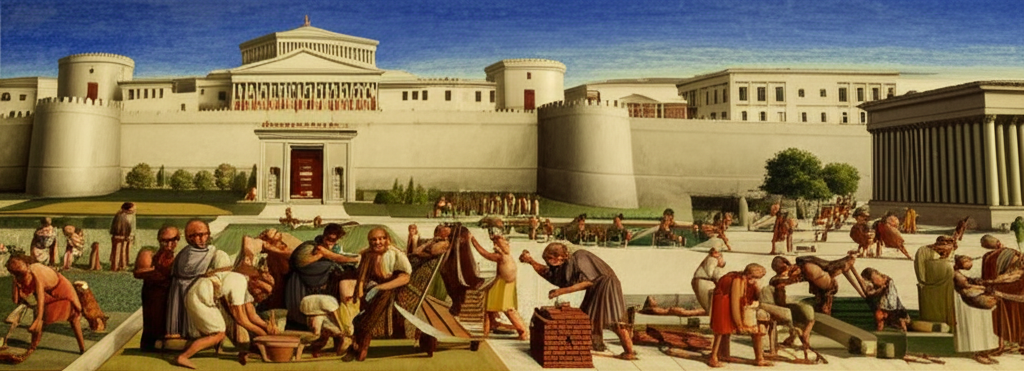
The Intertwined Destinies: Labor, State, and Government
The relationship between labor, the State, and its Government is one of profound interdependence.
Labor as the Source of State Revenue
Every tax, every fee, every form of public revenue ultimately originates from the productive labor within the State. Whether it's income tax on wages, sales tax on goods produced by labor, or property tax on land improved by labor, the Government's ability to fund its operations—from public services to defense—is directly tied to the labor and economic activity of its citizens.
Government's Role in Organizing and Directing Labor
The Government, as the administrative arm of the State, plays a crucial role in regulating, facilitating, and sometimes even directing labor.
- Laws and Regulations: Establishing legal frameworks for contracts, property rights, and working conditions.
- Public Works: Organizing large-scale projects (e.g., infrastructure development, military conscription) that require collective labor.
- Education and Training: Investing in human capital to enhance the productivity and skill of the workforce.
- Economic Policy: Implementing policies that incentivize or discourage certain forms of labor or industries.
Necessity vs. Contingency Revisited
The necessity of labor for the State's existence is an absolute truth. However, the contingency lies in the specific models and ideologies that a Government adopts to manage this labor. Whether through a market-driven capitalist system, a centrally planned socialist economy, or a mixed approach, the underlying requirement for productive effort remains immutable. The contingency is in the how, not the whether. Different systems represent different attempts to optimize or control the flow of labor for the benefit of the State and its citizens, but none can eliminate the fundamental need for it.
The Unseen Burden: When Labor Falters
History is replete with examples where a breakdown in productive labor has led to the decline or collapse of States. Famine, plague, or war can decimate the workforce, leading to economic collapse, social unrest, and the eventual inability of the Government to maintain order or provide essential services. The Roman Empire's decline, for instance, was exacerbated by a shrinking agricultural base and a reliance on slave labor that eventually proved unsustainable, weakening the very foundations of the State.
Conclusion: The Enduring Truth
In conclusion, the State is not a self-sustaining entity; it is a complex organism utterly dependent on the continuous, multifaceted labor of its people. From the basic needs of survival to the grand aspirations of civilization, every aspect of political life finds its material and conceptual grounding in human effort. The insights from the "Great Books of the Western World" consistently underscore this profound necessity. While political philosophies may debate the ideal structure of Government or the just distribution of the fruits of labor, none can escape the enduring truth: without labor, there can be no State.
📹 Related Video: PLATO ON: The Allegory of the Cave
Video by: The School of Life
💡 Want different videos? Search YouTube for: ""Plato Republic division of labor explained" and "Political philosophy necessity of work""