

The Indispensable Link: Why Education is the Necessity for Knowledge
For anyone who has ever pondered the origins of understanding, the path to true knowledge often appears shrouded in mystery. Yet, when we strip away the layers of individual genius or serendipitous discovery, one undeniable truth emerges: education is not merely a convenience, but an absolute necessity for the acquisition and cultivation of knowledge. It is the structured, intentional process through which the human mind is shaped, challenged, and equipped to grasp, interpret, and ultimately create understanding. Without it, our intellectual landscape remains largely barren, limited by the contingency of immediate experience rather than enriched by the necessity of informed insight. This article explores why formal and informal learning, as championed by the enduring wisdom found in the Great Books of the Western World, is the bedrock upon which genuine knowing is built.
The Mind's Awakening: Education as the Catalyst
Imagine a mind as an unploughed field. While it possesses inherent potential for fertility, it cannot yield a harvest without the deliberate acts of tilling, planting, and nurturing. Similarly, the human intellect, though endowed with remarkable capacities, requires the systematic engagement that education provides to flourish. From the Socratic dialogues that probe fundamental assumptions to Aristotle's rigorous classifications of logic and ethics, the Great Books consistently illustrate how active inquiry and instruction are paramount.
Education, in its broadest sense, is the process of:
- Introducing fundamental concepts: Laying the groundwork for understanding complex ideas.
- Developing critical thinking skills: Teaching how to question, analyze, and evaluate information.
- Transmitting accumulated wisdom: Passing down the insights and discoveries of previous generations.
- Fostering intellectual curiosity: Igniting the desire to explore and learn continuously.
Without this deliberate cultivation, our perceptions remain largely superficial, and our conclusions, often prejudiced. The mind needs training to discern truth from falsehood, to differentiate between opinion and reasoned argument, and to build a coherent worldview.
Necessity and Contingency in the Pursuit of Knowledge
The concepts of necessity and contingency offer a powerful lens through which to view education's role. Some forms of knowledge might seem to arise from contingent circumstances – a sudden insight, a chance encounter, or an accidental discovery. However, even these moments often rely on a mind already prepared by prior education to recognize their significance. The "eureka" moment is rarely truly spontaneous; it usually culminates from a long process of learning, questioning, and intellectual struggle.
The Necessary Elements for Knowledge Acquisition:
| Element | Description | Philosophical Link (Great Books) |
|---|---|---|
| Structured Learning | Organized curricula, mentorship, and pedagogical methods. | Plato's Academy, Aristotle's Lyceum; Locke's Some Thoughts Concerning Education |
| Critical Engagement | The ability to analyze, synthesize, and evaluate information independently. | Socratic Method (Plato's Dialogues); Descartes' Discourse on Method |
| Access to Information | Exposure to established facts, theories, and historical perspectives. | Libraries, texts (the very essence of the Great Books collection) |
| Conceptual Frameworks | Mental models and categories for organizing and understanding the world. | Kant's categories of understanding in Critique of Pure Reason |
| Language & Logic | Tools for coherent thought, expression, and reasoning. | Aristotle's Organon; Wittgenstein's Tractatus Logico-Philosophicus |
Contingent Factors Influencing Knowledge (Still Benefiting from Education):
- Individual Talent: While some have a natural aptitude, education hones and directs it.
- Serendipity: Fortuitous discoveries often require an educated mind to interpret their meaning.
- Cultural Context: The specific knowledge prioritized can vary, but the necessity of education remains.
- Personal Experience: Direct experience becomes meaningful knowledge when reflected upon through an educated framework.
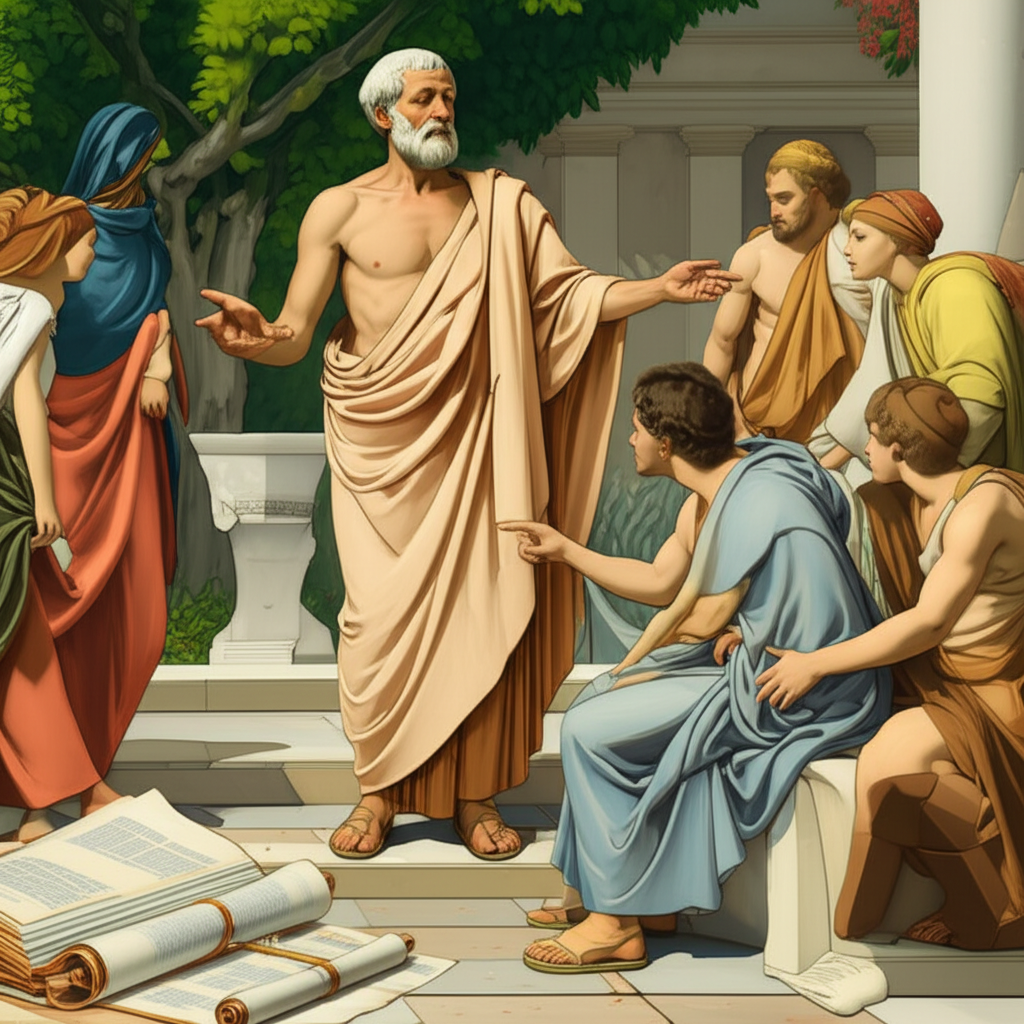
The necessity of education is not simply about accumulating facts; it's about developing the intellectual faculties that make genuine knowledge possible. It's the difference between merely observing phenomena and understanding their underlying principles, between memorizing a text and grasping its profound implications.
Beyond Information: Cultivating True Understanding
In an age saturated with information, it's crucial to distinguish between mere data acquisition and the cultivation of true knowledge and understanding. Education doesn't just fill the mind with facts; it teaches the mind how to think. It equips us with the tools to discern, to connect disparate ideas, and to form coherent, reasoned judgments.
Think of the enduring questions posed by the Great Books: What is justice? What is the good life? What is the nature of reality? These are not questions with simple, factual answers. They require a mind trained in philosophical inquiry, historical context, and ethical reasoning – all products of a robust education. Without this training, we risk mistaking superficial familiarity for deep insight, and mistaking opinion for reasoned conviction.
The journey of education transforms raw information into meaningful knowledge, moving us from passive reception to active engagement with the world of ideas. It empowers us to not just consume information, but to critically evaluate it, synthesize it, and even contribute to it.
The Societal Imperative of Educated Minds
The necessity of education extends beyond the individual to the very fabric of society. A community of uneducated minds is susceptible to misinformation, irrationality, and the erosion of democratic principles. Conversely, a society that values and invests in education cultivates citizens capable of critical thought, informed decision-making, and constructive civic participation. From the foundational political philosophies of Plato and Aristotle to the Enlightenment thinkers like Locke and Rousseau, the importance of an educated populace for a stable and just society is a recurring theme within the Great Books. It's a collective investment in the intellectual capital that drives progress, innovation, and ethical advancement.
Conclusion: An Ongoing Journey of Enlightenment
Ultimately, the argument for the necessity of education for knowledge is irrefutable. It is the indispensable forge where the mind is tempered, sharpened, and prepared for the lifelong pursuit of understanding. It moves us beyond the contingency of unexamined experience into the realm of reasoned insight and deliberate wisdom. As Chloe Fitzgerald, I believe that embracing education is not merely an option, but a profound commitment to the realization of our full intellectual potential – a journey that truly never ends, constantly enriched by the timeless conversations found in the Great Books and the continuous unfolding of human thought.
YouTube Video Suggestions:
-
📹 Related Video: PLATO ON: The Allegory of the Cave
Video by: The School of Life
💡 Want different videos? Search YouTube for: ""Plato's Allegory of the Cave Explained"" - This visual explanation directly relates to the journey from ignorance to knowledge through enlightenment, a core philosophical concept often associated with education.
2. ## 📹 Related Video: KANT ON: What is Enlightenment?
Video by: The School of Life
💡 Want different videos? Search YouTube for: ""John Locke Tabula Rasa Explained"" - This video would delve into Locke's concept of the mind as a blank slate, reinforcing the idea that knowledge is acquired through experience and, by extension, education, rather than being innate.