

The Unyielding Current: Understanding the Necessity of Change in History
History, often perceived as a chronicle of past events, is fundamentally a testament to the necessity of change. Far from being a mere series of contingent occurrences, the unfolding of human societies, political structures, and philosophical thought reveals an inherent drive toward transformation. This article explores how, from ancient philosophical observations to modern theories of historical progression, change emerges not merely as an option but as an indispensable force shaping the World, often navigating the intricate interplay between necessity and contingency.
The Enduring Flux: A Philosophical Foundation
From the earliest philosophical inquiries, thinkers have grappled with the dynamic nature of existence. While Heraclitus famously declared that "one cannot step into the same river twice," the Great Books of the Western World reveal a sustained engagement with this concept within human affairs. Plato, in his Republic, explores the inevitable decay and transformation of ideal states into lesser forms, suggesting a cyclical yet necessary progression through different political regimes. Aristotle, too, in his Politics, analyzes the various forms of government and their inherent tendencies to change, driven by internal contradictions and human nature.
This ancient recognition of flux laid the groundwork for understanding that societies, like individuals, are not static entities but are perpetually in motion. Institutions, traditions, and even fundamental beliefs are subject to an incessant process of adaptation, evolution, or revolution.
Dialectics of Progress: Necessity and Contingency in Historical Trajectories
The concept of necessity in historical change gained profound depth with later philosophers. Thinkers like G.W.F. Hegel posited a dialectical process where history progresses through conflict and resolution, an inevitable march of the Spirit towards self-realization. For Hegel, each historical epoch contains inherent contradictions that necessitate its transformation into a new, higher stage. This view suggests that while the specific events (the contingency) might vary, the underlying drive for change and development is a necessary feature of historical advancement.
Karl Marx, building upon Hegelian thought, further articulated a theory of historical materialism, where economic structures and class struggles are the primary engines of change. For Marx, the inherent contradictions within modes of production necessitate revolutionary shifts, leading to new social orders. The transition from feudalism to capitalism, and then, inevitably, to communism, is presented as a necessary historical progression, despite the contingent forms these revolutions might take.
However, the role of contingency cannot be wholly dismissed. While the broad sweep of history might exhibit necessary trends, the precise timing, leadership, and specific outcomes of historical events are often shaped by unforeseen circumstances, individual choices, and random occurrences. The Black Death, for instance, a contingent biological event, had profound and necessary long-term effects on European society, labor, and economic structures, accelerating changes that might otherwise have taken centuries.
Table 1: Philosophical Perspectives on Historical Change
| Philosopher/Tradition | Primary Driver of Change | Nature of Change | Necessity vs. Contingency |
|---|---|---|---|
| Plato (Republic) | Internal decay, human nature | Cyclical, degenerative | Necessary (inherent flaws) |
| Augustine (City of God) | Divine Providence, moral struggle | Linear, teleological | Necessary (part of God's plan) |
| Machiavelli (The Prince) | Human nature (ambition, fear), fortune | Adaptive, political | Contingent (response to circumstances) |
| Hegel (Philosophy of History) | Dialectical conflict of ideas/Spirit | Linear, progressive | Necessary (logical unfolding) |
| Marx (Historical Materialism) | Class struggle, economic contradictions | Linear, revolutionary | Necessary (material conditions) |
| Locke (Two Treatises of Government) | Natural rights, consent of the governed | Transformative, revolutionary | Contingent (when rights are violated) |
The Human Element: Freedom, Reason, and Revolution
Beyond grand historical forces, the individual and collective human will also play a pivotal role in the necessity of change. Thinkers like John Locke argued that when governments fail to uphold the natural rights of citizens, the people have a right, even a necessity, to alter or abolish them. This concept of revolution, deeply explored in the context of the Enlightenment, underscores how the pursuit of freedom, justice, and self-governance can become an irresistible force for societal transformation.
Immanuel Kant, in his Idea for a Universal History with a Cosmopolitan Purpose, suggests that human reason, through its continuous development and the challenges posed by societal conflicts, necessarily drives humanity towards a more rational and peaceful global order. The very act of seeking improvement, of striving for a better World, inherently necessitates change.
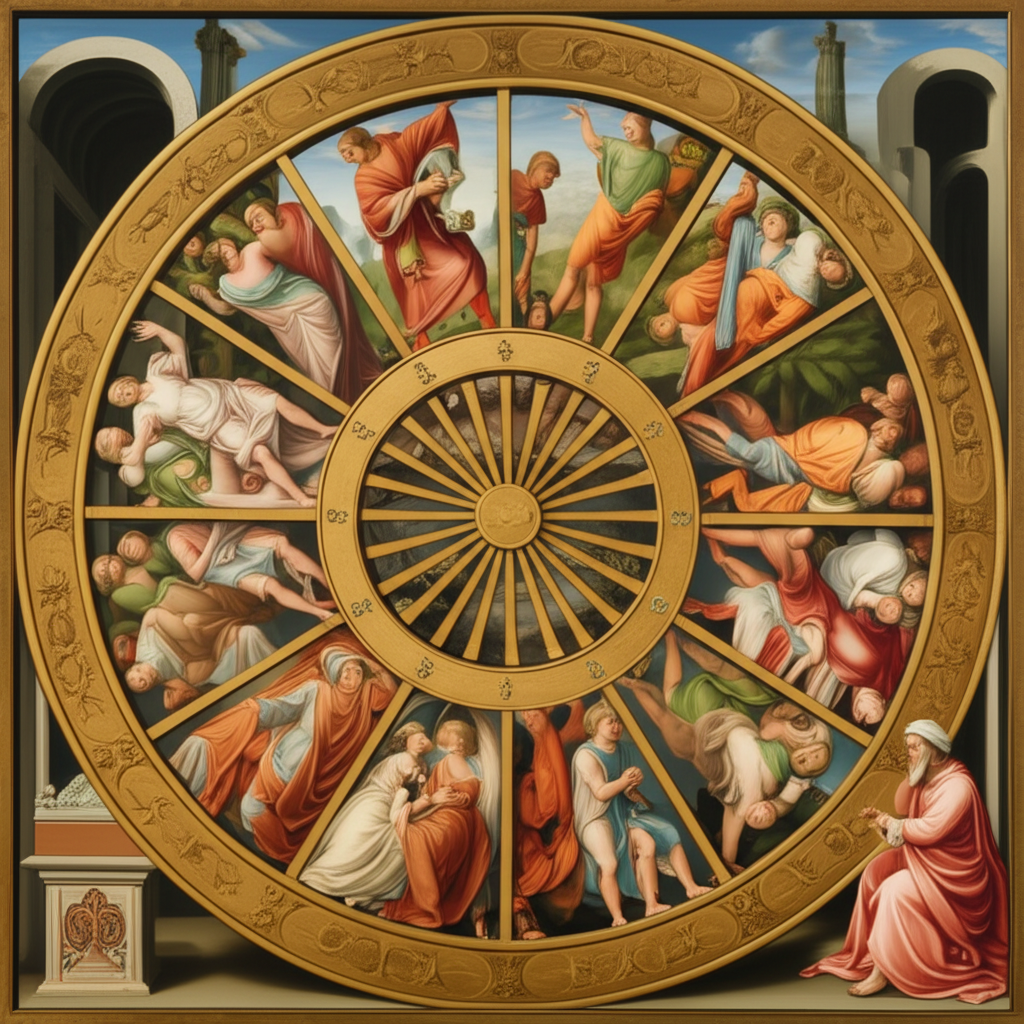
The World in Constant Metamorphosis
The globalized World we inhabit today exemplifies the ceaseless necessity of change. Technological advancements, ecological shifts, and interconnected economies mean that no nation or culture can remain truly isolated or static. The rise and fall of empires, the evolution of international law, and the ongoing redefinition of human rights all point to a dynamic reality where adaptation is not merely advantageous but essential for survival and progress.
Even when societies attempt to resist change, the underlying currents of demographic shifts, resource scarcity, ideological evolution, or external pressures often necessitate a response, leading to inevitable transformations, sometimes gradual, sometimes revolutionary. The necessity of change is thus not a philosophical abstraction but a lived reality, a fundamental law governing the trajectory of human civilization.
YouTube Suggestions:
- YouTube: "Hegel Philosophy of History Explained"
- YouTube: "Necessity and Contingency in Philosophy"
📹 Related Video: What is Philosophy?
Video by: The School of Life
💡 Want different videos? Search YouTube for: "The Necessity of Change in History philosophy"