

The Unceasing Current: Why Change is the Very Fabric of History
History is not merely a sequence of past events, but a dynamic and perpetually transforming narrative, where change emerges not as an anomaly, but as a fundamental and necessary condition. This article delves into the philosophical bedrock of this constant evolution, exploring the intricate relationship between necessity and contingency, and how this relentless flux shapes our understanding of the human story and the World itself. To comprehend history, we must first accept its inherent mutability.
The Irreducible Reality of Flux
From the fleeting moment to the grand sweep of civilizations, the human experience is defined by transformation. We often yearn for stability, for predictable patterns and enduring truths, yet history consistently presents us with a different reality: one of ceaseless motion. To truly engage with History is to confront Change as its primary characteristic. The crucial philosophical question then arises: Is this change merely a random succession of events, a series of accidents and happenstance, or is there a deeper, underlying necessity that drives the historical process? The answer, as we shall explore, lies in a complex interplay between the two.
The Inevitable Dance: Necessity and Contingency in Historical Unfolding
The philosophical problem of necessity and contingency lies at the heart of understanding historical change. Some transformations appear almost inevitable, driven by deep-seated forces that seem to propel societies along a particular trajectory. Consider the technological advancements that lead from agrarian to industrial, and then to information-based economies; these shifts often feel like an unstoppable current. Population growth, resource depletion, and the pursuit of knowledge are often seen as necessary drivers of societal evolution.
Yet, history is also replete with moments of profound contingency—events that seem accidental, unpredictable, and could have unfolded differently. A specific leader's decision, a sudden natural disaster, a chance encounter, or an unexpected discovery can dramatically alter the course of events. Ancient thinkers, pondering the roles of fate and free will, were grappling with an early form of this very tension. The truth is that both forces are always at play. A contingent event, like the assassination of an archduke, can trigger a series of events that appear almost necessary in their unfolding (e.g., the outbreak of a world war). Conversely, a necessary underlying condition, like economic inequality, might manifest in a contingent uprising whose timing and specific leaders could not have been predicted. It is in this dynamic, intricate dance between the determined and the accidental, that the rich tapestry of History is woven.
History as a River: Constant Flow, Shifting Banks
The metaphor of History as a river is particularly apt when considering the nature of Change. A river is never the same from one moment to the next; its waters are constantly flowing, eroding banks, depositing sediment, and carving new paths. Similarly, the historical landscape is in perpetual flux. Political systems rise and fall, empires expand and contract, ideologies emerge and obsolesce, and technologies redefine the very fabric of daily life.
This isn't merely about superficial alterations; it concerns fundamental structural shifts in societies, economies, cultures, and belief systems. The transformation from feudalism to capitalism, from monarchies to republics, or from oral traditions to mass literacy, represents profound and often irreversible change. To resist this fundamental flow often proves futile, leading to greater upheaval as underlying pressures eventually burst forth.
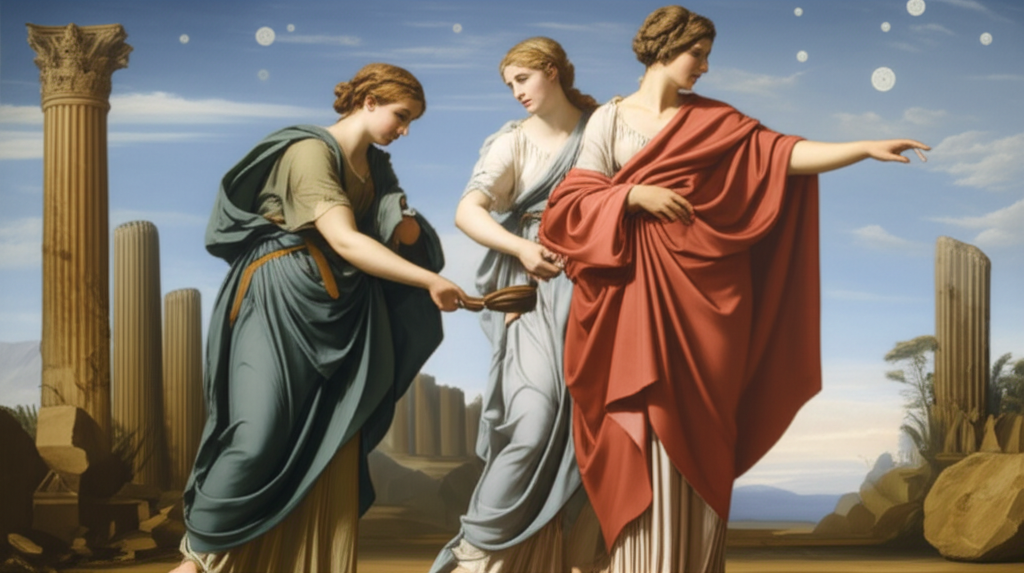
Philosophical Currents on Historical Transformation
Throughout the Great Books of the Western World, philosophers have grappled with the nature of historical change. Some, like many ancient Greeks, perceived history as largely cyclical, believing that societies and civilizations would rise, flourish, decay, and eventually return to a similar starting point, much like the seasons. Others, particularly during the Enlightenment and beyond, embraced a linear, progressive view, seeing history as a march towards greater reason, freedom, or material advancement, often driven by underlying forces or a grand design.
Whether through the dialectical clash of ideas as conceived by some German idealists or the material struggles between classes as posited by social theorists, a common thread emerges: Change is not an external imposition but an inherent characteristic of existence. Conflict, tension, and the constant striving for something new or different are often presented as the very engines that propel history forward, ensuring that stagnation is but a temporary illusion.
The World in Flux: A Global Tapestry of Transformation
The concept of Change extends far beyond individual nations or specific historical periods; it defines the very state of the World itself. In an increasingly interconnected global system, changes in one corner of the globe inevitably ripple outwards, affecting distant societies and cultures. Technological revolutions, such as the advent of the internet, have transformed communication, commerce, and social interaction across continents. Global pandemics demonstrate the fragility of borders in the face of biological realities. Climate shifts necessitate worldwide cooperation and adaptation.
No nation, culture, or civilization exists in a vacuum. All are integral parts of a larger, evolving global system where interdependencies ensure that local change can quickly become global change. Understanding this interconnectedness is crucial for navigating the complexities of the modern world.
The Human Element: Agents of Change and Architects of Resistance
While vast, impersonal forces often drive historical change, the human element remains profoundly significant. We are not merely passive recipients of historical momentum; individuals, groups, and movements are powerful agents of transformation. Visionary leaders, revolutionary thinkers, innovative scientists, and courageous activists have repeatedly demonstrated the capacity to redirect the course of History. Revolutions, scientific breakthroughs, and social reforms are all testaments to human agency.
Yet, humans also exhibit a powerful tendency to resist change. We cling to tradition, to established power structures, to familiar comforts, and to cherished beliefs. This inherent tension between the desire for permanence and the undeniable reality of flux is a constant, defining theme in History. It is this dynamic, between our longing for stability and our capacity for innovation and upheaval, that makes the human story so compelling and unpredictable.
Conclusion: Embracing the Unfolding Narrative
The necessity of change in history is not a pessimistic decree but a fundamental truth that invites deeper understanding. History is not a static archive but a living, breathing process, constantly being reshaped by the interplay of necessity and contingency. To comprehend the past, to navigate the present, and to anticipate the future, we must shed the illusion of permanence and embrace the unfolding narrative of Change. It is in this perpetual motion that the human story, and the story of the World, finds its enduring meaning.
YouTube Video Suggestions:
-
📹 Related Video: What is Philosophy?
Video by: The School of Life
💡 Want different videos? Search YouTube for: ""The Philosophy of Change: Heraclitus and Parmenides""
2. ## 📹 Related Video: PLATO ON: The Allegory of the Cave
Video by: The School of Life
💡 Want different videos? Search YouTube for: ""Hegel's Dialectic Explained: The Engine of History""