

The Enduring Quest: Unpacking the Nature of Universal Law
The concept of a "Universal Law" stands as one of philosophy's most enduring and profound inquiries, reaching far beyond the statutes of any human society. At its heart, this concept grapples with the existence of fundamental, unchanging principles that govern all reality, from the cosmos to human morality. It posits that there are truths inherent in the Nature of existence itself, truths that are not invented but discovered, and which apply equally to all, transcending cultural, temporal, and individual differences. This article delves into the philosophical exploration of these grand Principles, examining how they manifest as Law, and navigating the intricate relationship between the Universal and Particular in our quest to understand the fabric of reality.
Defining the Indefinable: What is Universal Law?
When we speak of Universal Law, we are not referring to the legislative decrees of governments or the conventions of social groups. Instead, we are exploring a deeper order – an inherent structure or set of rules believed to govern the universe, human reason, or moral conduct, independent of human will. Philosophers throughout history, from the pre-Socratics to modern thinkers, have sought to articulate these immutable truths. Is there a cosmic order that dictates the movement of planets and the growth of trees? Are there universal ethical imperatives that bind all rational beings? These are the questions at the core of understanding the Nature of Universal Law.
- Cosmic Law: The idea that the universe operates according to fixed, discoverable laws (e.g., laws of physics, natural cycles).
- Moral Law: The belief in inherent ethical principles that are universally binding, often tied to concepts of natural rights or duties.
- Logical Law: The foundational principles of reason and argumentation that hold true regardless of context.
Nature as the Architect: Observing the Cosmos
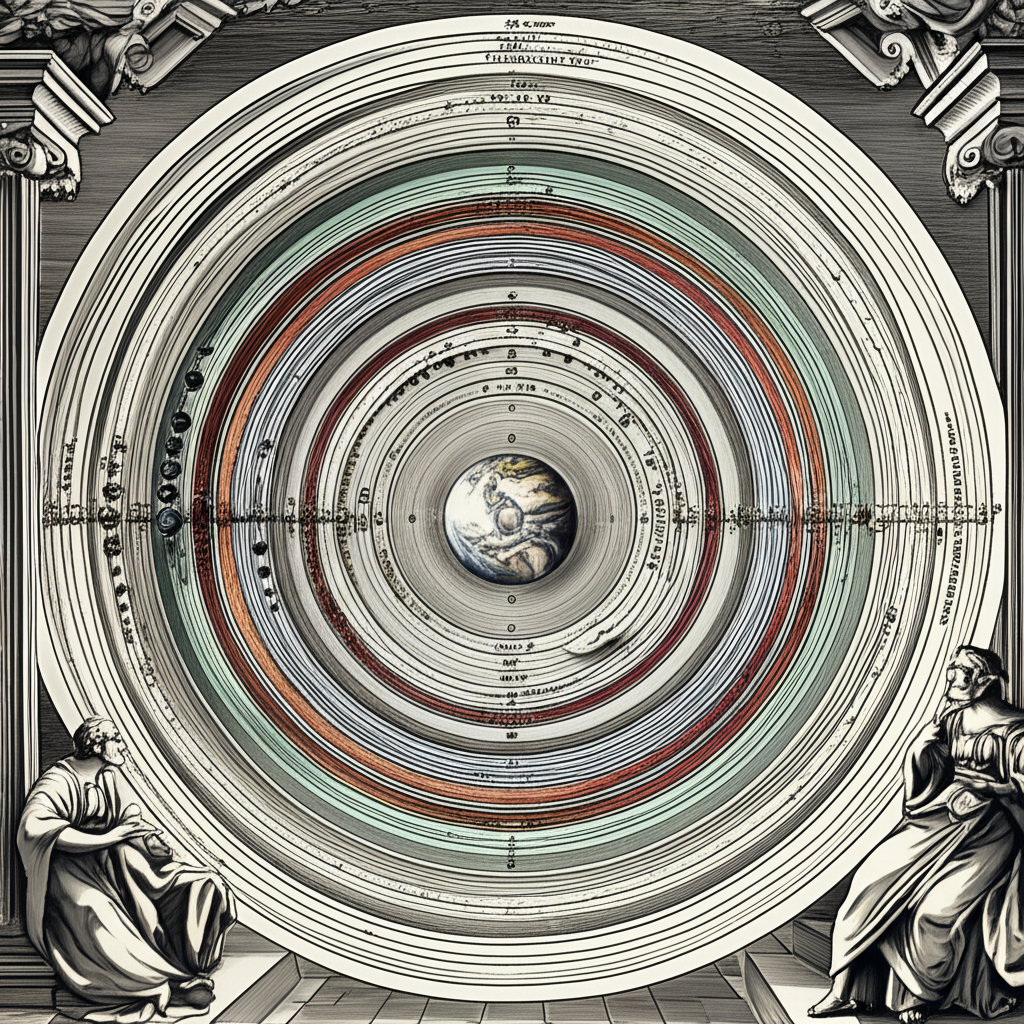
Many philosophical traditions find the source of Universal Law embedded within Nature itself. For ancient Greek thinkers, particularly the Stoics, the cosmos was a rational, ordered whole, governed by an overarching divine reason or logos. By observing the cycles of the seasons, the predictable movements of celestial bodies, and the inherent properties of matter, they posited that there must be an underlying intelligence or Principle at work. This perspective suggests that Universal Law is not something imposed from without, but rather emerges organically from the very fabric of existence. To live in accordance with Nature, therefore, was to live in harmony with these universal dictates, recognizing the inherent order that pervades all things.
The Dance of the Universal and Particular
One of the most profound challenges in comprehending Universal Law lies in reconciling its grand, overarching scope with the myriad of specific, Particular instances we encounter daily. How do universal principles manifest in the unique circumstances of individual lives, societies, and events?
| Aspect | Universal | Particular |
|---|---|---|
| Definition | Applies everywhere, always, without exception | Specific manifestation, context-dependent |
| Source | Inherent Principle, Nature, Reason | Individual experience, cultural norm, specific event |
| Example | The Law of gravity | An apple falling from a specific tree |
| Example | The Principle of justice | A specific court ruling in a particular case |
| Relationship | The general truth informing specific instances | The specific instance embodying the general truth |
Philosophers like Plato wrestled with this, positing a realm of perfect Forms (Universals) that particular objects in our world merely imitate. Aristotle, while emphasizing the particular, still sought universal essences within individual things. The tension between the Universal and Particular is crucial because it helps us understand how abstract Principles translate into concrete reality, and how we might discern the enduring Law amidst the ever-changing details of our experience.
From Principle to Practice: Implications for Humanity
The search for Universal Law is not merely an academic exercise; it carries profound implications for human ethics, governance, and our understanding of our place in the cosmos. If such laws exist, they provide a stable foundation for morality, suggesting that certain actions are inherently right or wrong, regardless of opinion. They could also offer a basis for international Law and universal human rights, grounded in shared Principles rather than mere agreement.
The enduring legacy of the Great Books of the Western World lies partly in their relentless pursuit of these fundamental questions. From the Socratic dialogues seeking universal definitions of virtue, to Kant's categorical imperative positing a universal moral Law derivable from reason, the quest for Universal Law continues to shape our understanding of ourselves and the world we inhabit. It invites us to look beyond the immediate and the subjective, to seek out the enduring Principles that give meaning and order to existence.
YouTube: "What is Natural Law Philosophy?"
YouTube: "Plato's Theory of Forms Explained"
📹 Related Video: What is Philosophy?
Video by: The School of Life
💡 Want different videos? Search YouTube for: "The Nature of Universal Law philosophy"