

The Enduring Enigma: Unpacking the Nature of Universal Law
The concept of Universal Law stands as a bedrock of philosophical inquiry, inviting us to ponder whether there exist fundamental principles that govern reality, morality, or human society, transciding the specificities of time, culture, and individual perspective. From the ancient contemplation of cosmic order to modern debates on human rights, the quest to understand the nature of these overarching laws has shaped our intellectual landscape. This article delves into the rich history of thought surrounding Universal Law, exploring its diverse interpretations and the perennial tension between the universal and particular that defines its application.
Tracing the Pedigree of Universal Law: A Historical Overview
Our journey into the nature of Universal Law begins with the foundational texts of Western thought, where thinkers grappled with the idea of an inherent order.
Ancient Insights: Cosmic Order and Rational Principles
The earliest stirrings of Universal Law can be found in the Greek concept of logos – a rational, ordering principle inherent in the cosmos. For Plato, as explored in works like The Republic, true reality resides in eternal, unchanging Forms, which serve as blueprints for all particular things. Justice, beauty, and goodness are not mere conventions but partake in these universal Forms, suggesting an objective moral and ontological structure.
Aristotle, while grounding his philosophy more in observation, also posited a natural order, emphasizing the inherent telos (purpose) of all beings. In his Nicomachean Ethics, he discusses natural justice, which "has the same force everywhere and does not depend on people's thinking this or that," contrasting it with conventional justice. This natural justice, a universal principle, guides what is inherently right for human flourishing.
The Stoics, represented in the Meditations of Marcus Aurelius or the Discourses of Epictetus, further developed this, seeing the universe as governed by divine reason (Logos). For them, living in accordance with Nature meant living in harmony with this universal law, making reason the ultimate guide for human conduct.
Medieval Syntheses: Divine Reason and Natural Law
The medieval period saw a profound integration of classical philosophy with theological doctrine. Thomas Aquinas, in his Summa Theologica, articulated a comprehensive hierarchy of laws:
- Eternal Law: The divine reason by which God governs the entire universe. This is the ultimate principle.
- Natural Law: The participation of rational creatures in the Eternal Law. It is knowable through human reason and directs us towards our natural ends (e.g., preserving life, procreating, seeking truth, living in society). This is the universal law accessible to all.
- Human Law: Specific ordinances devised by human reason for the common good, derived from or in conformity with Natural Law. These are the particular applications.
- Divine Law: Revealed by God (e.g., Ten Commandments), guiding humanity towards supernatural ends.
Aquinas' framework provided a powerful articulation of a universal moral and cosmic order, rooted in a divine intellect, yet discernible through human reason.
Enlightenment Perspectives: Reason, Rights, and Morality
The Enlightenment brought a renewed focus on individual reason and natural rights, shifting the locus of universal law from divine decree to inherent human faculties.
John Locke, in his Two Treatises of Government, argued that individuals possess inherent natural rights (life, liberty, property) that pre-exist government. These rights are derived from the Law of Nature, which "teaches all mankind... that being all equal and independent, no one ought to harm another in his life, health, liberty, or possessions." This universal principle forms the basis for legitimate governance and individual freedom.
Perhaps the most rigorous formulation of a universal moral law came from Immanuel Kant. In his Groundwork of the Metaphysics of Morals, he introduced the Categorical Imperative, a supreme principle of morality. Its most famous formulation is: "Act only according to that maxim whereby you can at the same time will that it should become a universal law." For Kant, moral actions are those that can be universalized without contradiction, meaning they apply to everyone, everywhere, at all times, regardless of particular circumstances or desires. This emphasis on reason and universalizability marked a profound shift in understanding the nature of moral obligation.
The Tension of Universal and Particular
One of the most persistent challenges in understanding Universal Law is the interplay between the universal ideal and its particular manifestation or application.
Table 1: Universal vs. Particular in Law
| Aspect | Universal Law | Particular Application/Human Law |
|---|---|---|
| Scope | Applies to all, across time and place | Specific to a given context, culture, or situation |
| Origin | Inherent in Nature, Reason, or Divine Will | Created by human convention, legislation, or custom |
| Characteristic | Immutable, foundational principle | Adaptable, contingent, detailed regulation |
| Example (Moral) | "Do not murder" (Kant's Categorical Imperative) | Specific laws defining homicide, self-defense exceptions |
| Example (Legal) | "Justice should be impartial" (Plato's Forms) | Procedural rules of a court, specific sentencing guidelines |
While a universal principle like "do not steal" might seem straightforward, its application in particular cases (e.g., stealing bread to feed a starving child, intellectual property rights in a digital age) can become immensely complex, highlighting the interpretive work required to bridge the gap.
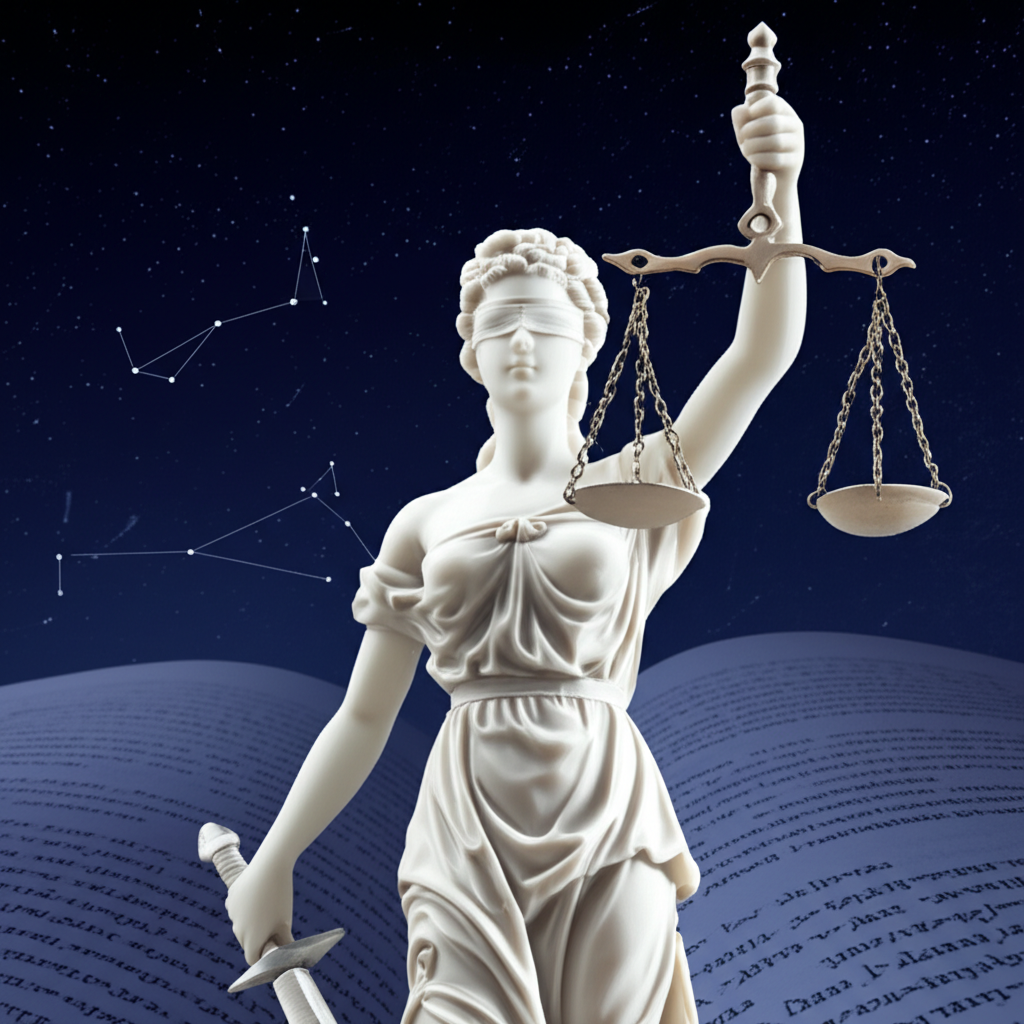
The Nature of Universal Law: Discovered or Constructed?
At the heart of our inquiry lies the question: Is Universal Law something we discover through reason, observation, or divine revelation, or is it something we construct as a society to facilitate order and cooperation?
- Discovery: Proponents of discovery often point to scientific laws (e.g., gravity, thermodynamics) as evidence of universal principles inherent in the physical Nature of the cosmos. Similarly, natural law theorists argue that fundamental moral tenets are discoverable through human reason, reflecting an objective moral order. The idea here is that these laws exist independently of human consciousness.
- Construction: Others argue that even seemingly universal moral or legal principles are, in fact, products of human agreement, cultural evolution, or power dynamics. While they may serve a universal human need for order, their specific forms are constructed. This perspective often highlights the historical and cultural variability of what is considered "lawful" or "moral."
The "Emily Fletcher" perspective here acknowledges that while the impulse to seek universal principles seems deeply ingrained in human nature, the precise articulation and enforcement of these laws are undeniably shaped by our collective human endeavors. The continuous dialogue across the Great Books of the Western World demonstrates this ongoing tension and the richness of the debate.
Conclusion: The Enduring Quest
The concept of Universal Law remains one of philosophy's most profound and persistent challenges. From the cosmic logos of the ancient Greeks to Kant's categorical imperative, the search for universal principles that transcend the particular has driven our understanding of Nature, morality, and society. Whether seen as divinely ordained, rationally discoverable, or socially constructed, the very idea of a universal law continues to serve as a critical benchmark against which we measure our individual actions, our societal structures, and our aspirations for a just and ordered world. The conversation, as ever, continues.
YouTube Video Suggestions:
-
📹 Related Video: PLATO ON: The Allegory of the Cave
Video by: The School of Life
💡 Want different videos? Search YouTube for: ""Great Books of the Western World Natural Law Aquinas""
2. ## 📹 Related Video: KANT ON: What is Enlightenment?
Video by: The School of Life
💡 Want different videos? Search YouTube for: ""Kant Categorical Imperative Universalizability explained""