

The Unfolding Tapestry: Exploring the Nature of Truth in Science
The quest for truth is perhaps the oldest and most persistent human endeavor, a thread woven through philosophy, religion, and art. Yet, when we turn our gaze to science, the nature of this truth takes on a particularly fascinating and often misunderstood character. Science, often heralded as the ultimate arbiter of fact, provides us with an unparalleled method for acquiring knowledge about the natural world. But what kind of truth does it offer, and how does it differ from other forms of understanding? This article delves into the dynamic and often provisional nature of scientific truth, exploring its foundations, its evolution, and its profound implications for our understanding of reality.
The Elusive Core: Defining Truth in a Scientific Context
At its heart, science seeks to explain phenomena, predict outcomes, and understand the underlying mechanisms of the universe. In this pursuit, "truth" is not always a static, absolute declaration, but rather a dynamic state of the best available explanation supported by robust evidence.
Consider the classic philosophical perspectives on truth:
- Correspondence Theory: A statement is true if it corresponds to reality. In science, this is often the ideal – a theory is true if it accurately describes how the world is.
- Coherence Theory: A statement is true if it fits logically and consistently within a larger system of beliefs or knowledge. Scientific theories gain strength by cohering with other established scientific principles.
- Pragmatic Theory: A statement is true if it is useful or effective in practice. Scientific theories are validated by their predictive power and their utility in solving problems.
While all these theories play a role, scientific truth leans heavily on the correspondence theory, yet it is always tempered by the understanding that our correspondence is ever-improving, never final.
Science as a Rigorous Path to Knowledge
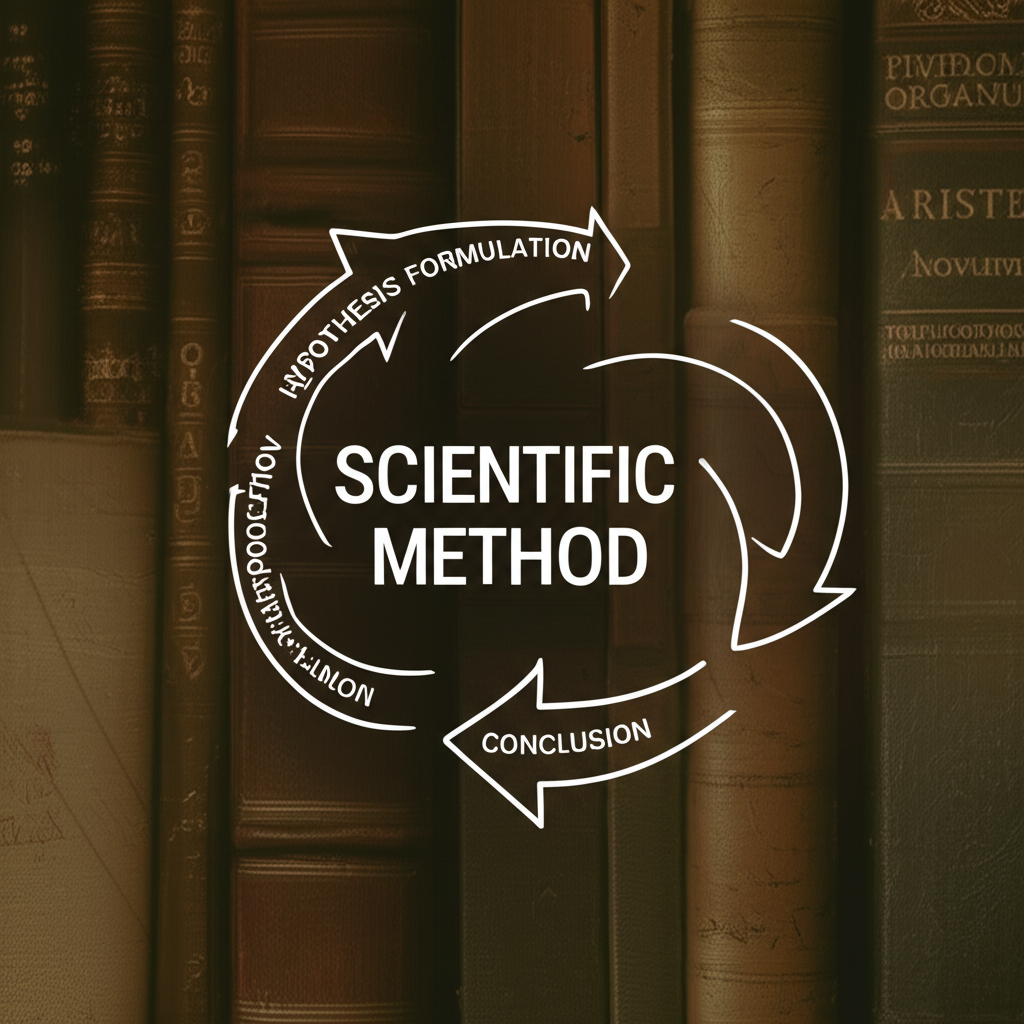
The scientific method is the bedrock upon which scientific knowledge is built. It is a systematic approach designed to minimize bias and maximize the reliability of our findings.
Key Components of the Scientific Method:
- Observation & Questioning: Identifying phenomena and formulating questions about them.
- Hypothesis Formulation: Proposing a testable explanation for the observation. This is an educated guess, a provisional answer.
- Experimentation & Data Collection: Designing and conducting experiments to test the hypothesis, gathering empirical data.
- Analysis & Interpretation: Examining the data for patterns, relationships, and statistical significance.
- Conclusion & Refinement: Determining if the data supports or refutes the hypothesis. If refuted, the hypothesis is modified or discarded, and the process may begin anew.
This iterative process of observation, hypothesis, experimentation, and refinement highlights the provisional nature of scientific truth. A scientific theory, unlike a mere hypothesis, is a well-substantiated explanation of some aspect of the natural world, based on a body of facts that have been repeatedly confirmed through observation and experiment. It is not an unproven guess, but rather a robust framework of knowledge.
The Evolving Landscape of Scientific Truth
One of the most profound aspects of scientific truth is its dynamic and evolving nature. Unlike certain philosophical or religious truths that may be considered immutable, scientific truths are always open to revision in light of new evidence or more refined understanding.
Consider the following points:
- Falsifiability: As Karl Popper famously argued, a scientific theory must be falsifiable. This means it must be possible to conceive of an experiment or observation that could prove the theory wrong. Theories that cannot be falsified (e.g., "invisible leprechauns cause all good luck") are not considered scientific. This criterion underscores that scientific truth is always held tentatively.
- Paradigm Shifts: Thomas Kuhn, in The Structure of Scientific Revolutions, introduced the concept of "paradigm shifts." He argued that scientific progress isn't always a linear accumulation of facts but can involve radical changes in fundamental assumptions and theories. The shift from a geocentric to a heliocentric model of the universe, or from Newtonian physics to Einsteinian relativity, are prime examples. These shifts demonstrate that even deeply entrenched scientific "truths" can be overturned by more comprehensive or accurate explanations.
- Progressive Refinement: More often, scientific truth evolves through continuous refinement. Our understanding of gravity, disease, or the universe expands and becomes more nuanced with each new discovery, rather than being completely discarded. The knowledge we gain today builds upon, clarifies, and sometimes corrects yesterday's insights.
This constant re-evaluation is not a weakness but the very strength of science. It is a self-correcting mechanism, ensuring that our understanding of nature becomes progressively more accurate and comprehensive.
Distinguishing Scientific Truth from Other Forms of Truth
It is crucial to understand that scientific truth operates within a specific domain and methodology. It primarily concerns the observable, measurable, and testable aspects of the natural world. Other forms of truth exist, and they serve different human needs and employ different criteria.
- Philosophical Truth: Explores fundamental questions about existence, knowledge, values, reason, mind, and language. It often relies on logical argumentation, introspection, and conceptual analysis rather than empirical experimentation.
- Artistic Truth: Concerns emotional resonance, aesthetic experience, and the representation of human experience or inner reality. It doesn't claim factual accuracy but seeks to evoke understanding or feeling.
- Religious Truth: Often based on faith, revelation, sacred texts, or spiritual experience. It typically addresses questions of meaning, purpose, and morality, operating outside the empirical domain of science.
Science does not claim to hold a monopoly on all forms of truth, nor does it typically offer answers to questions of ultimate purpose or moral injunctions. Its domain is the empirically verifiable, and within that domain, its method for acquiring knowledge is unparalleled.
The Enduring Quest for Knowledge
The nature of truth in science is thus complex: it is empirical, provisional, falsifiable, and constantly evolving. It is not an absolute, immutable decree, but rather the most reliable and rigorously tested knowledge we possess about the workings of the universe at any given moment. This dynamic quality is precisely what makes science so powerful and enduring. It is a continuous conversation with nature, a perpetual refinement of our understanding, always open to new evidence and deeper insights. As we continue to explore the cosmos and the microscopic world, the tapestry of scientific truth will undoubtedly continue to unfold, revealing ever more intricate and awe-inspiring patterns.
YouTube Video Suggestions:
-
📹 Related Video: ARISTOTLE ON: The Nicomachean Ethics
Video by: The School of Life
💡 Want different videos? Search YouTube for: "Karl Popper Falsifiability Explained"
-
📹 Related Video: PLATO ON: The Allegory of the Cave
Video by: The School of Life
💡 Want different videos? Search YouTube for: "Thomas Kuhn Paradigm Shifts Science"