

The Elusive Nature of True Opinion (Doxa): Bridging Belief and Knowledge
Summary:
This article delves into "Doxa," or true opinion, a concept originating in ancient Greek philosophy that remains profoundly relevant today. We explore how an opinion can be true without constituting genuine knowledge, dissecting the crucial distinction between merely holding a correct belief and possessing justified understanding. Examining the role of sense perception and rational justification, we uncover why Doxa, while often useful, remains distinct from the stable, reasoned certainty of knowledge, and why grappling with this distinction is vital for our pursuit of truth.
The Shifting Sands of Belief: What is Doxa?
In the vast landscape of human thought, few concepts are as foundational yet as frequently misunderstood as doxa. For the ancient Greeks, particularly Plato, doxa represented common belief, popular conviction, or simply opinion. It’s the realm of what we think is true, often based on sense experience, hearsay, or unexamined assumptions, rather than rigorous reasoning.
Consider the everyday: "I believe it will rain today," or "This path is the quickest way home." These are opinions. They might turn out to be true, or they might not. The critical philosophical challenge arises when an opinion is true. How do we distinguish a true opinion from genuine knowledge? This question lies at the heart of Plato's epistemology, particularly in dialogues like the Meno and the Republic.
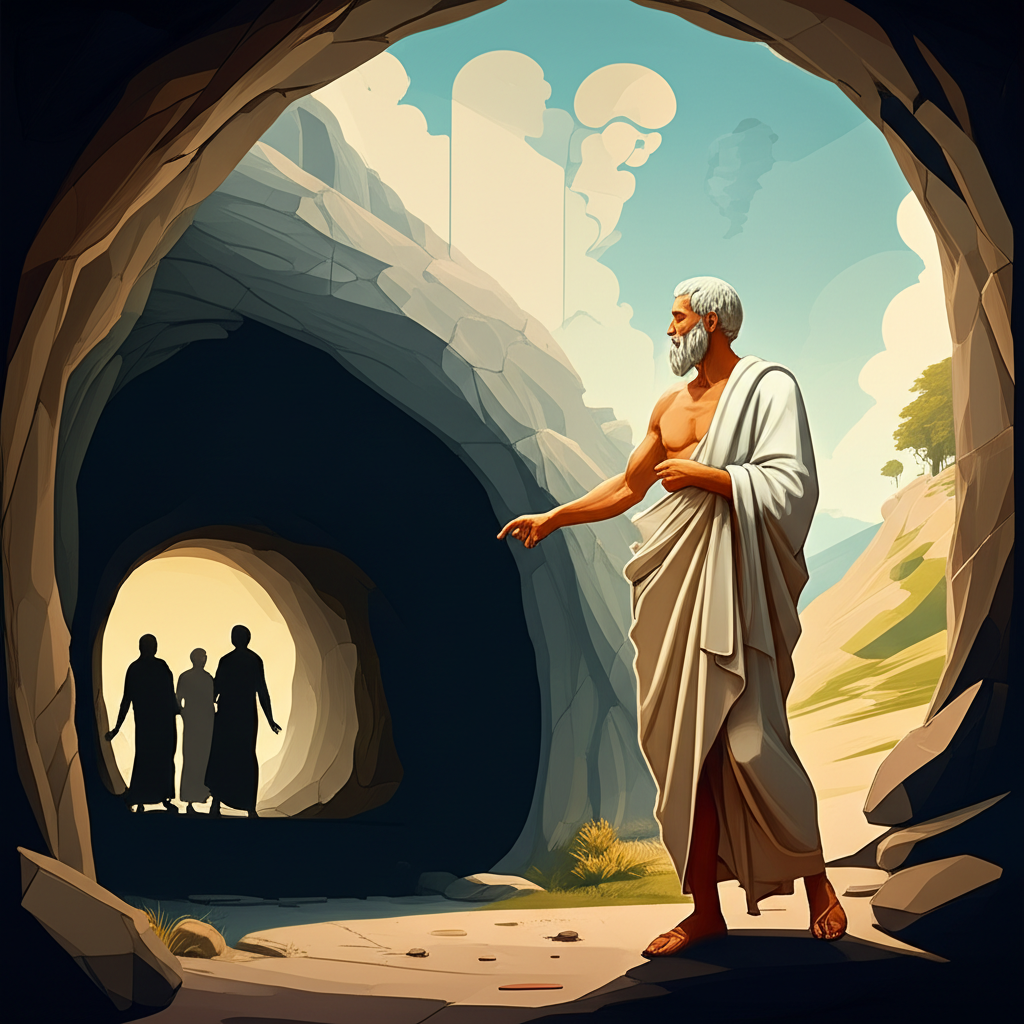
The Conundrum of True Opinion: When Belief Aligns with Reality
Imagine someone who, purely by chance, guesses the correct answer to a complex mathematical problem. Their answer is true, but do they possess knowledge of mathematics? Plato would argue no. Their correct answer is merely a true opinion. They cannot explain why it is true, nor can they consistently replicate the process.
This is the core of the problem: a true opinion, while factually correct, lacks the necessary justification or understanding that elevates it to knowledge. It's like having the right directions to a city without knowing the geography, the landmarks, or how to read a map. You might arrive, but your success is precarious and unrepeatable without deeper understanding.
- The Unstable Nature of Doxa: True opinions, Plato suggests, are like the statues of Daedalus – beautiful and lifelike, but prone to running away unless "tied down." This "tying down" is the work of reason, of providing an account, a logos, for why the opinion is true.
- The Role of Sense Experience: Our sense perceptions are primary sources of doxa. We see, hear, touch, and form beliefs about the world. While these perceptions can lead to true opinions (e.g., "The fire is hot"), they don't inherently provide the underlying principles or causes.
Doxa vs. Episteme: A Fundamental Distinction
To truly grasp the nature of true opinion, we must contrast it with episteme, or knowledge. This distinction is central to the Great Books of the Western World and continues to inform modern epistemology.
Here’s a breakdown of their key differences:
| Feature | Doxa (Opinion) | Episteme (Knowledge) |
|---|---|---|
| Foundation | Belief, sense experience, persuasion, custom | Reason, understanding, justification, demonstration |
| Stability | Fleeting, changeable, easily swayed | Stable, firm, enduring |
| Justification | Lacks a reasoned account; often accidental | Requires a logos (rational explanation) |
| Reliability | May be correct by chance; not consistently reliable | Consistently reliable and repeatable |
| Scope | Particular instances, empirical observations | Universal principles, necessary truths |
| Origin | External influences, unexamined assumptions | Internal intellectual grasp, insight |
The Path from True Opinion to Knowledge: Tying Down Belief
Plato, particularly in the Meno, illustrates the journey from true opinion to knowledge. He argues that true opinions, while valuable, are not as good as knowledge because they are not tethered by reasoning. If you know the way to Larissa, you can guide others and understand alternatives. If you merely have a true opinion about the way, you might get there, but you can’t explain why that way works, nor can you adapt if obstacles arise.
The transformation occurs when we:
- Seek Justification: Ask "Why?" and "How do I know this is true?"
- Provide an Account (Logos): Articulate the reasons, evidence, and logical steps that support the belief.
- Understand Causes: Grasp the underlying principles or causes that make the opinion true.
This process moves us beyond mere belief to an understanding of the necessity of the truth. It’s the difference between memorizing a formula and understanding the mathematical principles behind it.
Why Does This Matter? The Enduring Relevance of Doxa
Understanding the nature of true opinion is not merely an academic exercise; it has profound implications for our lives:
- Critical Thinking: It encourages us to question our own beliefs and those of others, distinguishing between well-reasoned arguments and persuasive rhetoric.
- Decision-Making: Relying solely on true opinions can lead to fragile decisions. True knowledge provides a more robust foundation for action.
- Education: True education aims to move students beyond memorization (true opinion) to genuine understanding (knowledge), fostering the ability to reason and justify.
- Societal Discourse: In an age of information overload, discerning between well-founded arguments and popular, yet unexamined, opinions is more crucial than ever for a healthy public sphere.
The pursuit of truth is not simply about having correct answers, but about understanding why those answers are correct. True opinion is a valuable starting point, a guide that points us in the right direction. But it is only through the rigorous work of reason and justification that we can truly arrive at the stable and enduring edifice of knowledge.
📹 Related Video: PLATO ON: The Allegory of the Cave
Video by: The School of Life
💡 Want different videos? Search YouTube for: "Plato's Meno True Opinion Explained"
📹 Related Video: What is Philosophy?
Video by: The School of Life
💡 Want different videos? Search YouTube for: "Doxa vs Episteme Explained Philosophy"