

The Elusive Glimmer: Unpacking the Nature of True Opinion (Doxa)
Summary: This article delves into the philosophical concept of doxa, or opinion, particularly focusing on what constitutes a "true opinion." Drawing heavily from the Great Books of the Western World, we explore the crucial distinction between mere belief and genuine knowledge, examining how an opinion can align with truth without possessing the robust justification that elevates it to the status of knowledge. We will investigate the role of sense experience in forming opinions and the philosophical implications of relying on beliefs that are true but lack a deeper understanding.
Introduction: The Shifting Sands of Belief
As Daniel Sanderson, I've always been fascinated by the subtle yet profound distinctions that underpin our understanding of reality. We live in a world awash with opinions – about politics, science, ethics, and even the weather. But what does it truly mean for an opinion to be "true"? This isn't just a semantic quibble; it's a foundational question that has occupied philosophers for millennia, particularly in ancient Greece. The term doxa (δόξα) encapsulates this idea, referring to common belief or opinion, often contrasted with episteme (ἐπιστήμη), or knowledge.
The journey through the Great Books reveals that while a true opinion might seem sufficient, philosophers from Plato onwards have warned against mistaking it for the real deal: knowledge. This exploration will unpack that critical difference, illuminating why the nature of true opinion is both alluring and potentially misleading.
Doxa vs. Episteme: A Fundamental Divide
The bedrock of this discussion lies in the ancient Greek distinction between doxa and episteme. Plato, a towering figure in the Great Books, meticulously explored this in dialogues such as the Meno and the Theaetetus. For Plato, an opinion, even a true one, is like a beautiful statue by Daedalus: it's correct and looks real, but it can "run away" if not "tied down" by reason and justification.
- The Platonic Dichotomy: In the Meno, Socrates famously argues that true opinions, while useful, are unstable. A man might have a true opinion about the road to Larissa, and he will guide you correctly. But if he doesn't know why that road is correct, his true opinion is no more reliable than someone who has true knowledge of the route. The latter can explain why it's the right path, offering reasons and justifications that solidify his understanding.
- The Problem of Justification: This is the crux. What separates true opinion from knowledge is the presence of a rational account or justification. To truly know something isn't just to believe it correctly, but to understand why it is true, to be able to defend it with reasoned arguments, and to connect it to a broader web of understanding. Without this "tying down," a true opinion remains vulnerable to change, forgetfulness, or being swayed by sophistry.
To clarify this crucial difference, consider the following:
| Feature | True Opinion (Doxa) | Knowledge (Episteme) |
|---|---|---|
| Accuracy | Aligns with truth (factually correct) | Aligns with truth (factually correct) |
| Justification | Lacks robust, reasoned explanation; often intuitive | Possesses strong, reasoned, and coherent justification |
| Stability | Unstable; can be forgotten, swayed, or unexamined | Stable; grounded in understanding and reason |
| Origin | Often from sense experience, hearsay, intuition | From reason, inquiry, demonstration, understanding |
| Understanding | "What" is true, but not necessarily "why" | "What" is true, and a deep understanding of "why" |
| Utility | Can be practically useful | Fundamentally reliable and explanatory |
The Peculiar Case of "True" Opinion
How, then, does an opinion become "true"? Often, it's a matter of alignment. My belief that it will rain today might be a true opinion if, indeed, it does rain. This belief might be based on my sense perception of dark clouds and a damp smell in the air. My senses provide me with data, and I form an opinion. If that opinion happens to correspond with reality, it is a true opinion.
- When Belief Aligns with Reality: A student might correctly guess the answer to a complex math problem without understanding the underlying principles. Their opinion is true, but it's not knowledge. They got it right, but they can't reliably replicate the process or explain their reasoning.
- The Role of Sense Experience: Our senses are powerful tools for gathering information, and they form the basis of countless true opinions. I see a red apple, and I form the opinion that "the apple is red." This is a true opinion. However, this relies on the fallibility of my senses and my interpretation. Is the apple truly red, or is it merely appearing red under this specific light? Knowledge would involve understanding the physics of light, color perception, and the properties of the apple's surface.
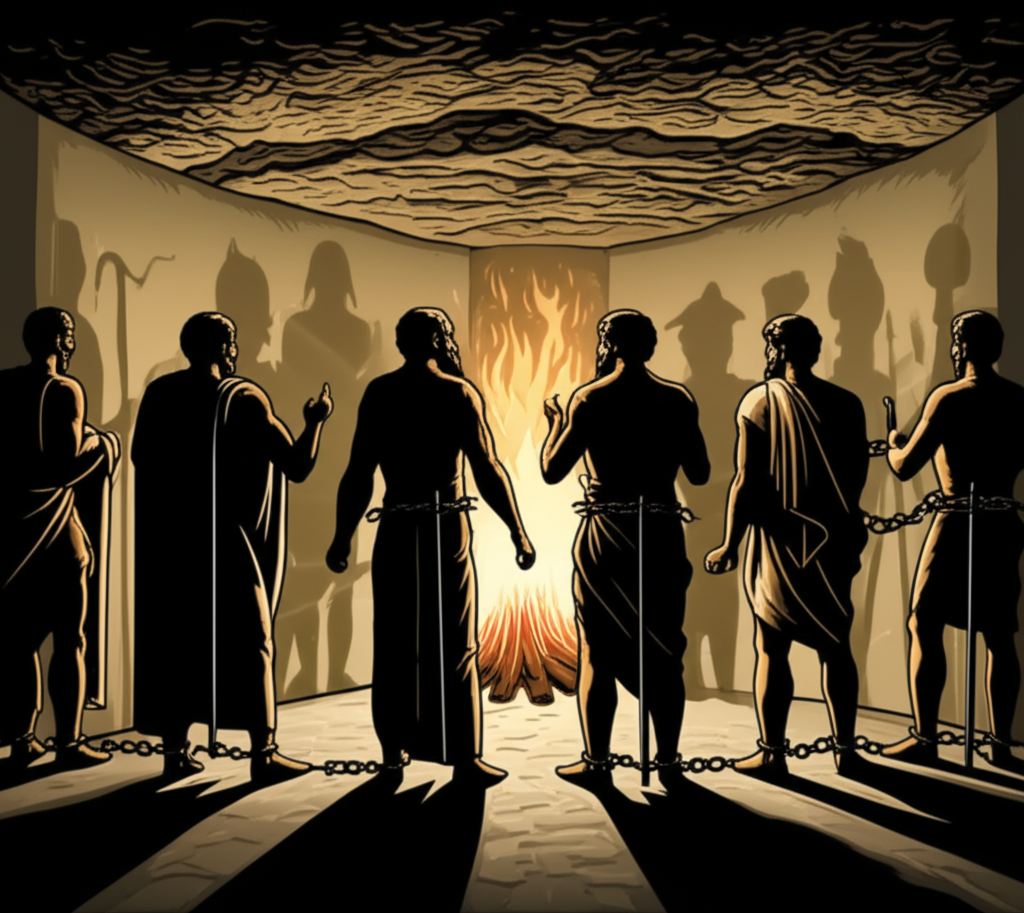
The Perils and Promises of Doxa
While true opinion can be incredibly useful – allowing us to navigate daily life, make quick decisions, and even achieve practical successes – relying solely on it carries significant risks.
- The Danger of Unjustified Beliefs: Without the anchor of knowledge, true opinions can be fragile. They can be easily shaken by counter-arguments, new evidence that isn't fully understood, or even just a lapse in memory. A doctor with a true opinion about a diagnosis, but without the knowledge of the disease's mechanisms, might struggle to adapt if the patient presents with unusual symptoms.
- The Stepping Stone to Knowledge: Yet, doxa isn't entirely without merit. It often serves as the initial spark, the hypothesis, or the intuition that prompts deeper inquiry. The person who correctly believes it will rain might then be inspired to study meteorology, transforming their true opinion into robust knowledge. It is the starting point from which philosophical and scientific investigation often begins. The Socratic method, for instance, frequently begins by examining commonly held opinions to expose their inconsistencies and push towards more reasoned conclusions.
From Opinion to Understanding: The Quest for Justification
The journey from true opinion to knowledge is fundamentally a quest for justification. It's about moving beyond "what is" to "why it is."
- The Socratic Method: Socrates, as portrayed in the Great Books, relentlessly challenged the opinions of his fellow Athenians. He didn't just want to know what they believed, but why they believed it. By exposing the lack of justification in many true opinions, he aimed to humble his interlocutors and set them on the path to genuine knowledge.
- The Path of Reason: This path involves critical thinking, logical analysis, empirical verification, and sustained reflection. It's the hard work of "tying down" our beliefs with sound arguments, understanding their premises, and exploring their implications. It's the difference between merely saying "Justice is good" (a true opinion for most) and being able to articulate a comprehensive theory of justice (which approximates knowledge).
Conclusion: Embracing the Nuance of Belief
The nature of true opinion, or doxa, is a complex and vital subject. It highlights the vast landscape between simply being correct and truly understanding. While a true opinion can guide us effectively in many situations, the philosophical tradition, particularly as found in the Great Books of the Western World, consistently reminds us that it is not the ultimate goal.
The pursuit of knowledge – the reasoned, justified, and stable understanding of truth – remains the higher aspiration. Recognizing the difference between a fleeting, lucky guess and a deeply understood principle empowers us not only to think more critically about our own beliefs but also to navigate a world brimming with assertions, distinguishing those that merely seem true from those that are genuinely grounded in reason and insight.
YouTube: Plato Meno true opinion knowledge
YouTube: Allegory of the Cave explained
📹 Related Video: What is Philosophy?
Video by: The School of Life
💡 Want different videos? Search YouTube for: "The Nature of True Opinion (Doxa) philosophy"