

The Shifting Sands of Belief: Unpacking the Nature of True Opinion (Doxa)
A Glimpse into the Ephemeral: Understanding Doxa
In the grand tapestry of philosophical inquiry, few concepts are as fundamental, yet as often misunderstood, as Doxa – opinion. This article delves into the nature of true opinion, exploring its intricate relationship with truth, knowledge, and the often-deceptive inputs of our senses. Drawing from the wisdom embedded in the Great Books of the Western World, we will navigate the terrain where belief resides, distinguishing mere conviction from justified understanding, and examining whether an opinion, even if true, can ever truly stand as knowledge.
The Realm of Appearance: Where Opinions Take Root
From the bustling agora of ancient Athens to the digital forums of today, human discourse is awash with opinions. But what, precisely, is an opinion in a philosophical sense? The ancient Greeks, particularly Plato, made a crucial distinction. Doxa refers to belief, common perception, or conviction, often derived from sense experience or societal consensus. It is the realm of appearances, the ever-changing phenomenal world, rather than the unchanging, intelligible Forms.
Consider the weather: one might have the opinion that it will rain based on dark clouds. This opinion, though potentially true, is contingent, based on observation, and lacks the foundational certainty of, say, a mathematical proof. It is shaped by our immediate perceptions and interpretations, which can be both illuminating and misleading.
Can an Opinion Be "True"? The Meno Paradox
This brings us to a critical question: can an opinion be true? Plato, in his dialogue Meno, grapples with this very idea. Socrates famously demonstrates that Meno's slave boy, through careful questioning, can arrive at a true geometric proposition without prior formal training. This suggests the possibility of true opinion – a belief that happens to align with reality.
However, Socrates immediately highlights a significant caveat:
"True opinions are a fine thing and do all the good that knowledge does, but they are not willing to remain long, and they escape from a man's mind, so that they are not worth much until one tethers them by working out the reason."
This "tethering" is the key. An opinion, even if true, lacks the stability and explanatory power of knowledge. It might be a lucky guess, a correct intuition, or a belief adopted without full understanding of why it is true. Without that understanding, without the ability to "give an account" (λογον διδοναι), the true opinion is fragile, easily forgotten or swayed.
The Crucial Divide: Doxa vs. Episteme (Knowledge)
The distinction between Doxa and Episteme (knowledge) is perhaps one of the most enduring contributions of classical philosophy. While true opinion might get us to the right answer, knowledge understands the underlying principles, the justifications, the immutable reasons why that answer is true.
Let's illustrate with a table:
| Feature | Doxa (Opinion) | Episteme (Knowledge) |
|---|---|---|
| Foundation | Sense experience, perception, belief, hearsay | Reason, understanding, justification, immutable Forms |
| Stability | Unstable, easily swayed, forgotten | Stable, enduring, difficult to dislodge |
| Justification | Often lacking, based on 'what seems to be' | Requires 'giving an account,' understanding 'why' |
| Nature | Contingent, particular, relative | Universal, necessary, absolute |
| Example | "I believe this road leads to the city." | "I know this road leads to the city because I have studied the map and understand its geographical relation to the landmarks." |
Knowledge, therefore, is not merely having a correct belief; it is having a correct belief and understanding the rational grounds that make it true. It is the difference between blindly following a recipe and understanding the chemistry of cooking.
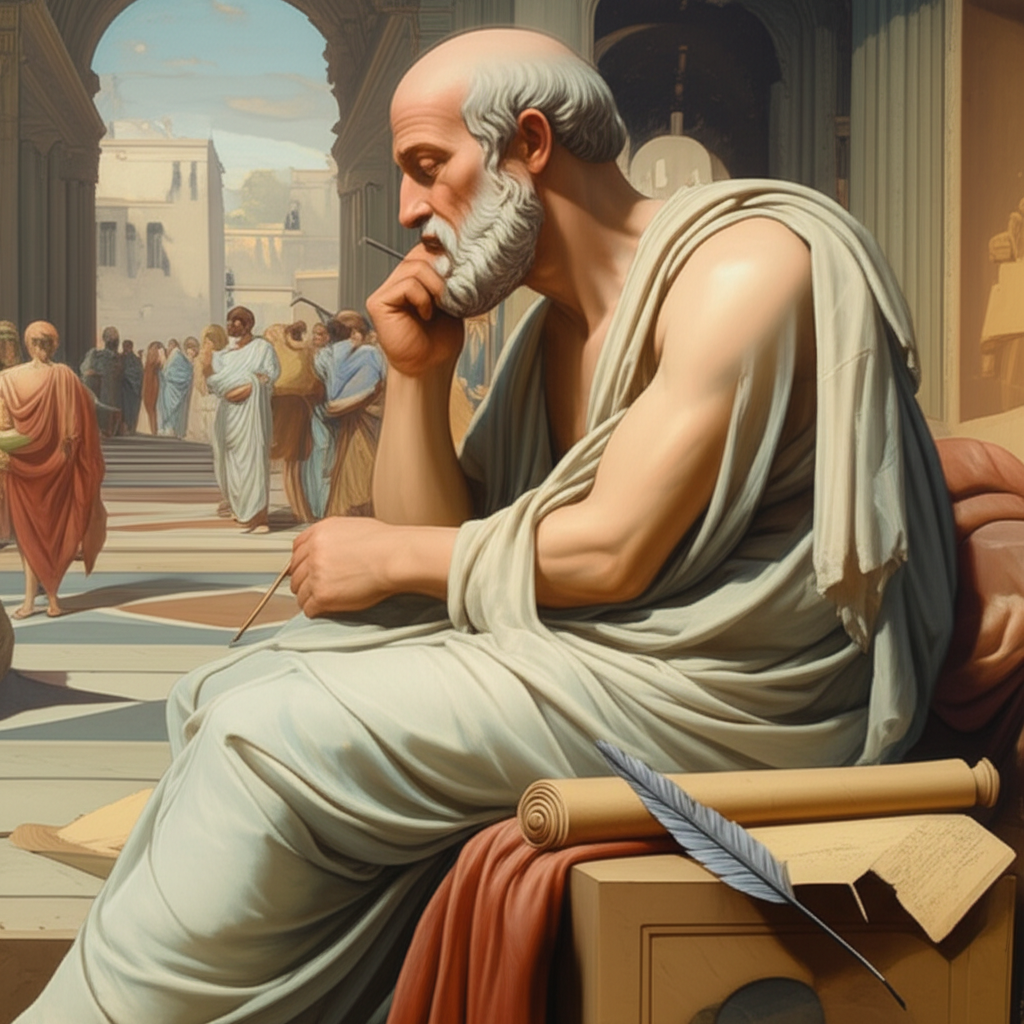
The Role of Sense and the Perils of Unexamined Doxa
Our senses are our primary interface with the world, and thus, they are the fertile ground for the formation of opinions. We see, hear, touch, taste, and smell, and from these raw data, we construct our understanding of reality. However, as Plato's Allegory of the Cave powerfully demonstrates, our senses can be deeply misleading. The shadows on the cave wall are opinions based on limited, indirect sensory input, mistaken for reality itself.
Unexamined Doxa, particularly that rooted solely in uncritical sense perception or popular consensus, can be dangerous. It can lead to prejudice, error, and a resistance to deeper understanding. The pursuit of truth demands that we scrutinize our opinions, questioning their origins, challenging their foundations, and seeking the justifications that can elevate them from mere belief to genuine knowledge.
From Opinion to Understanding: The Philosophical Journey
The journey from Doxa to Episteme is the very essence of philosophical inquiry. It is the disciplined effort to move beyond what merely seems to be true and to grasp what is true, grounded in reason and demonstrable understanding. While true opinion can be valuable in practical terms – it might lead us to the correct action – it remains fundamentally insecure without the accompanying rational explanation.
Therefore, understanding the nature of true opinion is not merely an academic exercise. It is a call to intellectual humility, urging us to constantly question our beliefs, to seek deeper justifications, and to strive for the stable, enduring understanding that defines true knowledge.
📹 Related Video: PLATO ON: The Allegory of the Cave
Video by: The School of Life
💡 Want different videos? Search YouTube for: "Plato Meno True Opinion Knowledge"
📹 Related Video: PLATO ON: The Allegory of the Cave
Video by: The School of Life
💡 Want different videos? Search YouTube for: "Epistemology Plato Doxa Episteme"