

Beyond Mere Belief: Unpacking the Nature of True Opinion (Doxa)
The world is awash with opinions, some fleeting, some deeply held. But what happens when an opinion, by sheer chance or astute observation, happens to be true? Is such a "true opinion" the same as knowledge? This article delves into the philosophical concept of doxa, or opinion, exploring its relationship with truth and knowledge, and examining the critical role our sense perceptions play in its formation. Drawing from the enduring insights of the Great Books of the Western World, we'll argue that while a true opinion can guide us, it fundamentally lacks the robust justification and understanding that defines genuine knowledge, challenging us to look beyond mere belief.
The Shifting Sands of Belief: Introducing Doxa
From the ancient Agora to the digital town square, human discourse is largely a symphony of opinion. We express beliefs about politics, art, science, and morality with varying degrees of certainty. But what, precisely, is an opinion? In the philosophical tradition, particularly through the lens of Plato, this concept is captured by the Greek term doxa. Doxa represents the realm of common belief, popular perception, and often, unexamined assumptions. It's the everyday understanding we accumulate, often without rigorous proof or deep insight.
Doxa Defined: The Realm of Human Opinion
Doxa is inherently tied to our experiential world. It arises primarily from our sense perceptions and empirical observations. We see, hear, touch, taste, and smell, and from these sensory inputs, we form conclusions about reality. If the sky is grey, we form the opinion that it might rain. If a trusted friend tells us something, we form the opinion that it's likely true. These opinions, while often practical and necessary for navigating daily life, are characterized by their contingent nature. They are often:
- Unjustified: Lacking a clear, rational explanation for why they are true.
- Changeable: Subject to new experiences or persuasive arguments.
- Particular: Focused on specific instances rather than universal truths.
This is where the ancient philosophers, particularly Plato, drew a stark line. For them, doxa stood in contrast to episteme, or true knowledge. Episteme was stable, justified, and concerned with unchanging, universal truths, often accessible only through reason.
The Fortuitous Alignment: When Opinion Strikes Truth
Here lies the intriguing paradox: an opinion can, in fact, be true. Imagine someone who, never having studied meteorology, happens to opine that it will rain tomorrow, and indeed, it does. Their opinion was true. Or consider a doctor who, without fully understanding the underlying pathology, correctly diagnoses a rare illness based on a gut feeling. Again, a true opinion.
This concept is famously explored in Plato's Meno, where Socrates illustrates that a person with a "right opinion" about how to get to Larissa can guide others just as effectively as someone with knowledge of the route. Both arrive at the correct destination. So, if a true opinion leads to the same practical outcome as knowledge, why bother with the distinction?
The Unbridgeable Chasm: From True Opinion to Enduring Knowledge
The crucial difference between a true opinion and genuine knowledge lies in justification, explanation, and understanding. While a true opinion merely gets it right, knowledge understands why it is right. It possesses the "reasons why" (the logos) that elevate it beyond mere belief.
Consider the example of the road to Larissa. The person with true opinion knows that this is the way. The person with knowledge knows that this is the way because of the landmarks, the terrain, the historical context, and can explain these connections. Their understanding is anchored, not just lucky.
| Feature | True Opinion (Doxa) | Knowledge (Episteme) |
|---|---|---|
| Foundation | Sense perception, experience, hearsay, intuition | Reason, understanding, justified argument |
| Nature | Unstable, contingent, particular, unexamined | Stable, universal, explanatory, justified |
| "Why?" | Doesn't necessarily know why it is true | Understands and can explain why it is true |
| Reliability | Can be correct by chance; easily swayed | Enduring; resistant to counter-argument without new, stronger evidence |
| Value | Practical guidance, often sufficient for daily life | Deep understanding, foundational for further inquiry, intellectual certainty |
This distinction is not merely academic. It speaks to the very core of intellectual integrity. To possess knowledge means to have wrestled with the facts, to have explored the underlying principles, and to be able to defend one's belief with reasoned arguments. A true opinion, while fortunate, is like a treasure found by accident; knowledge is a treasure earned through deliberate excavation.
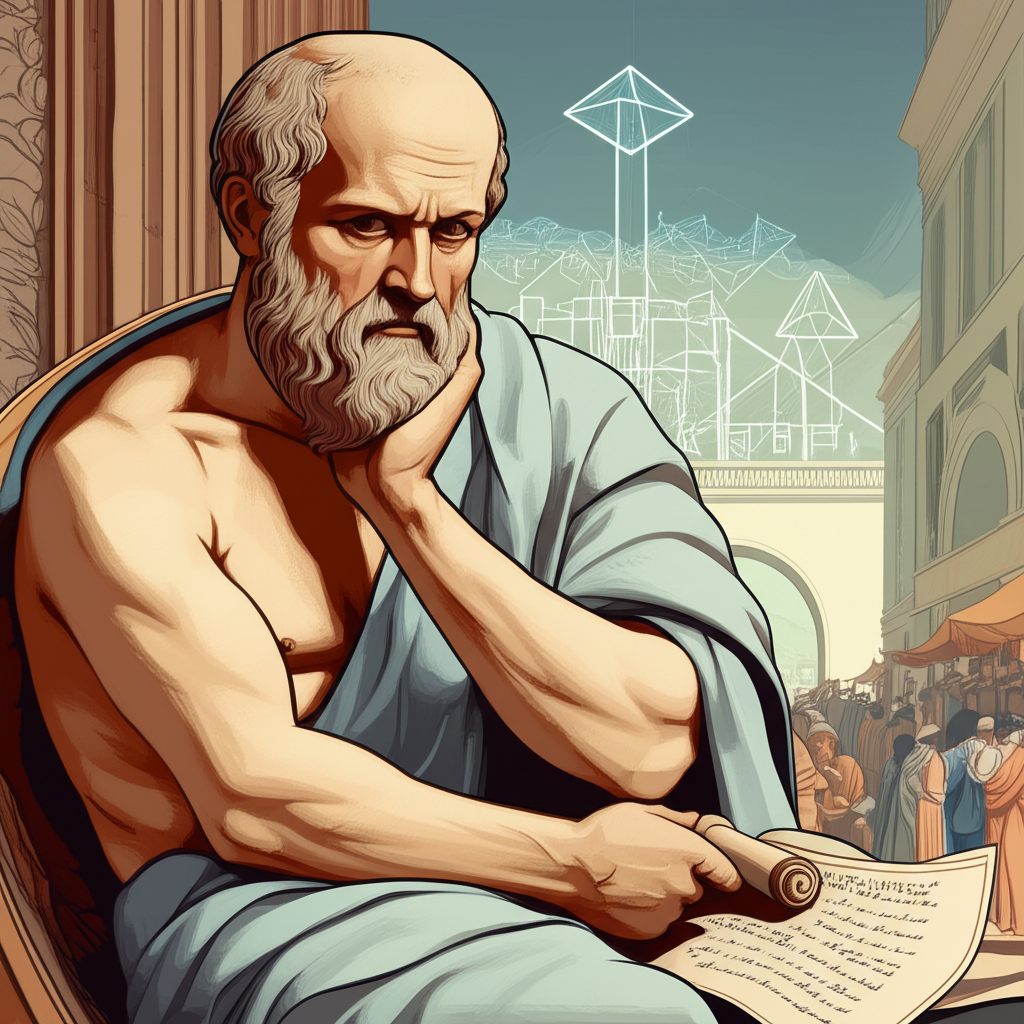
Why the Distinction Matters: Navigating a World of Belief
In an age saturated with information, the distinction between true opinion and knowledge is more critical than ever. Mistaking a true opinion for knowledge can lead to intellectual complacency, dogmatism, and an inability to critically evaluate new information or challenges. If we merely hold opinions, even true ones, without understanding their foundations, we become vulnerable to persuasive rhetoric, misinformation, and intellectual stagnation.
The pursuit of knowledge demands intellectual humility, a willingness to question our own beliefs, and a commitment to seeking out justifications and understanding. It encourages us to move beyond the superficiality of what seems right and to delve into the depths of what is right, and why. This journey, championed by the Great Books, is not just about accumulating facts, but about cultivating a rigorous, critical mind capable of discerning truth from mere appearance.
The Call to Justification
Ultimately, the nature of true opinion reveals a fundamental human aspiration: to move beyond mere belief and towards genuine understanding. While doxa plays an indispensable role in our daily lives, we are called to constantly examine our opinions, to seek out their justifications, and to strive for the kind of robust, explanatory knowledge that can withstand scrutiny. It is through this rigorous pursuit that we truly engage with the world, and with ourselves, as rational beings.
YouTube Video Suggestions:
-
📹 Related Video: PLATO ON: The Allegory of the Cave
Video by: The School of Life
💡 Want different videos? Search YouTube for: "Plato Meno True Opinion vs Knowledge"
2. ## 📹 Related Video: PLATO ON: The Allegory of the Cave
Video by: The School of Life
💡 Want different videos? Search YouTube for: "What is Epistemology Justified True Belief"