

The Nature of True Opinion (Doxa): A Philosophical Inquiry
True opinion, or doxa, occupies a fascinating and often perplexing space within philosophy, sitting precariously between outright ignorance and unassailable knowledge. This article explores the classical understanding of doxa, particularly through the lens of the Great Books of the Western World, examining how an opinion can be "true" without necessarily constituting knowledge, and the profound implications of this distinction for our understanding of truth, perception, and the pursuit of wisdom. We will delve into its reliance on sense perception, its elusive nature, and why philosophers have historically sought to transcend it.
The Elusive Realm of Doxa: More Than Just Belief
In ancient Greek philosophy, particularly in the works of Plato, doxa (δοξα) refers to common belief, judgment, or opinion. It stands in stark contrast to episteme (επιστήμη), which signifies certain, justified knowledge. While episteme is grounded in reason, understanding, and immutable forms, doxa is often rooted in the shifting sands of sense perception, experience, and the appearances of the material world.
However, the concept of true opinion presents a unique challenge. An opinion can, by chance or intuition, align with truth without the holder possessing a full, rational account of why it is true. This distinction is crucial for understanding the philosophical journey from mere belief to genuine understanding.
Plato's Allegory of the Cave: Shadows of True Opinion
Plato's Republic provides perhaps the most iconic illustration of doxa's nature. In the Allegory of the Cave, prisoners chained since birth perceive only shadows cast on a wall, believing these flickering images to be reality. Their perceptions, based entirely on their limited sense experience, represent doxa. If one prisoner were to correctly predict the sequence of shadows, he would hold a true opinion about the shadows, but he would still be fundamentally ignorant of the true objects casting those shadows, let alone the sun that illuminates them.
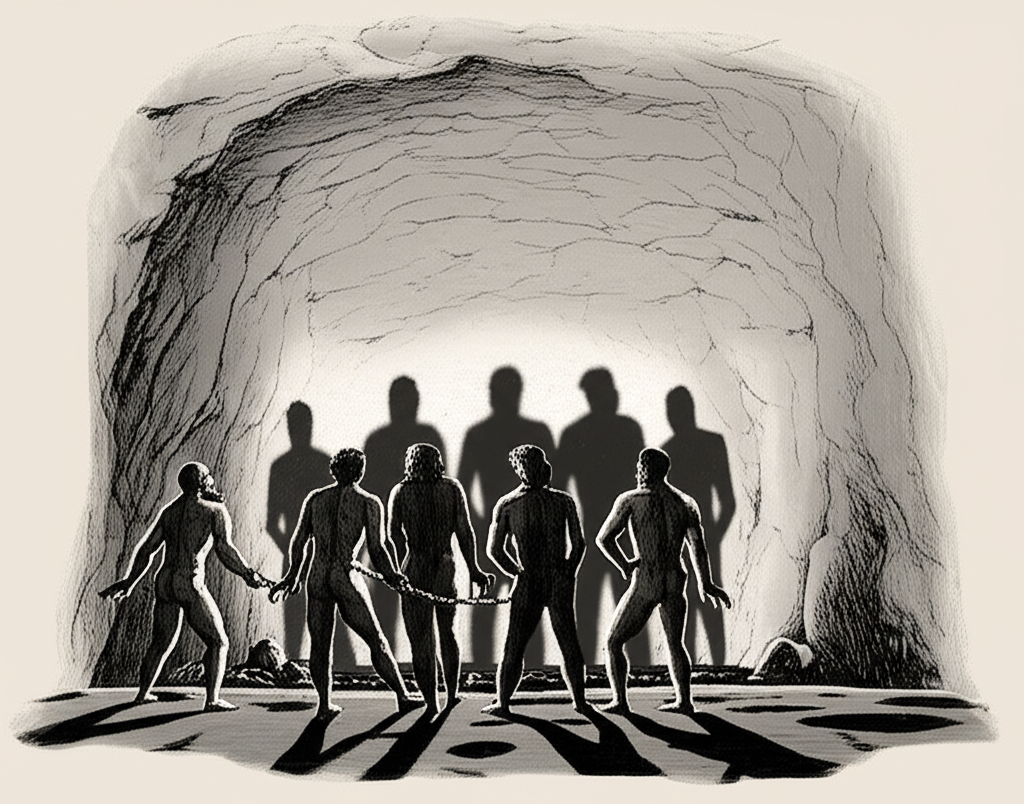
Plato argued that our everyday sense perceptions and the beliefs we form based on them are generally forms of doxa. They are unstable, prone to error, and lack the rigorous justification required for knowledge. While a true opinion might happen to correspond with reality, it lacks the logos – the reasoned account or explanation – that elevates it to knowledge.
Distinguishing True Opinion from Knowledge
To truly grasp the nature of true opinion, it's essential to delineate its boundaries from knowledge. Consider the following distinctions:
| Feature | Opinion (Doxa) | True Opinion | Knowledge (Episteme) |
|---|---|---|---|
| Basis | Sense perception, hearsay, habit, belief | Sense perception, intuition, lucky guess | Reason, understanding, justification, immutable forms |
| Stability | Shifting, changeable | Stable if it aligns with truth, but without ground | Stable, enduring, unshakeable |
| Justification | Lacks a reasoned account (logos) | Lacks a reasoned account (logos) for why it's true | Possesses a full, rational account (logos) |
| Certainty | Uncertain, open to doubt | Coincidental certainty, not reasoned | Certain, demonstrable |
| Relation to Truth | May or may not align with truth | Aligns with truth | Aligns with truth and understands why it aligns |
A ship's pilot might have a true opinion that a storm is coming based on a feeling in his bones or a particular cloud formation he's seen before. This opinion is true if the storm indeed arrives. However, a meteorologist possesses knowledge of the storm's approach, understanding the atmospheric pressure changes, wind patterns, and scientific models that explain why the storm is forming. Both arrive at the correct conclusion, but their understanding and justification differ fundamentally.
The Value and Limitations of True Opinion
Despite its limitations, true opinion is not without its value. In Plato's Meno, Socrates suggests that true opinions are "beautiful things and stand their ground only for a little while, and won't stay long, but run away out of a man's soul; and if one ties them down by reckoning out the cause, then first they become knowledge, and permanent." This implies that true opinion can serve as a guide or a starting point, a provisional truth that, when properly examined and justified, can be transformed into knowledge.
Aristotle, while also valuing reasoned knowledge, took a more pragmatic view of doxa. He often considered endoxa (widely accepted opinions) as valid starting points for dialectical inquiry in his ethical and political works. For Aristotle, examining common opinion was a crucial step in the philosophical process, helping to uncover underlying principles and refine understanding.
Navigating a World of Opinions: A Modern Challenge
In our contemporary world, awash in information and diverse perspectives, the distinction between opinion, true opinion, and knowledge is more critical than ever. The proliferation of unverified claims, echo chambers, and the ease with which unsubstantiated beliefs can spread underscores the enduring relevance of this ancient philosophical problem. The challenge remains: how do we move beyond simply holding beliefs that happen to be true, towards a deeper, justified understanding of the truth? It requires intellectual humility, a commitment to critical inquiry, and the persistent pursuit of the logos that underpins genuine knowledge.
Conclusion: The Enduring Pursuit of Understanding
The nature of true opinion reminds us that alignment with truth is not enough for comprehensive understanding. While a true opinion can lead us in the right direction, it lacks the foundational certainty and reasoned justification that characterize knowledge. The journey from the flickering shadows of doxa to the illuminated certainty of episteme remains a central project of philosophy, urging us to question, to seek deeper explanations, and to strive for not just what is true, but also why it is true.
YouTube Video Suggestions:
-
📹 Related Video: PLATO ON: The Allegory of the Cave
Video by: The School of Life
💡 Want different videos? Search YouTube for: "Plato Allegory of the Cave Explained"
-
📹 Related Video: What is Philosophy?
Video by: The School of Life
💡 Want different videos? Search YouTube for: "Doxa vs Episteme Ancient Greek Philosophy"