

The Unfolding Chronos: The Nature of Time in Evolution
In the grand tapestry of existence, time is often perceived as merely the stage upon which events unfold. Yet, when we consider the profound processes of evolution, it becomes clear that time is not a passive backdrop but an active, indispensable force, intricately woven into the very fabric of change in nature. This article delves into the philosophical essence of time as understood through the lens of the Great Books, exploring how its multifaceted nature shapes, enables, and is indeed defined by the relentless march of evolution.
Time as the Measure of Motion and the Engine of Change
The very essence of evolution is change. Species adapt, diversify, and transform over generations, a continuous flux that defines the living world. But what is the medium of this change? Aristotle, in his seminal Physics, posited time as "the number of motion with respect to before and after." This profound insight immediately elevates time from a mere container to an intrinsic dimension of change. For evolution, this is foundational. Without motion—without alteration in the biological forms and functions of organisms—there is no evolution. Time, then, does not simply pass while species change; rather, time is the very measure of that biological change unfolding across generations.
Consider the intricate dance of natural selection: advantageous traits accumulate, populations shift, and new adaptations emerge. Each step in this process is a change, and each change is quantifiable along the axis of time. The lineage from a common ancestor to the myriad forms of life we observe today is a testament to time as the relentless engine driving this grand narrative of biological transformation.
The Unidirectional Arrow: Evolution's Trajectory
The modern scientific understanding of evolution, largely codified by Darwin, inherently presupposes a linear 'arrow of time.' While physicists debate the cosmic reversibility of time, biological evolution is unequivocally directional. Natural selection acts cumulatively, building complexity, driving adaptation, and shaping the diversity of life in an irreversible sequence. This unidirectional flow of time allows for the accumulation of beneficial mutations, the branching of phylogenetic trees, and the emergence of entirely new forms of life from simpler ancestors. The past informs the present, which in turn sets the stage for the future, a continuous, unfolding narrative of change in nature.
This linearity stands in contrast to some ancient philosophical views that posited cyclical time, where events might repeat endlessly. While patterns in nature can recur (e.g., predator-prey cycles), the overarching trajectory of evolution on Earth, from single-celled organisms to complex ecosystems, is one of irreversible progression and diversification.
Philosophical Perspectives on Time and Its Evolutionary Relevance
To further appreciate the deep connection between time and evolution, it is useful to consider various philosophical lenses:
| Philosopher/Concept | Key Idea of Time | Relevance to Evolution |
|---|---|---|
| Aristotle | The measure of motion and change. | Time is intrinsic to the process of biological change; evolution is quantifiable through time. |
| Heraclitus | "Everything flows"; constant flux. | Emphasizes the ceaseless change inherent in natural selection and the dynamic nature of life. |
| St. Augustine | Subjective experience of past, present, future in the mind. | Our understanding of vast evolutionary timescales is a mental construct, challenging our human perception. |
| Linear Time | Unidirectional progression from past to future. | Provides the necessary framework for cumulative adaptation and the irreversible branching of life. |
The Immensity of Deep Time and Human Comprehension
One of the greatest challenges in grasping evolution lies in comprehending the immense timescales involved. Our human experience of time is fleeting, often measured in decades or centuries. Yet, evolution operates over eons, requiring millions of years for significant speciation to occur. St. Augustine, in his Confessions, grappled with the elusive nature of time, suggesting that past and future exist only in the present mind, as memory and expectation. This subjective lens highlights our struggle to truly internalize the 'deep time' of geological and evolutionary history. The perceived slowness of change on a human scale belies its profound cumulative power over vast spans of time, a power that has sculpted all life on Earth. Understanding evolution demands a philosophical leap beyond our immediate temporal experience, a recognition of time as a force of staggering magnitude and patience.
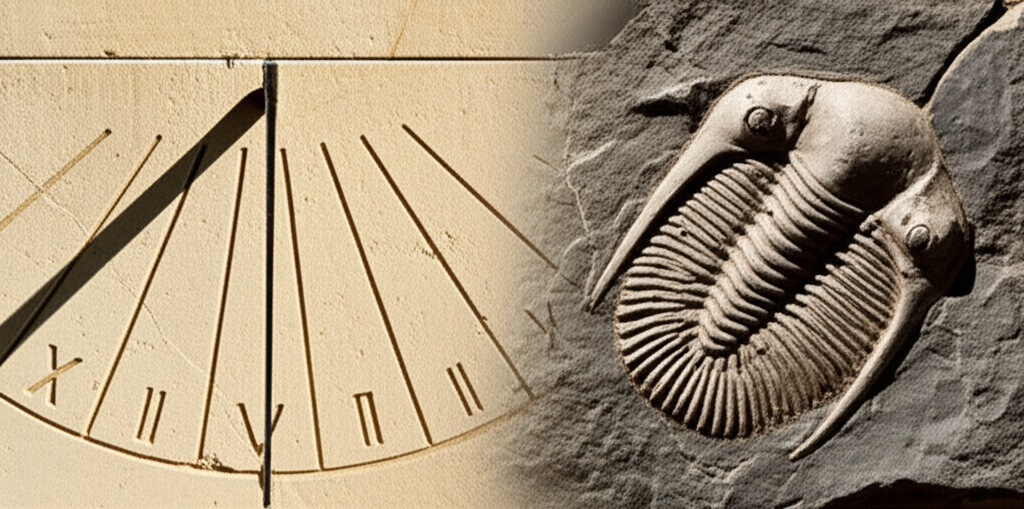
Conclusion: Time as the Fabric of Life
Ultimately, the nature of time in evolution is not merely a question of chronology, but of ontology. Time is not just where evolution happens; it is an active participant, an enabling condition, and indeed, a constituent element of the very process of change in nature. From Aristotle's measurement of motion to Augustine's subjective apprehension of its vastness, the Great Books offer profound avenues for contemplating this intricate relationship. To understand evolution is to understand time, not as an empty vessel, but as the dynamic, ever-unfolding dimension that shapes life itself. It is a reminder that the grand narrative of life is fundamentally a story told by time, inscribed in the ceaseless change of nature.
YouTube Suggestions:
-
📹 Related Video: ARISTOTLE ON: The Nicomachean Ethics
Video by: The School of Life
💡 Want different videos? Search YouTube for: ""Philosophy of Time Aristotle Augustine""
-
📹 Related Video: KANT ON: What is Enlightenment?
Video by: The School of Life
💡 Want different videos? Search YouTube for: ""Deep Time and Evolution Philosophical Implications""