

Unpacking Reality: The Fundamental Distinction Between Being and Essence
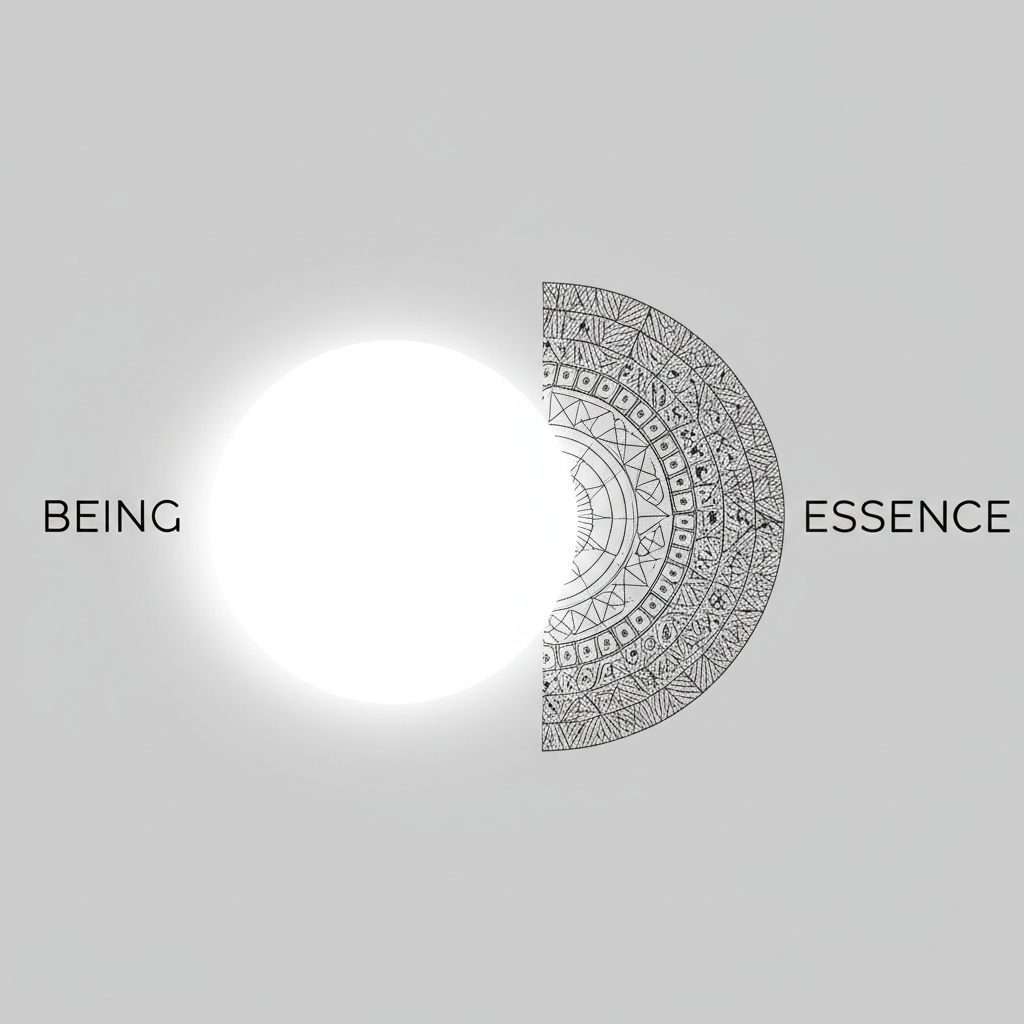
At the heart of Metaphysics, that grand inquiry into the nature of reality itself, lies a distinction so profound it underpins centuries of philosophical thought: the separation of being from essence. Simply put, being refers to the sheer fact that something exists – its actuality. Essence, on the other hand, describes what that existing thing is – its fundamental nature, its very Definition. This isn't just an academic quibble; understanding this difference is crucial for grappling with everything from the nature of God to the identity of a simple rock.
The Philosophical Bedrock: What Does it Mean to "Be"?
When we speak of being, we're touching upon the most fundamental concept imaginable. It's the brute fact of existence. To say something "is" means it has actuality, it occupies a place in reality, however transient or immaterial. It's the ultimate predicate, the assertion that something is rather than is not. In the realm of Metaphysics, "Being" itself is often treated as the primary subject of investigation, seeking to understand existence in its broadest, most universal sense. It’s the raw, unadorned presence of a thing.
Essence: The "Whatness" of Things
If being is the that, then essence is the what. It's the intrinsic nature of a thing, that which makes it what it is and not something else. Think of it as the blueprint, the inherent qualities, characteristics, and principles that constitute its fundamental identity. The essence of a human being, for instance, might be rationality or animality, depending on the philosophical framework. It's the answer to the question, "What is it?" and often corresponds directly to the Definition we formulate for a thing. Without its essence, a thing would cease to be itself; it would be something else entirely, or nothing at all.
The Crucial Divide: Existence vs. Nature
The distinction becomes clear when we consider that we can conceive of an essence without necessarily affirming its being. I can have a perfectly clear Idea of a unicorn (its essence: a horse with a single horn), but this doesn't mean unicorns actually exist (they lack being in our world). Conversely, something can exist (have being) without us fully grasping its essence. Consider a newly discovered subatomic particle – we know it is, but its precise nature, its essence, might still be under intense investigation.
This philosophical insight has deep roots, notably explored by figures from the Great Books of the Western World. Aristotle, in his Metaphysics, wrestled with substance and its attributes, paving the way for later distinctions. Later, Islamic philosophers like Avicenna and Christian scholastic thinkers like Thomas Aquinas built upon this, particularly in their discussions of God. For Aquinas, God is unique because in Him, Being and Essence are identical – God's very nature is to exist. For everything else, existence (being) is an addition to its essence.
Let's visualize this fundamental difference:
| Aspect | Being | Essence |
|---|---|---|
| Question | That it is (Answering "Is it?") | What it is (Answering "What is it?") |
| Nature | Actuality, existence, presence | Intrinsic nature, fundamental qualities |
| Concept | The fact of existence | The inherent Definition or Idea |
| Example | A tree exists in the forest. | The tree's woody structure, leaves, roots. |
| Relation | Can be conceived without essence (e.g., God) | Can be conceived without being (e.g., unicorn) |
Why This Distinction Matters
Understanding the difference between being and essence isn't just an exercise in intellectual gymnastics; it's a cornerstone for tackling some of philosophy's most enduring questions:
- The Problem of Universals: How do general concepts (like "humanity") relate to individual instances (like "Benjamin Richmond")? Is "humanity" an essence that exists independently, or only in individual beings?
- The Existence of God: As noted with Aquinas, the identity of being and essence in God is a central theological and philosophical argument for His unique nature as pure act, pure existence.
- Modal Logic: It allows us to speak of possibilities (essences that could exist) and actualities (essences that do exist).
- Identity and Change: How can something change (alter its accidental qualities) yet remain the same thing (retain its essence)?
This distinction forces us to look beyond the surface, to probe the very fabric of reality and the conceptual tools we use to understand it. It challenges us to consider not just what we see, but the deeper question of that it is there at all, and the inherent nature that gives it form and meaning.
*## 📹 Related Video: ARISTOTLE ON: The Nicomachean Ethics
Video by: The School of Life
💡 Want different videos? Search YouTube for: ""Aquinas Being and Essence explained" "Aristotle Metaphysics substance accident""*