

Beyond Mere Existence: The Metaphysical Divide of Being and Essence
The intricate tapestry of reality often compels us to look beyond the surface, to question not just that something is, but what it is. In the grand theatre of Metaphysics, few distinctions are as fundamental, or as thought-provoking, as that between Being and Essence. Simply put, Being refers to the sheer act of existence—the fact that something is. Essence, on the other hand, describes what a thing is—its fundamental nature, its defining characteristics, the very idea that makes it this particular thing and not another. This article delves into this profound philosophical divide, exploring its origins, its implications, and why it remains a cornerstone of our understanding of reality.
A Journey into Metaphysics: The Core Distinction
To truly grasp the world around us, we must first confront its most basic elements. Classical philosophy, particularly as articulated within the Great Books of the Western World, presents us with a powerful framework for this task. When we observe a tree, for instance, we can acknowledge its Being—the undeniable fact that it exists. Yet, simultaneously, we recognize its Essence—its treeness, its specific biological structure, its capacity for photosynthesis, its role in an ecosystem. Without this distinction, our conceptualization of reality would be profoundly impoverished, reducing everything to a mere undifferentiated presence.
Being: The Unadorned Act of Existence
Being is, in many respects, the most primary and elusive of concepts. It is the raw, unqualified fact of existence, stripped of all particular attributes. When we speak of something Being, we are referring to its presence in reality, its participation in existence itself. It is the answer to the question, "Does it exist?" If the answer is yes, then it possesses Being. This concept, central to ontological inquiry, suggests a fundamental "is-ness" that precedes any specific characteristic. For many philosophers, Being is not a property that a thing has, but rather the very act by which it is. It is the pure actuality, the "to be" of a thing.
Essence: The Blueprint of "Whatness"
Conversely, Essence addresses the question, "What is it?" It is the definition of a thing, its intrinsic nature, the collection of properties that make it what it is and distinguish it from everything else. The Essence of a human being might involve rationality and mortality; the Essence of a triangle involves having three sides and three angles summing to 180 degrees. This "whatness" is the idea of the thing, its form or structure. It is what allows us to categorize, understand, and predict the behavior of entities. Without an Essence, a thing would be utterly indeterminate, an amorphous "something" without character or identity.
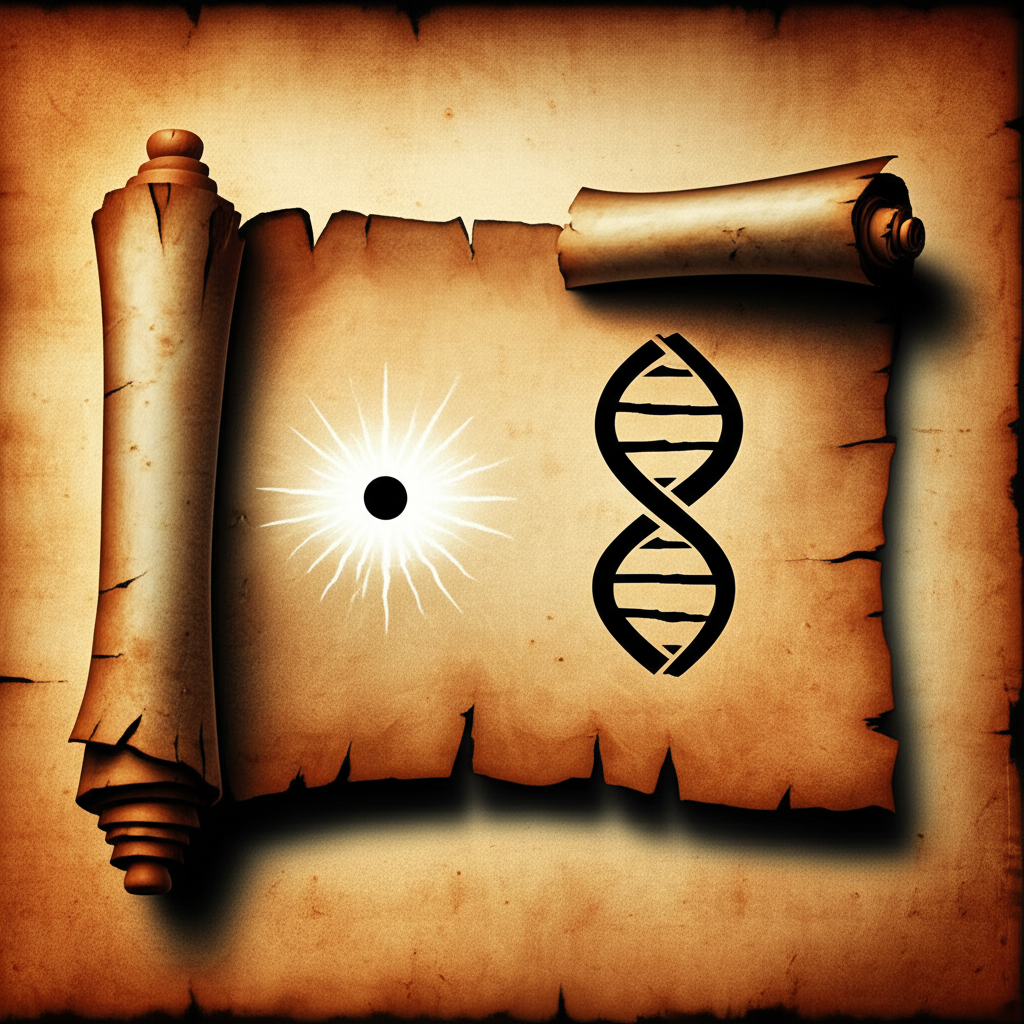
The Interplay and the Divide: Why the Distinction Matters
The relationship between Being and Essence is not one of simple opposition but of profound interplay. A thing cannot be without being something, and it cannot be something without being. In most created or contingent things, their Essence (what they are) is distinct from their Being (that they are). For example, the Essence of a unicorn can be perfectly defined, yet it lacks Being in our world. Conversely, a blurry, undefined blob on a distant photograph might possess Being, but its Essence remains unknown to us.
Here's a simplified comparison:
| Feature | Being | Essence |
|---|---|---|
| Question | That it is? (Existence) | What it is? (Nature) |
| Focus | Actuality, Presence | Definition, Characteristics, Form |
| Nature | Primary, Undifferentiated | Specific, Differentiating |
| Example | The fact that a tree exists | The "treeness" of the tree (its species, biological structure) |
| Role | The "is-ness" | The "whatness" |
This distinction is not merely an academic exercise; it underpins much of Western philosophy, from Aristotle's concepts of substance and form to Aquinas's theological metaphysics. For Aquinas, God alone is pure Being whose Essence is His Being, meaning God's very nature is existence itself, a unique and singular truth. For all other entities, Essence and Being are separable, indicating their contingent, created nature.
Implications for Understanding Reality
The distinction between Being and Essence offers a powerful lens through which to examine fundamental questions:
- Contingency vs. Necessity: If a thing's Essence is distinct from its Being, then its Being is not necessary; it could not exist. This concept is vital for discussions of creation and the nature of God.
- Knowledge and Reality: Our knowledge often begins with understanding the Essence of things—their definition and properties. Yet, this knowledge doesn't automatically confer Being upon them. We can define a perfect circle, but its perfect Being in the physical world is another matter entirely.
- The Problem of Universals: The idea of "humanity" (an Essence) can be applied to many individual humans (each with their own Being). How do these universal essences relate to particular existing things?
- Change and Identity: A thing can change its accidental properties (e.g., a green apple turning red) without losing its fundamental Essence (it remains an apple). But if its Essence were to change, it would effectively become a different thing.
This profound philosophical distinction invites us to look beyond the immediate sensory data and ponder the deeper structure of existence. It challenges us to consider not just the fact of presence, but the meaning and nature of that presence. In doing so, we engage with the very core of what it means to be a conscious observer in a world brimming with both Being and Essence.
Further Explorations
For those keen to delve deeper into these foundational concepts, the philosophical landscape is rich with inquiry.
📹 Related Video: ARISTOTLE ON: The Nicomachean Ethics
Video by: The School of Life
💡 Want different videos? Search YouTube for: "Aristotle Metaphysics Essence Existence"
📹 Related Video: ARISTOTLE ON: The Nicomachean Ethics
Video by: The School of Life
💡 Want different videos? Search YouTube for: "Thomas Aquinas Being and Essence explained"