

The Enduring Divide: Unpacking the Distinction Between Being and Essence
The distinction between being and essence is a cornerstone of metaphysics, a profound philosophical inquiry into the nature of reality itself. At its heart, this distinction grapples with two fundamental questions about anything that exists: that it is, and what it is. Simply put, being refers to the sheer act of existence – the fact that something is at all. Essence, on the other hand, refers to the intrinsic nature or definition of a thing – what makes it the kind of thing it is, its fundamental characteristics, or its idea. Understanding this divide is crucial for navigating questions of existence, identity, and the very fabric of reality.
The Metaphysical Foundation: Why This Distinction Matters
For millennia, philosophers, from the ancient Greeks to the Scholastics, have wrestled with the profound implications of differentiating between something's existence and its inherent nature. This is not merely an exercise in semantic nitpicking; it underpins our understanding of everything from God to a simple stone. Without this distinction, we risk conflating the actuality of a thing with its conceptual blueprint, leading to a shallow or incomplete grasp of reality. It's the bedrock upon which many complex philosophical systems are built, allowing us to ask not just if something is, but what it truly is at its core.
Defining the Indefinable: Being
- Being (Latin: esse) refers to the simple, brute fact of existence. It is the act by which anything is. It doesn't describe what something is, but rather that it participates in reality. In its most fundamental sense, being is the answer to the question "Does it exist?" It is the sheer 'to be' of a thing.
- Consider a mythical creature, like a unicorn. We can conceive of its essence (a horse-like creature with a single horn), but it lacks being in our reality. Conversely, a rock has being – it exists – but its being is distinct from its specific rock-ness (its essence).
The Blueprint of Reality: Essence
- Essence (Latin: essentia) refers to the intrinsic nature of a thing, its quiddity, or "whatness." It is the set of properties or characteristics that make a thing what it is and without which it would cease to be that particular thing. Essence provides the definition of a thing, distinguishing it from all other things.
- For example, the essence of a human being might include rationality and animality. The essence of a triangle includes having three sides and three angles. These are the ideas that define the object. Even if a perfect triangle doesn't exist in the physical world, its essence can be grasped.
Historical Perspectives from the Great Books
The distinction between being and essence has a rich lineage within the Western philosophical tradition, as explored in the Great Books.
Plato and the Forms
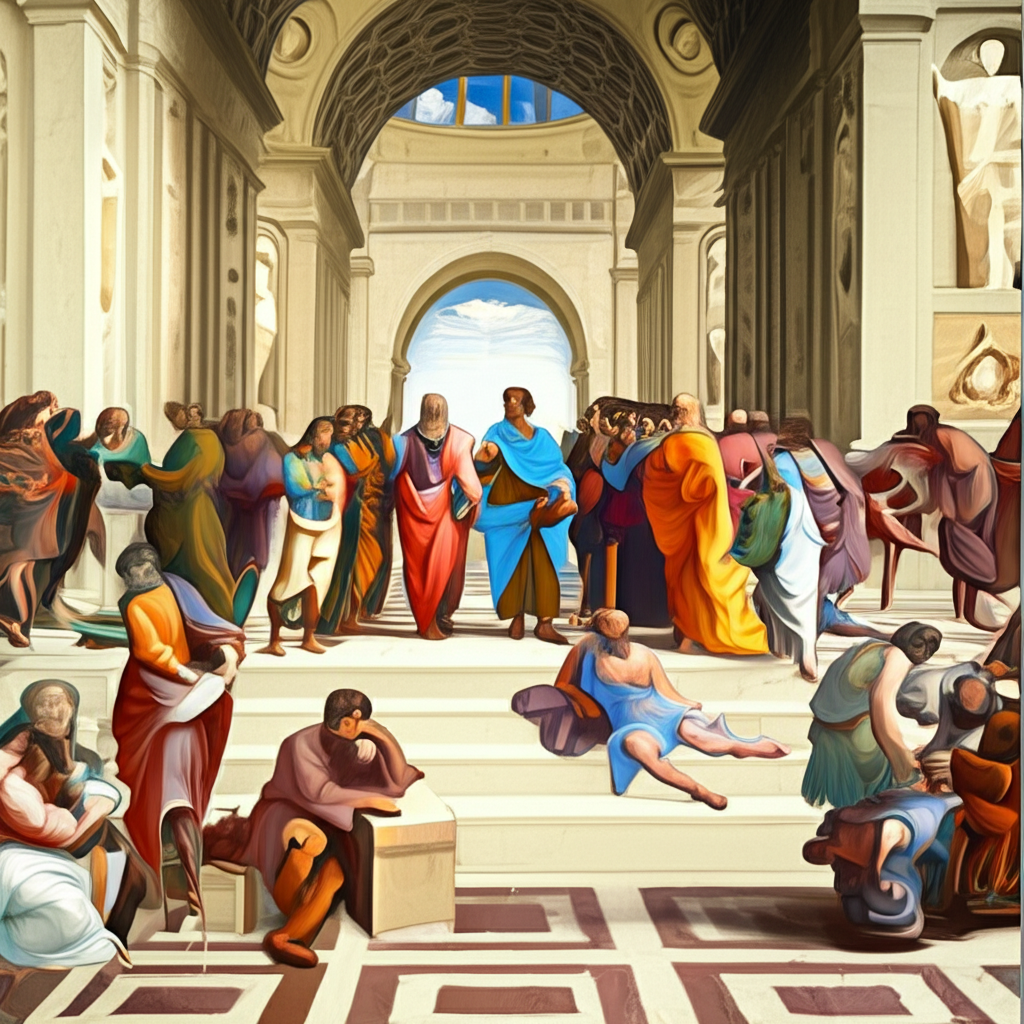
While Plato didn't use the exact terms "being" and "essence" in the same way later philosophers would, his theory of Forms laid crucial groundwork. For Plato, the Forms (e.g., the Form of Beauty, the Form of Justice) represented the perfect, unchanging essence or idea of things. Particular objects in the sensible world merely participate in these Forms, thereby acquiring their being or existence as instances of that Form. A beautiful object is beautiful because it partakes in the Form of Beauty.
Aristotle's Substance and Quiddity
Aristotle, a student of Plato, refined this concept significantly. He posited that essence is inextricably linked to the substance of a thing. The essence of a substance is its "what-it-is-to-be" (its quiddity). For Aristotle, the essence is not separate from the individual thing but inheres within it, defining its nature and purpose. A horse's essence is to be a horse, and this essence is found in the individual horse, not in a separate realm.
Aquinas and the Act of Existence
Perhaps the most explicit and influential formulation of the being-essence distinction came from Thomas Aquinas, heavily influenced by Aristotle. Aquinas argued that in all created beings, essence and being (or existence, actus essendi) are distinct.
| Feature | Being (Esse) | Essence (Quidditas) |
|---|---|---|
| Nature | The act of existing; that something is. | The intrinsic nature; what something is. |
| Role | Actualizes the essence; gives it reality. | Limits and defines the being; provides identity. |
| Question | "Does it exist?" | "What is it?" |
| Analogy | The light that illuminates a picture. | The picture itself (its form, colors, subject). |
| Dependence | Essence receives being to become actual. | Being actualizes the essence. |
For Aquinas, only God's essence is His existence (Pure Actuality). For every other created thing, existence is something received by an essence. An essence can be conceived without existing, but it cannot exist without an essence. This distinction highlights the contingency of created things – they could not exist, whereas God necessarily exists.
The Ramifications of the Distinction
The distinction between being and essence is far from an abstract intellectual exercise; it profoundly impacts various philosophical domains:
- Existence of God: It provides a framework for arguments about God's nature as necessary existence (where essence and being are identical).
- Modal Metaphysics: It helps explore possibilities and necessities – what could exist (essence) versus what does exist (being).
- Identity and Change: It informs discussions about how something retains its identity (essence) even as its accidental properties change, or whether its very existence (being) can be lost.
- Epistemology: How we come to know the essence of things through definition and idea, distinct from merely knowing that they are.
- Ontology: It clarifies the different ways things can be said to exist and the hierarchy of being.
Conclusion: The Enduring Philosophical Quest
The distinction between being and essence remains a vital tool in the philosopher's toolkit, a fundamental concept that empowers us to probe deeper into the nature of reality. From the ancient insights of Plato and Aristotle to the rigorous scholasticism of Aquinas, this core metaphysical divide has shaped our understanding of existence, identity, and the very structure of the cosmos. To truly grasp the world around us, we must move beyond simply acknowledging that things are, and strive to comprehend what they are, in their deepest and most fundamental nature.
📹 Related Video: KANT ON: What is Enlightenment?
Video by: The School of Life
💡 Want different videos? Search YouTube for: ""Aquinas Essence and Existence Explained""
📹 Related Video: ARISTOTLE ON: The Nicomachean Ethics
Video by: The School of Life
💡 Want different videos? Search YouTube for: ""Metaphysics 101: Being, Essence, and Existence""