

The Nature of Prophecy and Time: A Philosophical Inquiry
Summary: The concepts of Prophecy and Time are inextricably linked, forming a fascinating nexus for philosophical exploration. This article delves into how foreknowledge, whether divine or intuitive, challenges our understanding of temporal linearity, free will, and the very nature of Knowledge. Drawing insights from the Great Books of the Western World, we will examine the historical and philosophical tensions between predictive insight, the relentless flow of Time, and the human quest for certainty amidst the mysteries of Religion and existence.
Unraveling the Threads of Foreknowledge
From ancient oracles to modern seers, humanity has long been captivated by the idea of Prophecy – the ability to glimpse events yet to unfold. But what does it mean to know the future? And how does such knowledge interact with our experience of Time? These questions plunge us into a rich philosophical landscape, challenging our assumptions about causality, determinism, and the limits of human understanding.
Historically, prophecy has often been interwoven with Religion, serving as a conduit for divine will or a testament to supernatural power. Yet, beyond theological interpretations, prophecy presents profound philosophical dilemmas concerning the nature of reality itself.
Time: The Unyielding River of Existence
Before we can fully grasp prophecy, we must first confront Time. Is time a linear progression, an endless present, or a subjective construct of the mind? Philosophers from antiquity have grappled with its elusive nature:
- Aristotle, in his Physics, saw time as the "number of motion with respect to before and after," tied directly to change in the physical world.
- St. Augustine, in his Confessions, famously pondered, "What then is time? If no one asks me, I know; if I wish to explain it to one who asks, I know not." He located time primarily in the mind, as a distention of the soul.
- Later, Isaac Newton posited an absolute, mathematical time, flowing uniformly without relation to anything external.
These differing views profoundly impact how we might conceive of prophecy. If time is absolute and linear, does prophecy merely reveal a pre-ordained path? If it's subjective, does prophecy become a function of consciousness?
The Paradox of Prophetic Knowledge
The very notion of Prophecy introduces a profound paradox: if the future is knowable, is it truly open? This question strikes at the heart of free will and determinism.
- Determinism: If future events are already fixed and can be known, then our choices might be mere illusions, played out on a predetermined stage. This view often finds resonance in certain theological frameworks where a divine being possesses complete foreknowledge.
- Free Will: Conversely, if human beings possess genuine free will, capable of making choices that genuinely shape the future, then how can that future be definitively known in advance?
This tension has been a cornerstone of philosophical and theological debate for millennia, particularly within Religion. Does God's omniscient Knowledge of all events, past, present, and future, negate human freedom? Or is there a way to reconcile divine foreknowledge with human agency?
Prophecy, Knowledge, and Belief
What kind of Knowledge does prophecy offer? Is it empirical, rational, intuitive, or revealed?
- Empirical Knowledge: Typically based on observation and experience, which prophecy, by definition, transcends.
- Rational Knowledge: Derived through logic and reason, though prophetic visions often appear to bypass logical deduction.
- Revealed Knowledge: Often associated with Religion, where truth is disclosed through divine communication, making it a matter of faith and belief rather than empirical verification.
The acceptance of prophetic claims often hinges on belief. Skepticism, on the other hand, demands evidence that can withstand rational scrutiny. The history of philosophy is replete with arguments for and against the veracity of prophetic claims, often linked to the authority of their source.
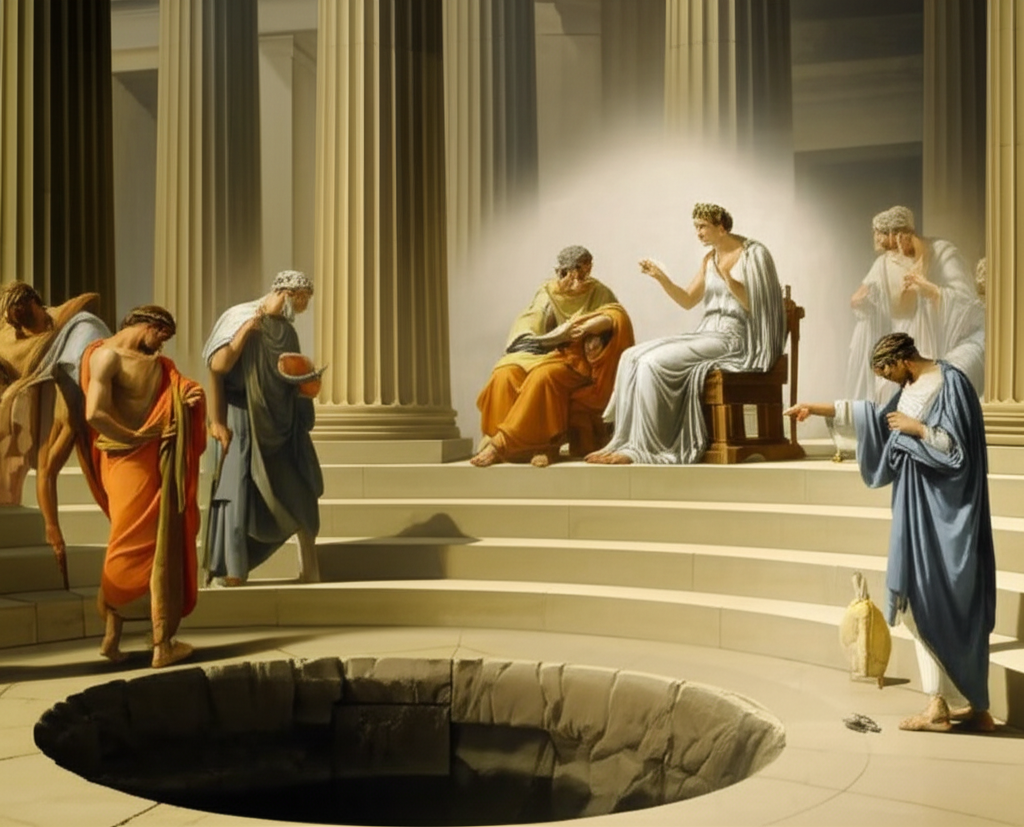
Historical Perspectives on Prophecy and Time
Across different epochs and cultures, the understanding and role of prophecy have varied significantly:
| Era/Culture | View of Prophecy | Relationship to Time | Key Philosophical/Religious Context |
|---|---|---|---|
| Ancient Greece | Oracles (e.g., Delphi) as conduits for divine will, often cryptic and open to interpretation. | Future as fate, but with human actions potentially influencing the specifics. | Polytheistic Religion, emphasis on destiny, human hubris (hubris) and divine retribution (nemesis). |
| Judeo-Christian | Prophets as direct messengers of God, delivering warnings, promises, and future events. | Linear Time with a definite beginning and end (eschatology), divine plan unfolding. | Monotheistic Religion, covenant, moral law, messianic expectations, divine Knowledge. |
| Medieval Europe | Prophecy often viewed through a Christian lens, with saints and mystics receiving visions. | Time as God's creation, leading to ultimate judgment and salvation. | Dominance of Christian theology, scholasticism, reconciling faith and reason. |
| Enlightenment | Increased skepticism, prophecy often dismissed as superstition or psychological phenomenon. | Emphasis on rational Knowledge, scientific method, linear Time as measurable. | Rise of empiricism and rationalism, questioning of religious dogma. |
| Modern Era | Diverse interpretations: psychological projection, Jungian archetypes, cultural narratives, or continued religious belief. | Time as relative (Einstein), or a human construct, leading to complex views on foreknowledge. | Postmodern thought, secularism, continued interest in spiritual and metaphysical phenomena. |
The Enduring Allure
Despite scientific advancements and philosophical critiques, the human fascination with prophecy endures. Perhaps it stems from our innate desire to control the uncontrollable, to find meaning in chaos, or to alleviate the anxiety of an uncertain future. Whether as a source of comfort, a warning, or a catalyst for action, prophecy continues to challenge our understanding of Time, Knowledge, and our place in the grand tapestry of existence. It forces us to confront the limits of our perception and the profound mysteries that lie beyond the immediate horizon.
📹 Related Video: What is Philosophy?
Video by: The School of Life
💡 Want different videos? Search YouTube for: ""Augustine on Time Philosophy""
📹 Related Video: What is Philosophy?
Video by: The School of Life
💡 Want different videos? Search YouTube for: ""Free Will and Determinism Philosophy Debate""