

The Unveiling of Tomorrow: Prophecy, Knowledge, and the Fabric of Time
The intersection of prophecy and knowledge presents one of philosophy's most enduring and perplexing challenges. At its core, this inquiry compels us to confront the very nature of what we can truly know, particularly when that knowledge purports to pierce the veil of the future. This article will delve into the philosophical dimensions of prophecy, examining its claims to foresight against the rigorous demands of epistemology, and critically analyzing how our understanding of Time shapes, or indeed limits, our capacity for such extraordinary Knowledge. From ancient oracles to modern scientific prediction, the quest to comprehend the unknown future remains a fundamental human endeavor, deeply embedded in our philosophical tradition.
I. Defining the Contours: Prophecy, Knowledge, and the Natural World
To embark on this philosophical journey, we must first establish a clear understanding of our terms.
- Prophecy: More than mere prediction or conjecture, prophecy, in its classical sense, often implies a divinely inspired or supernaturally informed utterance concerning future events. It asserts a direct apprehension of what is to come, typically beyond the scope of ordinary human reason or empirical observation. The nature of this apprehension—whether through vision, dream, auditory message, or direct insight—varies across traditions but consistently claims an extraordinary source of information.
- Knowledge: Following the venerable tradition of Plato in his Theaetetus, knowledge is often defined as "justified true belief." For a belief to qualify as Knowledge, it must be true, and we must have good reasons (justification) for holding it. This rigorous standard immediately poses a significant challenge to prophetic claims, as the truth of a future event cannot be empirically verified until it occurs, and the justification for believing it often rests on faith or an appeal to an unobservable source.
- The Nature of Reality: The very possibility of prophecy hinges on our understanding of the nature of reality itself. Is the future fixed and predetermined, merely awaiting its unfolding? Or is it open, contingent upon choices and chance? This fundamental ontological question underpins any discussion of how Knowledge of the future could even exist.
II. Time's Labyrinth: The Epistemological Hurdle of the Future
The most formidable obstacle to understanding prophecy as a form of Knowledge lies in the elusive nature of Time. Our perception of Time as a linear progression from past to present to future creates a profound epistemological problem.
- Aristotle and Future Contingents: Aristotle, in his work On Interpretation, grappled with the problem of "future contingents"—statements about events that may or may not happen (e.g., "There will be a sea-battle tomorrow"). If such statements are true now, then the future event must be necessary, implying a deterministic universe where free will is an illusion. Conversely, if they are not true now, then our ability to make meaningful statements about the future, let alone possess Knowledge of it, is severely limited. Aristotle's solution suggested that such statements are neither true nor false until the event occurs, preserving contingency.
- Augustine and Divine Foreknowledge: St. Augustine, a towering figure from the Great Books of the Western World, confronted the challenge of divine foreknowledge in Confessions and The City of God. How can God know the future without rendering human free will meaningless? Augustine's profound insight was to posit that God exists outside of Time, experiencing all of Time (past, present, and future) as an eternal present. From this divine perspective, Knowledge of future events does not impose necessity but merely apprehends what will freely occur. This moves the problem from human epistemology to the nature of divine cognition.
- Kant and the A Priori Nature of Time: Immanuel Kant, in his Critique of Pure Reason, argued that Time is not an objective feature of reality itself, but rather an a priori intuition, a fundamental structure of our minds through which we experience the world. If Time is a subjective form of intuition, then the nature of any Knowledge that transcends this intuitive framework, such as prophecy, becomes even more enigmatic.
III. Categories of Foresight: From Revelation to Reason
When we speak of "prophecy," we often conflate various forms of foresight. A philosophical analysis requires distinguishing between them:
| Category of Foresight | Claimed Source of Knowledge | Epistemological Basis | Relation to Time |
|---|---|---|---|
| Divine Revelation | Supernatural, direct message from God | Faith, inspired interpretation | Transcends linear time, often specific events |
| Mystical Intuition | Inner vision, subconscious insight | Personal experience, non-rational apprehension | Often symbolic, vague, or subjective |
| Philosophical Insight | Deep understanding of human nature | Reason, observation, historical patterns | General trends, ethical outcomes, long-term views |
| Scientific Prediction | Empirical data, natural laws | Inductive and deductive reasoning, testable hypotheses | Probabilistic, based on known causal chains |
While scientific prediction, based on the laws of Nature, offers a verifiable form of "foresight" (e.g., predicting an eclipse), it differs fundamentally from classical prophecy. Scientific prediction is a form of Knowledge derived from understanding the causal mechanisms within Time, whereas prophecy claims Knowledge of outcomes without necessarily detailing the causal path, often bypassing the very framework of temporal causality.
IV. The Challenge to Epistemology: Can Prophecy Be Knowledge?
The central question remains: can prophecy truly constitute Knowledge in the philosophical sense?
- Justification: The primary hurdle is justification. How does one justify a prophetic claim before the event occurs? If the justification is "God told me," it moves the discourse into theology rather than empirical epistemology. For philosophy, the justification must be accessible to reason or shared experience.
- Truth: While a prophetic statement might eventually prove true, its truth value at the moment of utterance is problematic. If a statement about the future is contingent, it cannot be definitively true or false until that future arrives.
- The Nature of Certainty: Philosophical Knowledge often strives for certainty. Prophecy, even when fulfilled, often carries an element of mystery regarding its source and mechanism, making it difficult to integrate into a rational framework of certainty.
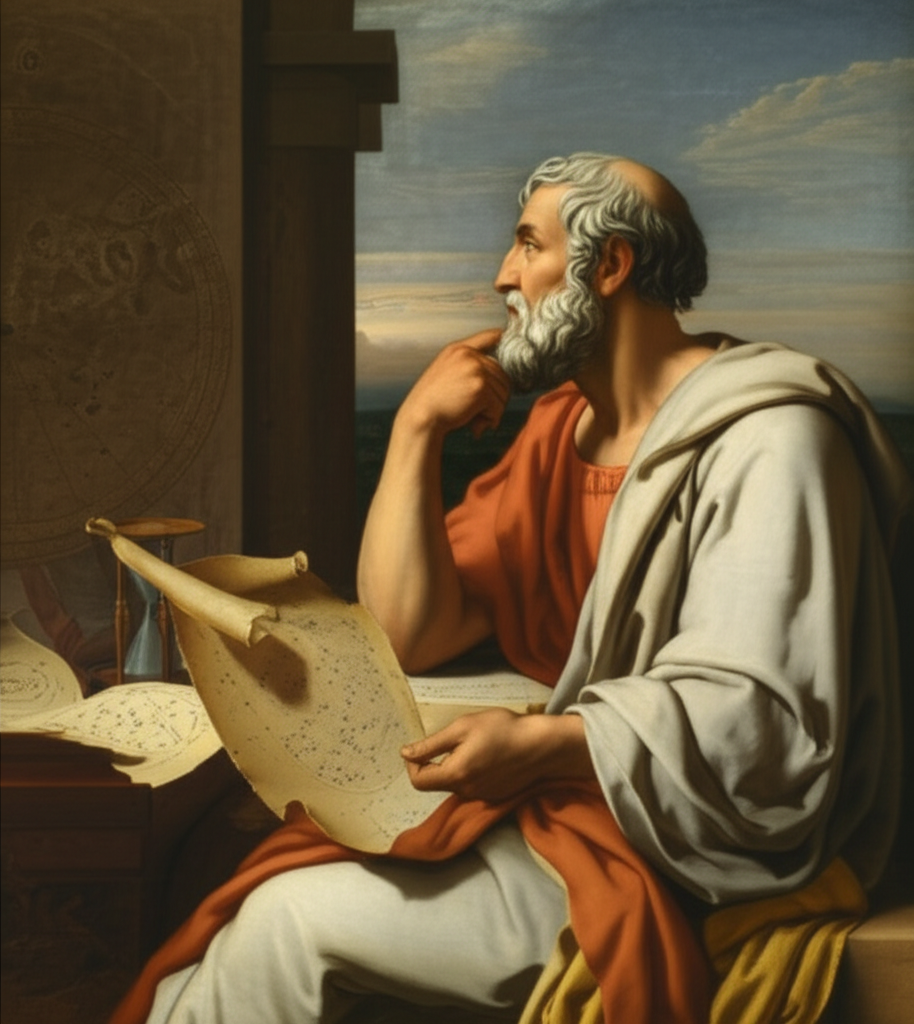
V. Implications for Our Understanding of Time and Reality
The philosophical investigation into prophecy forces us to reconsider the fundamental nature of our existence:
- Determinism vs. Free Will: If true prophecy is possible, does it imply a deterministic universe where all events are predetermined, thus undermining human free will? Or does it, as Augustine suggests, merely reflect a non-temporal apprehension of freely chosen futures?
- The Limits of Human Knowledge: Prophecy, if real, suggests a realm of Knowledge beyond our ordinary sensory and rational faculties. This challenges the empirical and rationalist traditions that have shaped much of Western philosophy, prompting questions about the boundaries of human understanding.
- The Nature of Time Itself: The very existence of prophecy implies a more complex nature of Time than our linear experience suggests. Perhaps Time is not a simple river flowing from past to future, but a landscape that can be glimpsed from different vantage points.
VI. Conclusion: An Enduring Philosophical Enigma
The nature of prophecy and its relationship to Knowledge remains a profound and unresolved philosophical enigma. While scientific prediction has expanded our capacity to foresee future events based on the laws of Nature, the classical concept of prophecy continues to challenge the very foundations of our epistemology and ontology. It compels us to wrestle with the nature of Time, the limits of human reason, and the ultimate structure of reality. Whether viewed as divine revelation, profound intuition, or mere superstition, the human fascination with knowing the future speaks to a deep-seated desire for certainty in an uncertain world, a desire that continues to fuel philosophical inquiry across generations, drawing from the wellspring of wisdom found in the Great Books of the Western World.
YouTube Video Suggestions:
-
📹 Related Video: PLATO ON: The Allegory of the Cave
Video by: The School of Life
💡 Want different videos? Search YouTube for: ""Plato Theory of Knowledge Justified True Belief Explained""
2. ## 📹 Related Video: What is Philosophy?
Video by: The School of Life
💡 Want different videos? Search YouTube for: ""Augustine on Time and Eternity Philosophy""