

The Nature of Prophecy and Faith: A Philosophical Inquiry into Divine Utterance and Human Belief
Summary: Unveiling the Enigmatic Connection
Prophecy and faith stand as two pillars in the grand edifice of human spiritual and intellectual history, particularly within the realm of Religion. This pillar page delves into the profound Nature of prophecy—its claims to divine insight, its mechanisms, and its impact—and explores faith not merely as a passive assent but as an active, often transformative, response. From ancient oracles to sacred texts, prophecy purports to offer a unique form of Knowledge, challenging the boundaries of empirical understanding and inviting a leap of belief. We shall navigate the philosophical terrain where reason confronts revelation, examining how these concepts have shaped civilizations and continue to inform our understanding of the divine, destiny, and the human condition.
1. Introduction: The Human Quest for Foreknowledge and Meaning
Humanity's enduring fascination with the future and its yearning for transcendent meaning have found potent expression in the phenomena of prophecy and faith. Across diverse cultures and epochs, individuals have claimed to receive messages directly from the divine, offering glimpses into what is to come or insights into ultimate truth. These pronouncements, often veiled in symbolism and mystery, demand a particular kind of receptivity: faith. But what, precisely, is the Nature of such prophecy? Is it a genuine conduit to divine Knowledge, a psychological projection, or a socio-political tool? And what role does faith play in validating, interpreting, and sustaining these claims within the broader framework of Religion? This inquiry seeks to unravel these complex threads, drawing upon the rich tapestry of Western philosophical thought.
2. Defining Prophecy: More Than Mere Prediction
At its core, prophecy is the claim of receiving and communicating a message from a divine source. However, to understand its Nature, we must distinguish it from simple prediction or foresight.
2.1. Prophecy vs. Prediction
| Feature | Prophecy | Prediction |
|---|---|---|
| Source | Divine, supernatural, spiritual inspiration | Human reason, empirical data, statistical analysis |
| Purpose | Revelation, divine will, moral guidance, warning, future events | Forecasting, strategic planning, scientific hypothesis |
| Authority | Inherent divine authority, often unquestionable | Based on evidence, logic, subject to revision |
| Mechanism | Vision, audition, dream, direct inspiration | Deduction, induction, observation |
| Scope | Often moral, spiritual, existential, cosmic | Typically practical, empirical, temporal |
Prophecy, therefore, carries a weight and a claim to truth that transcends human intellectual capacity, positing a direct line to a higher intelligence or ultimate reality. It often involves not just foretelling but also forthtelling—speaking truth to power, delivering moral imperatives, or offering profound spiritual insights.
2.2. The Forms of Prophecy
Prophecy manifests in various forms throughout religious history:
- Oracular Utterances: Ambiguous pronouncements from sacred sites (e.g., the Oracle of Delphi).
- Divine Visions and Dreams: Direct experiences of the divine realm or future events (e.g., biblical prophets).
- Inspired Writings: Sacred texts believed to be divinely inspired (e.g., the Torah, the Quran).
- Charismatic Speaking: Individuals speaking under direct divine influence (e.g., glossolalia in some Christian traditions).
3. The Nature of Prophecy: Source, Mechanism, and Epistemology
Philosophically, the Nature of prophecy raises profound questions about its source, the mechanism of its transmission, and the kind of Knowledge it purports to offer.
3.1. Divine Inspiration: The Ultimate Source
For believers, the source of prophecy is unequivocally divine. This posits a transcendent being capable of communicating with humanity. Philosophers like Augustine of Hippo, a towering figure in the Great Books of the Western World, explored the concept of divine illumination, where God directly enlightens the human mind. The challenge, of course, lies in verifying such a claim outside the framework of faith itself. Is it a unique form of knowing, or a subjective experience interpreted as divine?
3.2. Mechanisms of Revelation
How does the divine communicate?
- Direct Infusion: The prophet's mind is directly imbued with divine Knowledge.
- Symbolic Communication: God speaks through symbols, metaphors, and allegories, requiring interpretation.
- Ecstatic States: Prophets enter altered states of consciousness, where they are believed to be more receptive to divine messages.
- Inner Voice/Intuition: A profound internal conviction believed to originate externally.
The mechanism often dictates the clarity and directness of the prophetic message, leading to diverse interpretations and sometimes conflicting claims within and between religious traditions.
3.3. Prophecy and Knowledge: A Unique Epistemology
If prophecy offers Knowledge, what kind of Knowledge is it?
- Revealed Knowledge: Distinct from empirical or rational Knowledge, it is given, not discovered.
- Infallible Knowledge (for believers): Often considered absolute and unquestionable truth, unlike human-derived Knowledge which is fallible.
- Esoteric Knowledge: Often requires special insight or spiritual development to fully grasp.
Baruch Spinoza, another luminary from the Great Books, critically examined prophecy, suggesting that prophets often expressed divine truths through the limitations of their own imagination and cultural context rather than through pure intellect. This perspective highlights the tension between the claims of divine infallibility and the undeniable human element in prophetic transmission.
4. Faith: The Human Response to Prophecy and Revelation
Prophecy rarely stands alone; it demands a response, and that response is often faith. Faith is not merely a passive acceptance but an active engagement with the claims of prophecy, shaping individual lives and entire communities.
4.1. The Nature of Faith
- Trust and Assent: Belief in the truthfulness of prophetic claims, often without complete empirical proof.
- Commitment: A dedication to live in accordance with the revealed truths or future promises.
- Hope: An expectation of future fulfillment, divine intervention, or ultimate salvation.
- Beyond Reason (but not necessarily against it): As Thomas Aquinas argued, faith often builds upon reason but also transcends its limits, providing access to truths not discoverable by reason alone. This reconciliation of faith and reason is a recurring theme in the Great Books.
4.2. Faith as a Foundation for Religion
Faith is the bedrock upon which most Religion is built. It provides:
- Cohesion: Unites communities around shared beliefs and narratives.
- Meaning: Offers frameworks for understanding life's purpose, suffering, and destiny.
- Moral Imperative: Prophetic messages often contain ethical commands, which faith compels adherents to follow.
- Continuity: Sustains traditions and beliefs across generations, even in the absence of ongoing direct prophecy.
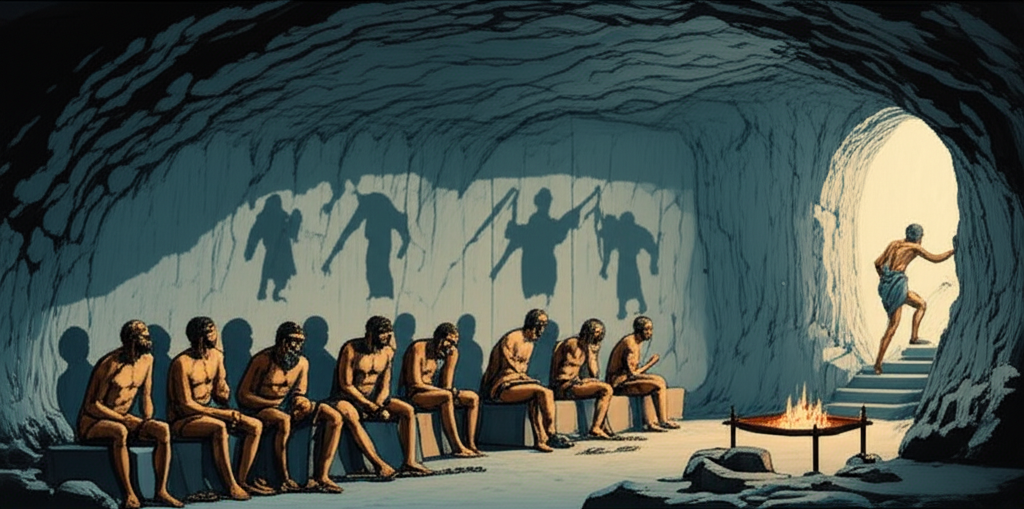
5. Prophecy, Faith, and Religion: Institutionalizing the Divine
The interplay of prophecy and faith is most vividly observed within the structures of Religion. Religious institutions often serve as custodians of prophetic traditions, interpreters of sacred texts, and guides for communal faith.
5.1. The Role of Religious Texts
Sacred scriptures are often seen as codified prophecy, preserving divine utterances for posterity. They become the primary source of Knowledge regarding God's will, humanity's origins, and future destiny. The interpretation of these texts, however, is a complex and often contentious process, leading to diverse theological schools and denominations.
5.2. Prophetic Figures as Founders and Reformers
Many religions trace their origins to charismatic prophetic figures (e.g., Moses, Jesus, Muhammad). Their prophetic experiences and teachings form the foundational narrative and ethical framework for the Religion. Subsequent generations often look back to these figures for guidance and inspiration, with faith in their divine commission being paramount.
5.3. Ritual and Practice: Reinforcing Faith
Religious rituals, ceremonies, and practices often serve to reinforce the faith of adherents and commemorate prophetic events. From sacraments to pilgrimage, these acts create a tangible connection to the sacred history and future promises embedded in prophetic traditions.
6. Philosophical Challenges and Critical Perspectives
While prophecy and faith are central to Religion, they have also been subjects of intense philosophical scrutiny and skepticism.
6.1. The Problem of Verification
How can one verify the authenticity of a prophetic claim? If prophecy transcends empirical proof, how can it be distinguished from delusion, fraud, or wishful thinking? This is a fundamental challenge for those seeking rational Knowledge.
6.2. Reason vs. Revelation
Philosophers like Immanuel Kant explored the limits of human reason, suggesting that while reason can lead us far, certain ultimate questions might remain beyond its grasp, leaving room for faith. Yet, he also cautioned against allowing faith to contradict reason, seeking a harmonious balance or clearly demarcated spheres. The tension between reason and revelation has been a perennial debate in Western philosophy.
6.3. The Problem of Evil and Unfulfilled Prophecy
If prophecy comes from an omniscient, benevolent God, why do prophecies sometimes appear to go unfulfilled, or why does suffering persist despite divine promises? These questions challenge the Nature of divine Knowledge and the efficacy of faith.
7. Conclusion: The Enduring Significance
The Nature of prophecy and faith remains a profound and multifaceted subject. Whether viewed as divine revelation, psychological phenomena, or cultural constructs, their impact on human history and the development of Religion is undeniable. They speak to a deep-seated human desire for meaning, certainty, and connection to something greater than ourselves, offering a unique path to Knowledge that often transcends the empirical and the rational. As we continue to grapple with existential questions, the dialogue between prophecy, faith, and philosophical inquiry will undoubtedly persist, inviting us to ponder the very limits of our understanding and the boundless possibilities of belief.
Further Exploration
📹 Related Video: What is Philosophy?
Video by: The School of Life
💡 Want different videos? Search YouTube for: ""Philosophy of Prophecy and Revelation""
📹 Related Video: PLATO ON: The Allegory of the Cave
Video by: The School of Life
💡 Want different videos? Search YouTube for: ""Faith and Reason Debate - Great Philosophers""