

The Labyrinth of Thought: Unpacking Poetry, Imagination, and the Nature of Reality
Poetry, often dismissed as mere fancy or decorative language, stands as a profound philosophical endeavor, inextricably linked to the faculty of imagination. Far from being a superficial embellishment, poetry, informed by memory and shaped by an active imagination, doesn't just imitate nature but actively participates in its revelation, offering unique insights into truth and the human condition. This article explores the intricate connection between poetry and imagination, arguing for their fundamental role in human understanding and the creation of Art, drawing insights from classical philosophical traditions.
The Poetic Impulse: Glimpsing Nature's Unseen Threads
At the heart of human experience lies a perpetual quest to understand the "Nature" of existence—the world around us, our inner landscapes, and the very fabric of reality. While science offers empirical data and philosophy provides structured reasoning, poetry offers a unique mode of apprehension. It allows us to perceive the underlying currents, the emotional resonance, and the often-hidden connections that constitute our world, transcgoing mere observation to reveal deeper truths. The poetic impulse is thus not just an aesthetic drive, but a cognitive one, a way of knowing.
Echoes of Mimesis: Poetry, Imitation, and Truth
The philosophical debate surrounding poetry's truth-bearing capacity dates back to antiquity, particularly within the Great Books of the Western World.
- Plato's Shadow: In his seminal work, The Republic, Plato casts a skeptical eye upon poetry, viewing it primarily as a form of mimesis, or imitation. He argues that poets, by imitating appearances, are twice removed from ultimate truth (the Forms). For Plato, the poet merely copies the sensible world, which itself is a copy of the ideal Forms, thus leading audiences away from genuine knowledge and potentially corrupting their souls with emotional appeals rather than rational thought.
- Aristotle's Affirmation: In stark contrast, Aristotle, in his Poetics, offers a robust defense of mimesis. For Aristotle, poetic imitation is not a slavish copy but a creative act. It allows the poet to represent not just "what has happened," but "what may happen"—the probable and the necessary. This makes poetry "more philosophical and of graver import than history," as it deals with universal truths (katholou) rather than particular facts. Through imaginative construction, poetry can reveal the underlying principles of human action and character, offering catharsis and insight.
This ancient dialectic highlights a crucial point: the nature of poetry shifts from passive imitation to active creation, a process driven by imagination.
The Crucible of Creation: Memory and Imagination Intertwined
The true power of poetry lies in its profound reliance on the human faculties of Memory and Imagination. These are not separate entities but deeply intertwined processes that fuel artistic creation.
- Memory as Foundation: Memory serves as the vast reservoir of human experience. It collects sensory impressions, emotions, ideas, and knowledge acquired throughout life. For the poet, memory is not merely a passive archive but a dynamic source of raw material. It's the scent of a childhood garden, the sting of a past heartbreak, the echo of a forgotten melody—all waiting to be re-envisioned.
- Imagination as Architect: Imagination is the active, transformative power that shapes this raw material into something new. It is the architect of meaning, performing several critical functions:
- Synthesis: It connects disparate elements from memory, finding novel relationships and creating coherent wholes.
- Projection: It transcends the immediate, projecting possibilities, envisioning what could be or might have been, thus enabling the creation of new worlds and ideas.
- Transformation: It re-interprets and re-contextualizes memories, imbuing them with fresh significance and universal resonance.
Philosophers from various traditions have explored this dynamic. From ancient concepts of phantasia (the faculty of forming images) to later distinctions, such as Kant's "productive imagination" which synthesizes sensory data into coherent experience, or Coleridge's "primary" and "secondary" imagination, the notion of imagination as a fundamental cognitive and creative force has been central to understanding human consciousness and Art.
The Poet as Seer: Re-presenting the World
Through the intricate dance of memory and imagination, the poet transcends simple description. The poet, much like a seer, doesn't merely describe "Nature" but re-presents it. This re-presentation is not a mirror image but a re-interpretation, revealing the essence, the emotional core, or the hidden dimensions of reality that might otherwise remain unseen. The poem, then, becomes a created reality, a new "Art" object that, while rooted in experience, stands on its own, offering a fresh perspective. It is the subjective experience of the poet made universal through the power of imaginative construction.
Dimensions of Poetic Imagination: A Typology
The imaginative faculty manifests in diverse forms within poetry, each engaging with human experience in distinct ways.
| Imaginative Dimension | Focus | Examples |
|---|---|---|
| Lyric Imagination | Intense personal experience, emotion, and subjective truth; often exploring feelings and inner states. | Sonnets, Odes, short reflective poems. |
| Narrative Imagination | Constructing worlds, characters, and events; exploring moral, existential, or historical dilemmas. | Epic poems (e.g., Homer's Iliad), dramatic monologues, ballads. |
| Metaphorical Imagination | The power to connect seemingly disparate entities, revealing profound analogies and new perspectives. | Figurative language, symbolism, allegories; seeing the 'like' in the 'unlike'. |
These dimensions underscore the versatility of Poetry as a medium for exploring the multifaceted Nature of human existence and the world.
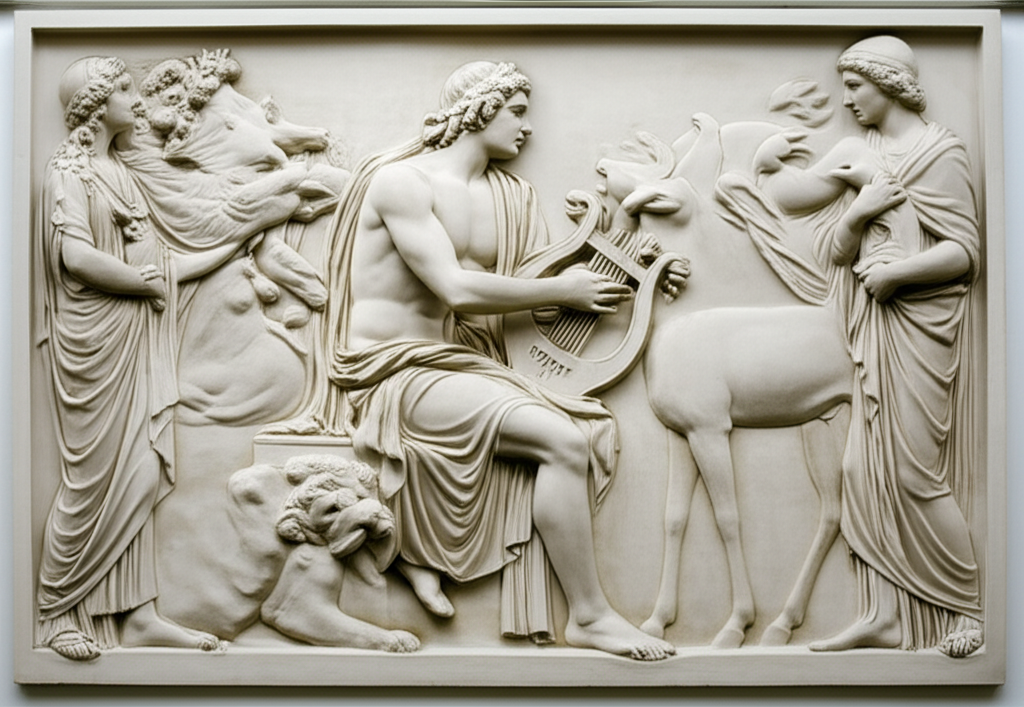
The Enduring Power of Poetic Art
The enduring power of poetic Art lies in its capacity to transcend temporal and cultural boundaries. By engaging our Memory and Imagination, poetry fosters empathy, challenges perceptions, and expands our understanding of ourselves and the world. A well-crafted poem, born from the crucible of a poet's imagination, can resonate across centuries, speaking to universal human experiences through particular instances. It's a timeless dialogue with existence, continually redefining our relationship with "Nature" and truth.
Conclusion: The Imagination's Infinite Canvas
Ultimately, the Nature of Poetry is inseparable from the boundless capacity of Imagination. It is not merely a decorative flourish but a fundamental cognitive and creative faculty that allows us to process Memory and Imagination, interpret reality, and construct meaning. Poetry, as a vital mode of philosophical inquiry and artistic expression, continually redefines our understanding of the world, reminding us that truth often resides not just in what is seen, but in what can be envisioned. Through the poet's imaginative lens, the ordinary becomes extraordinary, the fleeting becomes eternal, and the whispers of memory transform into the resonant voice of Art.
YouTube Video Suggestions:
📹 Related Video: PLATO ON: The Allegory of the Cave
Video by: The School of Life
💡 Want different videos? Search YouTube for: "Plato's Theory of Art and Mimesis Explained"
📹 Related Video: KANT ON: What is Enlightenment?
Video by: The School of Life
💡 Want different videos? Search YouTube for: "The Philosophy of Imagination: Kant and Coleridge"