

The Unseen Loom: Weaving Reality Through Poetry and Imagination
Summary: At the heart of human experience lies a profound interplay between poetry and imagination. This article explores how these two faculties, deeply rooted in the very nature of our consciousness, not only reflect the world but actively shape our understanding of it. Drawing upon the intellectual currents found within the Great Books of the Western World, we delve into how memory and imagination coalesce to form the essence of creative art, offering insights into truth and beauty that transcend mere empirical observation.
The Intrinsic Nature of Poetic Expression
The inquiry into the nature of poetry is an ancient one, a philosophical pursuit that stretches back to the likes of Plato and Aristotle. Is poetry a mere imitation of reality, a mimesis as the Greeks conceived it, or does it possess a deeper, more transformative power? For millennia, thinkers have grappled with the poet's unique capacity to articulate the ineffable, to give form to feelings, and to illuminate aspects of existence that prose often leaves untouched.
Poetry, in its essence, is more than just carefully arranged words; it is a mode of perception. It invites us to see the familiar anew, to feel deeply, and to contemplate the underlying structures of meaning that govern our lives. It is a conduit through which the subjective experience can attain universal resonance, transforming personal insight into shared human understanding. The art of the poet, therefore, is not simply decorative; it is fundamental to how we engage with and interpret the world.
The Crucible of Imagination: Forging New Realities
Central to the poetic act, and indeed to all creative art, is the faculty of imagination. Far from being a frivolous diversion, imagination is a cornerstone of human cognition, a vital mechanism that allows us to conceive of possibilities beyond the immediate present. Philosophers, from Aristotle's concept of phantasia (the faculty of forming mental images) to Kant's productive imagination, have recognized its indispensable role in both perception and creation.
The symbiotic relationship between memory and imagination is particularly potent. Memory provides the raw material—the accumulated experiences, sensations, and knowledge—while imagination acts as the alchemist, reordering, combining, and transforming these elements into novel constructs. It is through this alchemical process that we can envision futures, empathize with others' experiences, and construct complex narratives that give meaning to our lives. Without imagination, our understanding would be confined to the purely empirical, lacking the depth and breadth necessary for true insight.
Table 1: Key Philosophical Perspectives on Imagination
| Philosopher | Core Concept of Imagination | Impact on Poetry/Art |
|---|---|---|
| Plato | Primarily imitative, potentially deceptive | Poets as imitators, removed from truth; can inspire divine madness. |
| Aristotle | Phantasia - faculty for mental images | Essential for memory, thought, and artistic mimesis; allows for "universal" truths. |
| Immanuel Kant | Productive Imagination - synthesizes senses | Crucial for forming concepts, bridging understanding and sensibility, creating beauty. |
| S.T. Coleridge | Primary & Secondary Imagination | Primary: living power, human perception. Secondary: dissolves, diffuses, creates. |
From Mimesis to Creation: The Poet's Transformative Art
While early philosophical thought, particularly Plato's, viewed art and poetry with a degree of suspicion, seeing them as mere imitations of imitations, subsequent thinkers have championed their capacity for deeper truth-telling. The poet, through the power of imagination, does not merely copy what is seen; rather, they reveal what could be or what is, but unseen. They distill the essence of human experience, presenting it in a form that is both particular and universal.
This transformative power of poetic art lies in its ability to transcend the literal. A poem about a sunset is not just a description of light and color; it is an evocation of awe, transience, and beauty. The poet uses language as a sculptor uses clay, shaping it to reveal a form that previously existed only in the mind's eye. This creative act, born from the interplay of memory and imagination, allows us to apprehend truths about the human condition, about love, loss, joy, and sorrow, in ways that direct experience alone might not permit.
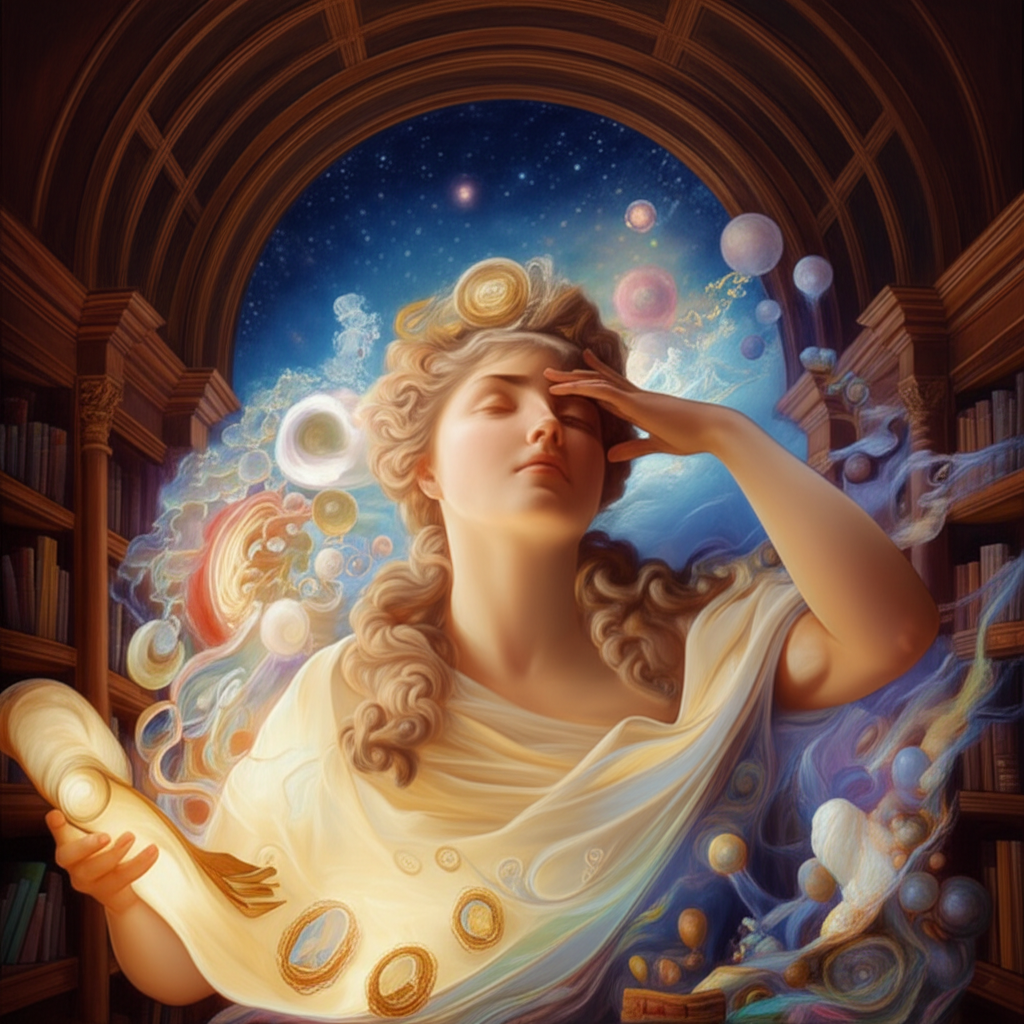
The Enduring Resonance of Art and Poetry
The nature of poetry and imagination is not merely an academic concern; it is fundamental to our cultural and personal development. Through the art of language and the boundless capacity of the mind to conjure and connect, we build shared narratives, preserve collective memory, and continually redefine our understanding of existence. The great poems, plays, and stories are not just historical artifacts; they are living testaments to the enduring power of the human spirit to create meaning where none might outwardly appear. They challenge us, comfort us, and ultimately, help us to better understand ourselves and our place within the vast, intricate tapestry of the cosmos.
YouTube Video Suggestions:
- YouTube: Plato Aristotle Poetry Philosophy Mimesis
- YouTube: Kant Imagination Aesthetics Philosophy
📹 Related Video: What is Philosophy?
Video by: The School of Life
💡 Want different videos? Search YouTube for: "The Nature of Poetry and Imagination philosophy"