

The Nature of Poetry and Imagination: A Philosophical Inquiry
Poetry, far from being a mere aesthetic adornment, stands as a profound philosophical endeavor, deeply intertwined with the human faculty of imagination. This article explores how poetry, through its unique engagement with memory and the creative impulse, not only mirrors the Nature of existence but actively shapes our understanding of it, asserting its vital place within the broader domain of Art. We will delve into how the poet's unique vision, fueled by Memory and Imagination, translates the ineffable into tangible form, offering pathways to deeper truths about ourselves and the cosmos.
The Inseparable Dance of Verse and Vision
At its core, Poetry is an act of profound translation – taking the raw, often chaotic data of experience and transforming it into something ordered, resonant, and meaningful. This process is utterly dependent on Imagination, the human capacity to form new images and ideas that are not present to the senses. It is through imagination that we transcend the immediate, envisioning possibilities, contemplating abstractions, and forging connections that defy conventional logic. For the philosopher, this makes poetry a fascinating case study in how human consciousness grapples with reality, not just by observing it, but by actively re-creating and re-interpreting it.
The Essence of Poetic Creation: Beyond Mere Words
What is Poetry? It is more than meter and rhyme; it is a concentrated form of expression that seeks to capture the very Nature of a feeling, an idea, or an experience. Unlike prose, which often aims for direct communication, poetry thrives on suggestion, metaphor, and ambiguity, inviting the reader into a co-creative act of interpretation.
Consider the ancient Greek concept of mimesis, explored extensively in Aristotle's Poetics. While often translated as 'imitation,' it implies a deeper engagement than mere copying. The poet, through imagination, imitates not just the surface of reality, but its underlying principles, its universal truths. They create a new reality that, in its essence, reflects something profound about the original. This is where poetry touches upon philosophy – both disciplines seek to uncover the fundamental structures and meanings of existence.
Imagination: The Architect of Inner Worlds
The faculty of Imagination is the crucible in which poetic truth is forged. It is not merely fantasy, but a powerful cognitive tool that allows us to:
- Synthesize diverse experiences: Combining disparate elements to form novel insights.
- Empathize with others: Stepping into different perspectives and understanding complex emotions.
- Envision alternatives: Imagining worlds that could be, or recalling worlds that were.
- Give form to the formless: Articulating emotions, concepts, and spiritual insights that defy simple description.
Without imagination, poetry would be barren. It is the force that allows a poet to see a "cloud" not just as water vapor, but as a "lonely wanderer" or a "fleeting thought," imbuing the mundane with profound significance.
Memory's Canvas, Imagination's Brush
The relationship between Memory and Imagination is particularly vital to the poetic endeavor. Memory provides the raw material – the sights, sounds, feelings, and thoughts accumulated over a lifetime. But imagination is not merely a passive recall mechanism; it is an active, transformative force.
As philosophers like Augustine have explored, memory is not a static archive but a dynamic, creative space. When a poet draws upon a past experience, their imagination reworks, recontextualizes, and re-presents it, often imbuing it with new meaning that was not apparent at the moment of its original occurrence. This interplay allows poetry to:
- Reanimate the past: Bringing historical moments or personal recollections vividly back to life.
- Extract universal truths from particular experiences: A specific memory of loss can become a poem about universal grief.
- Shape identity: Through the imaginative retelling of one's own history, both individual and collective identities are formed and reinforced.
| Aspect of Poetic Creation | Role of Memory | Role of Imagination |
|---|---|---|
| Inspiration | Provides initial spark, sensory details, emotional context | Transforms initial spark into concept, expands details, crafts narrative |
| Figurative Language | Supplies concrete images and past associations for metaphors | Creates novel comparisons, synthesizes disparate ideas into new meaning |
| Emotional Resonance | Recalls personal feelings of joy, sorrow, awe | Amplifies, refines, and universalizes emotions for broader impact |
| Structure & Form | May suggest patterns from remembered songs or stories | Innovates new forms, adapts existing structures to fit unique vision |
Poetry as a Unique Art Form
Within the broader spectrum of Art, poetry holds a distinct and powerful position. While painting captures visual form and music evokes emotional states, poetry leverages the very fabric of language itself – its sounds, rhythms, and semantic layers – to construct meaning. It is an art form that operates directly on the intellect as well as the emotions, compelling the reader to engage actively with its intricate structures and evocative imagery.
The beauty of poetry lies not just in its aesthetic appeal, but in its capacity to expand our understanding of the world. It often challenges conventional ways of seeing, inviting us to perceive the extraordinary in the ordinary, and to find order within chaos. This makes poetry an indispensable tool for philosophical inquiry, capable of articulating nuances that prose might flatten or that purely logical arguments might miss.
The Reciprocal Act: Poet, Poem, and Reader
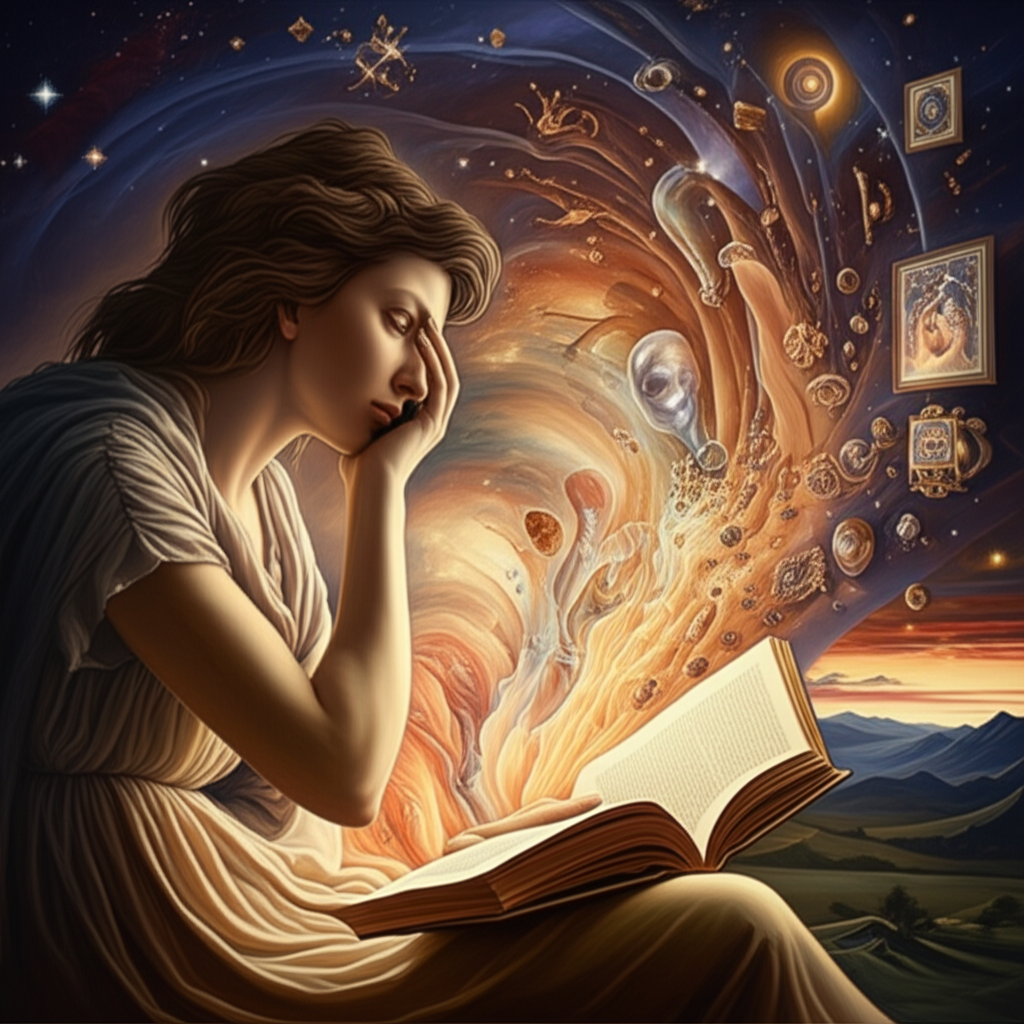
The power of Poetry and Imagination is not confined to the poet alone. The act of reading poetry is itself an imaginative exercise. The poet offers a scaffold of words, but the reader's imagination must build the full structure, filling in the sensory details, experiencing the emotions, and interpreting the layers of meaning. This makes poetry a profoundly interactive Art form, where the work is completed in the mind of the recipient. This shared imaginative space fosters empathy, broadens perspectives, and strengthens our connection to the shared human experience.
Conclusion: The Enduring Truths of Poetic Nature
Ultimately, the Nature of Poetry and Imagination reveals itself as a fundamental aspect of human existence. It is through this potent combination that we not only reflect on the world but actively participate in its creation of meaning. Poetry, as an Art form born from the interplay of Memory and Imagination, offers us not just beauty, but profound insights into the human condition, the mysteries of consciousness, and the enduring quest for truth. It reminds us that to truly understand reality, we must not only observe it but also imagine it.
📹 Related Video: PLATO ON: The Allegory of the Cave
Video by: The School of Life
💡 Want different videos? Search YouTube for: "Plato on Poetry and Art Philosophy"
📹 Related Video: KANT ON: What is Enlightenment?
Video by: The School of Life
💡 Want different videos? Search YouTube for: "Kant Aesthetic Judgment Imagination"