

The Enduring Enigma: Unpacking the Nature of Light in Physics
Summary: The nature of light stands as one of the most profound and persistent mysteries in physics, challenging our very understanding of reality. From ancient philosophical inquiries into vision and illumination to the revolutionary insights of quantum mechanics, light has defied simple categorization, revealing itself to be both a wave and a particle. This duality forces us to confront the limits of classical intuition and invites a deeper philosophical reflection on the fundamental element that underpins our observable universe.
The Dawn of Illumination: Ancient Musings on Light
For millennia, the phenomenon of light has captivated thinkers, not merely as a practical necessity for sight but as a profound philosophical puzzle. The great minds chronicled in the Great Books of the Western World, from Plato's allegory of the cave, which uses light as a metaphor for truth and knowledge, to Aristotle's detailed observations on vision and color, grappled with its essence. Was light a substance emanating from objects, or was it a modification of the medium between the eye and the object? These early contemplations, while lacking the rigorous experimental framework of modern physics, laid the groundwork for asking fundamental questions about perception, reality, and the very nature of existence.
The Classical Debate: Waves, Particles, and the Aether
The scientific revolution brought a more systematic approach to understanding light. The 17th century saw the emergence of two formidable, competing theories:
- Corpuscular Theory (Isaac Newton): Proposing that light consists of tiny, discrete particles (corpuscles) emitted by luminous bodies. This theory elegantly explained phenomena like reflection and refraction, treating light's behavior through the lens of classical mechanics. Newton's immense authority lent significant weight to this particle view.
- Wave Theory (Christiaan Huygens): Suggesting that light propagates as a wave through a hypothetical medium called the "luminiferous aether." This model was particularly adept at explaining diffraction and interference patterns, phenomena that were difficult for the corpuscular theory to reconcile.
For centuries, these two paradigms wrestled for dominance, with experimental evidence often seeming to favor one over the other. Thomas Young's double-slit experiment in the early 19th century provided compelling evidence for the wave nature of light, demonstrating interference patterns characteristic of waves. Later, James Clerk Maxwell unified electricity and magnetism, showing that light is an electromagnetic wave, further solidifying the wave theory.
The Quantum Leap: Light's Astonishing Duality
Just as the wave theory seemed definitively established, the early 20th century delivered a series of profound shocks that irrevocably altered our understanding.
- Planck's Quantum Hypothesis (1900): Max Planck, while trying to explain black-body radiation, proposed that energy is not continuous but emitted and absorbed in discrete packets, or "quanta."
- Einstein's Photoelectric Effect (1905): Albert Einstein extended Planck's idea, suggesting that light itself consists of discrete energy packets, which he called "photons." This brilliant explanation of the photoelectric effect, where light ejects electrons from a metal surface, resurrected the particle nature of light. The energy of these photons was directly related to the light's frequency, not its intensity.
This was a paradigm shift. How could light be both a wave and a particle? This perplexing phenomenon, known as wave-particle duality, became a cornerstone of quantum mechanics. Light exhibits wave-like properties (interference, diffraction) when propagating, but particle-like properties (discrete energy packets) when interacting with matter. The nature of light is not simply one or the other, but an intrinsic, inseparable blend of both.
Light as a Fundamental Element of Reality
Beyond its dual nature, light is far more than just what allows us to see. It is a fundamental element of the universe, playing a pivotal role in countless physical processes:
- Energy Carrier: Light carries energy from the sun, fueling life on Earth through photosynthesis.
- Information Conveyor: From fiber optics to radio waves, light in its various electromagnetic forms is the primary carrier of information across vast distances.
- Cosmic Messenger: Light from distant stars and galaxies is our only direct link to the cosmos, allowing us to understand the universe's origins, expansion, and composition.
- Universal Constant: The speed of light in a vacuum (c) is a universal constant, a bedrock principle of Einstein's theory of relativity, dictating the ultimate speed limit for anything in the universe. This constant underpins the very fabric of spacetime.
The study of light has thus evolved from a simple inquiry into vision to a profound exploration of the fundamental mechanics governing the cosmos.
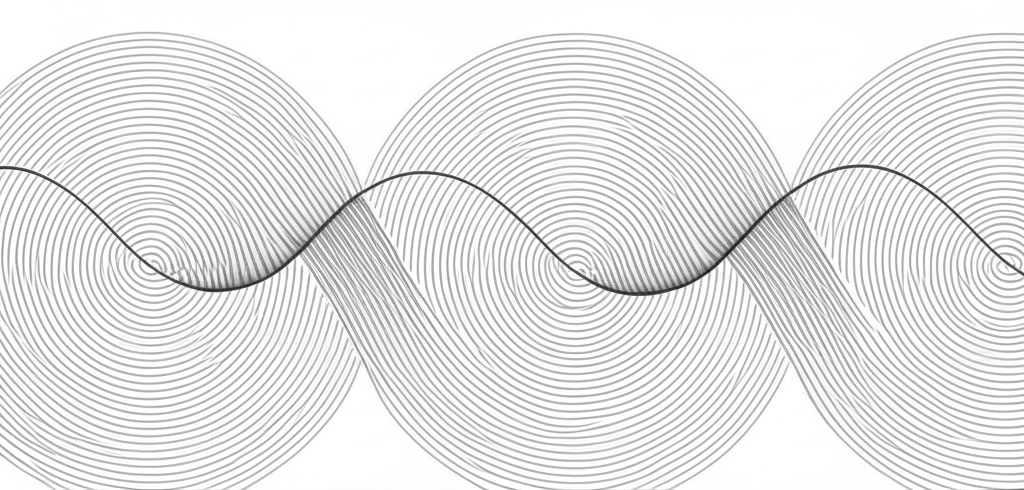 and the other half showing a stream of discrete, luminous particles (photons). The two halves seamlessly merge in the center, symbolizing their inherent duality. The background is a subtle gradient from deep cosmic blue to bright ethereal white, suggesting both its omnipresence and its mysterious origin.)
Philosophical Echoes in the Quantum Realm
The quantum nature of light forces us to reconsider deeply held philosophical assumptions about reality, observation, and knowledge. If light behaves differently depending on how we observe it, what does that imply about an objective reality independent of an observer? This question echoes ancient dialogues about appearance versus reality, perception versus truth, topics eloquently explored in the Great Books. The indeterminacy inherent in quantum mechanics challenges our classical notions of cause and effect, suggesting a more probabilistic universe where the element of light itself embodies a profound mystery.
In essence, the journey to understand the nature of light is a microcosm of humanity's broader quest for knowledge. It is a journey that began with ancient philosophers gazing at the stars, evolved through meticulous scientific inquiry, and now leads us to the very edge of our comprehension, reminding us that the universe holds wonders far stranger and more beautiful than we could ever classically imagine.
Further Exploration:
-
📹 Related Video: KANT ON: What is Enlightenment?
Video by: The School of Life
💡 Want different videos? Search YouTube for: ""Wave-Particle Duality Explained Simply""
-
📹 Related Video: PLATO ON: The Allegory of the Cave
Video by: The School of Life
💡 Want different videos? Search YouTube for: ""History of Light Theories from Newton to Quantum Mechanics""