

The Enigmatic Nature of Light: A Philosophical Inquiry into Physics
Light, that ubiquitous element of our perception, has long been a source of both wonder and profound scientific inquiry. From the earliest philosophical ponderings to the most advanced quantum theories, its nature has challenged our understanding of reality itself. This article delves into the historical and scientific journey of comprehending light, exploring how its mechanics have reshaped our physics and, consequently, our philosophical worldview. We will trace its evolution from a simple ray to a complex quantum entity, revealing how each discovery has peeled back layers of mystery, only to expose deeper, more fascinating questions about the fabric of the cosmos.
The Journey of Illumination: A Summary
The nature of light, a seemingly simple phenomenon, has proven to be one of the most complex and revelatory subjects in physics. Initially conceived as either particles or waves, its true character was unveiled through centuries of scientific exploration, culminating in the mind-bending concept of wave-particle duality. From the ancient Greeks pondering its elemental form to Maxwell's electromagnetic revolution and Einstein's relativistic insights, light has consistently served as a cornerstone for advancing our understanding of the universe's fundamental mechanics. Its study continues to challenge our intuitions, forcing us to reconsider the very nature of observation and reality.
From Rays to Waves: Early Investigations into Light's Mechanics
For millennia, the nature of light remained an elusive concept, often intertwined with philosophical and theological explanations. Ancient thinkers, as found in the Great Books of the Western World, pondered whether light emanated from the eye or the object, whether it was instantaneous or travelled. Aristotle, for instance, considered light not a body or a mechanic movement, but a mere "activity" of a transparent medium.
The scientific revolution began to shift this perspective. Figures like René Descartes proposed light as a pressure in a subtle medium, while Isaac Newton, through his experiments with prisms, championed a corpuscular theory, suggesting light was composed of tiny particles. His groundbreaking work, Opticks, detailed phenomena like reflection and refraction with remarkable precision.
However, a competing wave theory emerged, notably from Christiaan Huygens. He proposed that light propagated as waves through an ethereal medium. The crucial evidence favoring the wave model came much later with Thomas Young's double-slit experiment in the early 19th century. This elegant experiment demonstrated interference patterns, a hallmark of wave mechanics, seemingly settling the debate: light was a wave.
Maxwell's Unification: Light as an Electromagnetic Element
The mid-19th century brought a monumental leap in understanding. James Clerk Maxwell, building upon the work of Faraday, unified electricity and magnetism into a single theoretical framework. His famous Maxwell's equations not only described the behavior of electric and magnetic fields but also predicted the existence of electromagnetic waves propagating at a specific speed. Remarkably, this calculated speed precisely matched the measured speed of light.
This discovery was revolutionary: light was revealed to be an element of the electromagnetic spectrum, an oscillating wave of electric and magnetic fields. This elegant theory explained a vast array of optical phenomena and laid the foundation for modern telecommunications. It connected light, once a mysterious entity, directly to the fundamental forces of the universe, demonstrating the underlying unity of seemingly disparate physical phenomena.
Quantum Mechanics and the Dual Nature of Light
Just as the wave nature of light seemed definitively established, new experimental evidence began to emerge that challenged this understanding. Phenomena like the photoelectric effect, where light striking a metal surface ejects electrons, could not be adequately explained by wave theory alone.
In 1900, Max Planck introduced the concept of energy quantization, suggesting that energy is emitted or absorbed in discrete packets, or "quanta." Five years later, Albert Einstein applied this idea to light, proposing that light itself consists of discrete packets of energy, which he later called photons. This re-introduced the particle aspect of light.
The resolution to this apparent contradiction came with the development of quantum mechanics and the concept of wave-particle duality. Light, it turns out, exhibits both wave-like and particle-like properties, depending on how it is observed or measured. It's not exclusively one or the other but possesses a dual nature that defies our everyday intuition.
| Property | Wave-like Manifestations | Particle-like Manifestations |
|---|---|---|
| Behavior | Diffraction, Interference, Polarization | Photoelectric Effect, Compton Scattering |
| Description | Continuous field, wavelength, frequency | Discrete packets (photons), energy, momentum |
| Key Experiments | Young's Double-Slit | Photoelectric Effect |
This duality is not merely a scientific curiosity; it has profound philosophical implications. How can something be both a wave and a particle simultaneously? It forces us to reconsider the nature of reality itself, suggesting that our classical categories may be insufficient to describe the quantum realm.
Light's Unyielding Speed: A Cornerstone of Modern Physics
Another pivotal moment in understanding light's nature came with Albert Einstein's theory of special relativity in 1905. Central to this theory is the postulate that the speed of light in a vacuum (c) is constant for all observers, regardless of their relative motion. This seemingly simple fact has staggering consequences for our understanding of space, time, and causality.
If the speed of light is invariant, then space and time must be relative, warping and stretching to accommodate this universal constant. This revelation about light's fundamental mechanics fundamentally altered our perception of the cosmos, replacing the absolute Newtonian framework with a dynamic, interconnected spacetime. Light, therefore, is not just an element we observe; it is a fundamental pillar upon which the very structure of our universe is built.
Reflecting on Light's Essence: A Philosophical Lens
The scientific journey to understand the nature of light is also a philosophical odyssey. From ancient philosophers grappling with light as a metaphor for knowledge and truth (Plato's Allegory of the Cave) to modern physicists confronting its paradoxical quantum mechanics, light has consistently pushed the boundaries of human comprehension.
The wave-particle duality, in particular, challenges our fundamental assumptions about identity and categorization. Is light truly an element in the traditional sense, or is it a manifestation of deeper, more abstract principles? The very act of observing light seems to influence its nature, raising questions about the role of the observer in shaping reality – a concept with deep roots in philosophical discourse about consciousness and perception.
The evolution of our understanding of light, detailed through the lens of physics, mirrors the broader human quest for knowledge. Each scientific advancement, from Newton's prisms to Einstein's relativity, can be seen as a chapter in our ongoing dialogue with the universe, revealing its hidden mechanics and forcing us to refine our philosophical frameworks. The Great Books offer us a historical perspective, showing how foundational questions persist, even as our tools for answering them become vastly more sophisticated.
Conclusion
The nature of light, a seemingly simple phenomenon, has proven to be one of the most complex and revelatory subjects in physics. It has led us from the tangible world of rays and waves into the abstract realm of quantum mechanics and relativistic spacetime. Light is more than just how we see; it is an elemental force that shapes the universe and challenges our very understanding of reality. As we continue to probe its mysteries, light remains a beacon, illuminating not only the cosmos around us but also the profound depths of philosophical inquiry into the nature of existence itself. The journey to understand light is, in essence, a journey to understand ourselves and our place within the grand mechanics of the universe.
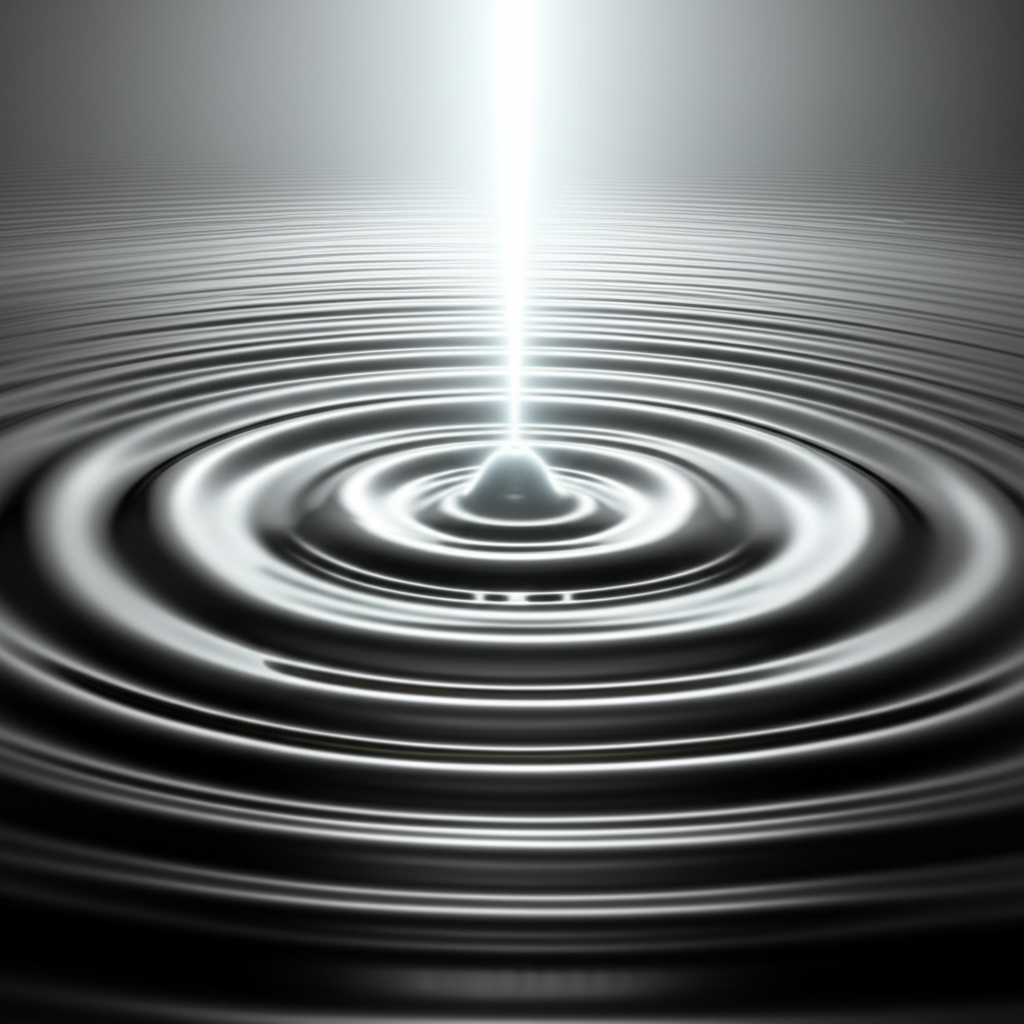 and discrete particles (like a shower of luminous dots). The background is a dark, cosmic expanse, subtly hinting at the vastness of the universe and the fundamental role of light within it. The image aims to visually represent the wave-particle duality in a philosophically evocative manner, suggesting mystery and profound truth.)
📹 Related Video: What is Philosophy?
Video by: The School of Life
💡 Want different videos? Search YouTube for: ""Philosophy of Light Physics Duality""
📹 Related Video: What is Philosophy?
Video by: The School of Life
💡 Want different videos? Search YouTube for: ""Great Books Western World Science Philosophy""