

Our journey into ancient philosophy brings with it a timeless reminder: the past holds keys to understanding our present. This newsletter seeks to bridge ancient insights with modern relevance, allowing us to engage with enduring questions about life, virtue, and the nature of justice. As we explore ideas from Plato and his dialogues, we are reminded of the wisdom embedded in these texts—a wisdom that continues to shape our thinking, offering both guidance and challenge as we navigate today’s world.
From the Archives of Ancient Greece: Sugrue’s Examination of Thrasymachus’ Challenge to Justice
Dr. Michael Sugrue’s study of Thrasymachus in The Republic invites us into a classic debate: is justice a genuine virtue, or simply a product of power? Thrasymachus’ view—that “justice is nothing other than the advantage of the stronger”—tests the depth of our understanding of fairness. Sugrue portrays Thrasymachus not just as an opponent to Socratic ideals, but as a crucial voice in the dialogue, prompting us to reflect on whether justice is an intrinsic good or a socially constructed tool for maintaining order. This examination challenges us to revisit the role of justice in our lives, encouraging us to see both sides in this timeless debate.
Insights from the Dialogues: Justice as the Stronger’s Advantage (Republic, 338c-341a)
In The Republic, Socrates confronts Thrasymachus’ claim that justice serves only the powerful. The dialogue, especially at 338c-341a, dives into questions about the nature of justice, exposing the tension between self-interest and morality. Thrasymachus’ assertion that rulers craft laws for their own benefit presses us to ask: does justice truly exist outside the interests of those in power? By examining this exchange, Plato encourages us to explore the possibility of justice as an objective ideal. For today’s reader, this passage serves as a reminder that the concept of justice is not just about laws—it is about the moral foundation that upholds them.
Chance and Fate: Fairness and Fortune in Ancient Games
Ancient games of chance, such as knucklebones and dice, offered a rich reflection on fortune’s role in life. These games, which held significance far beyond entertainment, represented fate’s unpredictable influence, serving as a powerful metaphor for life’s uncertainties. To the Greeks, fairness in these games mirrored life’s balance, where fortune could uplift or humble anyone, irrespective of status. Today, these games remind us that while we strive for control and fairness, outcomes are sometimes left to chance. Reflecting on this balance, we gain insight into the resilience needed to embrace life’s unpredictable nature.
Explore the Mystical World of Astraguli: Ancient Games of Chance with Cultural Significance.
Virtues Revisited: Practical Lessons for Today
One of Plato’s most enduring gifts to philosophy is his exploration of the cardinal virtues: wisdom, courage, temperance, and justice. These virtues offer practical guidance that transcends time. Each newsletter highlights one virtue with real-life examples that speak to contemporary challenges. Whether in decision-making, personal discipline, or the courage to question, these virtues provide a roadmap to living well. Today’s focus on justice challenges us to look beyond conventional ideas of right and wrong, encouraging a deeper understanding of fairness in personal and societal contexts.
Engage with Us: Reader’s Corner
We invite you to join the conversation! Share your reflections, questions, or insights into the themes discussed here. Selected reader responses will be featured in future newsletters, creating a space where we can engage together. What resonated with you? What questions remain? We look forward to your contributions, as they help keep these ancient discussions alive and relevant.
Closing Reflection: Socrates’ Enduring Legacy
Socrates, through his dialogues and relentless questioning, left an indelible mark on the world of ideas. His legacy reminds us that philosophy is not merely an academic exercise; it is a way of life, a pursuit of wisdom and truth. As we close this issue, let us carry forward Socrates’ example, remembering that the journey to understanding often begins with a single question. Through inquiry, reflection, and dialogue, we continue to seek meaning in a complex world.
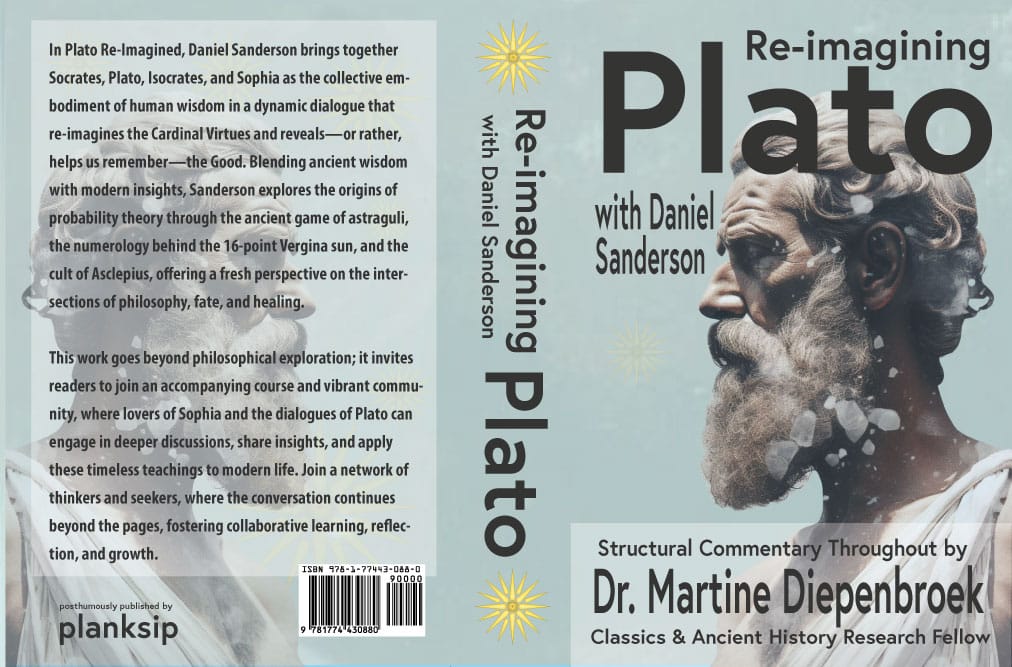
Plato Re-Imagined
This course offers 32 comprehensive lectures exploring most of Plato's dialogues. These lectures guide students toward a consilient understanding of the divine—a concept that harmonizes knowledge across disciplines and resonates with secular and religious leaders. As a bonus, Lecture #33 focuses on consilience, demonstrating how different fields of knowledge can converge to form a unified understanding.


