

The Enduring Quest: Unpacking the Nature of Justice in a Democratic State
The pursuit of justice is one of humanity's oldest and most profound endeavors, a foundational pillar upon which civilizations are built and aspire to thrive. When this quest unfolds within the framework of a democratic State, the complexities multiply, intertwining ideals of self-governance, individual liberty, and collective well-being. This exploration delves into the multifaceted nature of justice within a democracy, drawing upon the wisdom of the "Great Books of the Western World" to illuminate the principles, challenges, and perpetual evolution of this vital relationship. We will examine how law, government, and the constitution act as both instruments and reflections of a society's understanding of fairness and equity.
I. Defining the Indefinable: What is Justice?
Before we can understand justice in a democratic State, we must first grapple with its fundamental definition. Is it a universal truth, a societal construct, or a personal virtue? Philosophers have debated this question for millennia, laying the groundwork for our contemporary understanding.
A. Classical Conceptions of Justice
From the annals of ancient Greece, particularly within Plato's Republic, justice is presented not merely as a set of external laws but as an internal harmony, both within the individual soul and the ideal State. For Plato, a just individual is one whose reason, spirit, and appetite are in proper balance, guided by wisdom. Analogously, a just State is one where each class (rulers, auxiliaries, producers) performs its function appropriately, contributing to the overall good.
Aristotle, in his Nicomachean Ethics and Politics, offers a more practical and nuanced view. He distinguishes between:
- Distributive Justice: Concerned with the fair allocation of honors, wealth, and goods according to merit or contribution.
- Corrective Justice: Aims to restore equality when it has been disturbed by wrongdoing, often through punishment or compensation.
- Reciprocal Justice: Essential for the stability of society, involving fair exchange in transactions.
For Aristotle, justice is intrinsically linked to the common good and the flourishing of the polis.
B. Modern Perspectives on Justice
Later thinkers shifted focus, often emphasizing individual rights and social contracts. John Locke, in his Two Treatises of Government, posited that individuals possess natural rights (life, liberty, property) that precede the State, and justice involves protecting these rights. The State is legitimate only if it governs with the consent of the governed, ensuring these rights are upheld through law.
In the 20th century, John Rawls's A Theory of Justice (though not strictly a 'Great Book' in the classical sense, it stands as a cornerstone of modern political philosophy) introduced the concept of "justice as fairness," proposing that a just society would be structured by principles chosen by individuals in an "original position" behind a "veil of ignorance," ensuring impartiality.
II. The Democratic Ideal and the Role of the State
A democratic State is, by its very definition, a political entity where power ultimately resides with the people. It is a system built on the principles of popular sovereignty, equality, and liberty.
A. Core Tenets of Democracy
- Popular Sovereignty: The ultimate authority rests with the citizenry.
- Equality: All citizens are equal before the law and possess equal political rights.
- Liberty: Guarantees fundamental freedoms, often enshrined in a Constitution.
- Rule of Law: Governance by established laws, not by arbitrary power.
Jean-Jacques Rousseau, in The Social Contract, argued that legitimate political authority stems from a "general will" of the people, expressing their collective interest rather than individual desires. This general will, when translated into law, forms the basis of a just society.
B. The State as an Instrument of Justice
The State provides the framework for actualizing justice in a democracy. It is the apparatus that:
- Establishes and enforces laws.
- Administers government functions.
- Protects individual rights and liberties.
- Provides public services.
Without a functioning State, the abstract ideals of justice and democracy would remain theoretical constructs, lacking the means for their practical implementation.
III. The Intertwined Destinies: Justice in Democracy
The fundamental premise is that a democratic State is uniquely positioned to pursue justice because it derives its legitimacy from the people it serves. However, this pursuit is fraught with inherent tensions.
A. Law as the Embodiment of Justice
In a democracy, law is the primary mechanism through which justice is sought and administered. Ideally, laws are:
- Universal: Applying equally to all citizens.
- Transparent: Known and accessible to everyone.
- Fair: Reflecting societal values of equity.
Cicero, in his treatise On Duties, underscored the importance of law as a reflection of natural reason and a binding force for a just society. A just law aims to protect the innocent, punish the guilty, and resolve disputes impartially.
B. The Constitution: Blueprint for a Just Government
A Constitution serves as the foundational law of a democratic State. It outlines the structure of government, defines the powers and limitations of its branches, and often enumerates the fundamental rights and freedoms of citizens.
A well-crafted Constitution aims to:
- Limit Power: Preventing tyranny and ensuring accountability of the government.
- Protect Rights: Safeguarding individual liberties against infringement.
- Establish Due Process: Guaranteeing fair legal procedures.
- Promote Stability: Providing a consistent framework for governance.
C. The Government's Mandate for Justice
The various branches of government play distinct roles in upholding justice:
- Legislature: Enacts laws that reflect the will of the people and aim for societal fairness.
- Executive: Implements and enforces those laws.
- Judiciary: Interprets laws, resolves disputes, and ensures that laws are applied justly and constitutionally.
IV. Mechanisms and Manifestations of Justice in a Democratic State
The quest for justice in a democracy is a continuous process, manifest through various institutional and societal mechanisms.
A. The Rule of Law
The principle of the Rule of Law is paramount. It means that everyone, including those in government, is subject to the law. This concept, championed by thinkers like A.V. Dicey and echoed in the writings of Locke, ensures predictability, accountability, and prevents arbitrary rule.
B. Constitutional Frameworks and Rights
Modern democratic States typically enshrine fundamental rights within their Constitutions, such as:
- Freedom of speech and assembly
- Right to a fair trial
- Protection against discrimination
- Right to vote
These constitutional guarantees are vital for ensuring that the majority cannot unjustly oppress minorities, a concern eloquently raised by John Stuart Mill in On Liberty regarding the "tyranny of the majority."
C. The Role of Government Institutions
| Institution | Primary Role in Justice | Connection to Keywords |
|---|---|---|
| Legislature | Creates laws that aim to be just, reflecting societal needs and balancing competing interests. | Law, Government, Democracy |
| Executive | Enforces laws impartially; ensures public safety and welfare. Administers policies designed to promote social justice. | Government, Law, State, Justice |
| Judiciary | Interprets laws and the Constitution; ensures fair application of law; protects rights; resolves disputes. | Justice, Law, Constitution, Government |
| Civil Society | Advocates for justice, holds government accountable, provides services, and fosters civic participation. | Democracy, Justice, State |
V. Challenges, Tensions, and the Perpetual Struggle
Despite its noble aspirations, achieving perfect justice in a democratic State is an ongoing struggle, marked by inherent tensions and persistent challenges.
A. The Tension Between Liberty and Equality
Often, the pursuit of individual liberty can conflict with the goal of social equality, and vice-versa. How much State intervention is justified to correct economic disparities without infringing on individual freedoms? This dilemma has been central to political philosophy from Adam Smith's The Wealth of Nations to contemporary debates.
B. The Tyranny of the Majority
As Alexis de Tocqueville warned in Democracy in America, a democracy can, at times, lead to the "tyranny of the majority," where the dominant group's will overrides the fundamental rights and interests of minorities. Protecting these minority rights is a critical aspect of justice in a democracy, often addressed through constitutional safeguards and independent judiciaries.
C. The Imperfection of Law and Governance
No system of law is flawless, and no government is perfectly immune to corruption, inefficiency, or bias. Laws can be unjust, their application uneven, and the enforcement mechanisms flawed. The ongoing process of legal reform and public oversight is essential.
D. Economic and Social Inequality
Deep-seated economic and social inequalities can undermine the promise of justice in a democracy. When access to education, healthcare, or legal representation is unevenly distributed, the ideal of equal opportunity becomes elusive, challenging the very fabric of a just society.
VI. The Citizen's Imperative: Upholding Justice
Ultimately, the nature of justice in a democratic State is not solely determined by its institutions, but by the active engagement of its citizens. The responsibility for upholding and advancing justice rests with each individual.
- Active Participation: Voting, advocating for just policies, and holding government accountable.
- Civic Virtue: Cultivating empathy, tolerance, and respect for the Rule of Law.
- Critical Scrutiny: Questioning injustices, challenging prejudices, and demanding fairness.
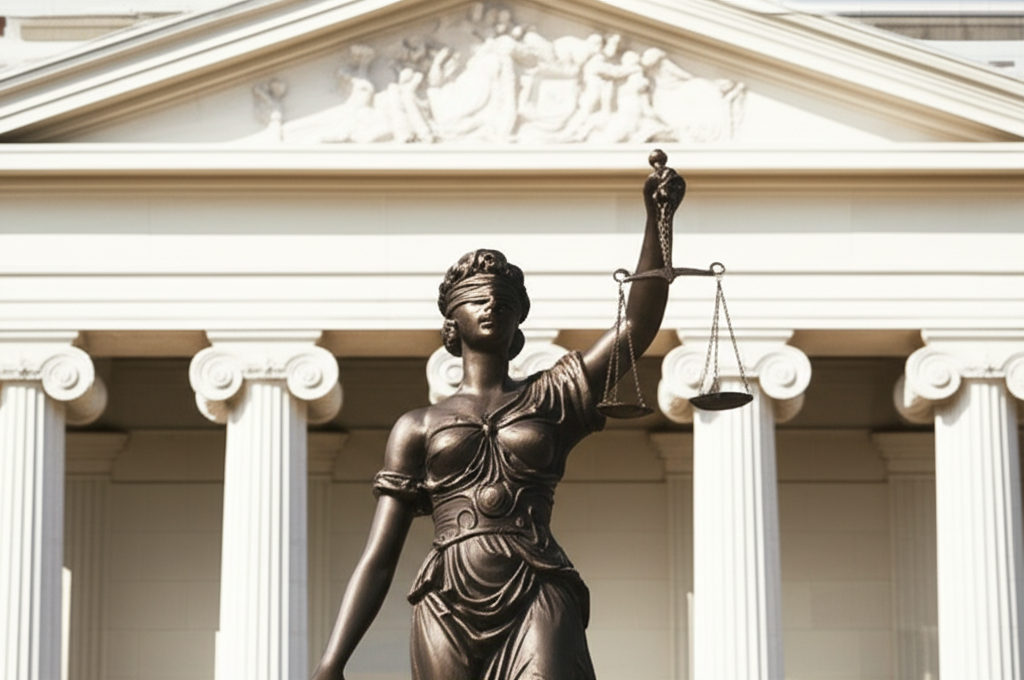
This active engagement transforms justice from an abstract concept into a living, breathing reality, continually shaped and refined by the collective will and moral conscience of the people.
Conclusion: A Continuous Evolution
The nature of justice in a democratic State is not a static ideal to be achieved once and for all, but a dynamic and continuous process of negotiation, reflection, and action. It is a journey informed by the profound insights of philosophers from Plato to Rawls, enshrined in foundational documents like the Constitution, and administered through the various branches of government and the law.
The pursuit of justice requires constant vigilance, a willingness to confront imperfections, and an unwavering commitment to the principles of fairness, equality, and liberty for all. It is the enduring quest that defines the moral character of a democratic State and its people.
**## 📹 Related Video: PLATO ON: The Allegory of the Cave
Video by: The School of Life
💡 Want different videos? Search YouTube for: ""Plato's Republic Justice Summary" or "Aristotle on Justice and the State""**
**## 📹 Related Video: What is Philosophy?
Video by: The School of Life
💡 Want different videos? Search YouTube for: ""The Social Contract Rousseau Explained" or "John Locke Natural Rights Philosophy""**