

The Quest for Righteousness: The Nature of Justice in a Democratic State
The pursuit of justice stands as one of humanity's most enduring and profound endeavors. Within the intricate framework of a democratic state, this pursuit takes on a unique complexity, intertwining ideals of equality, freedom, and the rule of law. This pillar page delves into the multifaceted nature of justice as it manifests, is challenged, and is upheld within a democratic government, drawing upon the rich tapestry of Western philosophical thought to illuminate its essential components and persistent dilemmas. From ancient Athens to modern constitutional republics, the question of "what is justice?" remains central to the legitimacy and efficacy of any state claiming to serve its people.
Unpacking Justice: A Philosophical Foundation
Before we can understand justice in a democratic state, we must first grapple with the concept of justice itself. Philosophers throughout history have offered varied, often conflicting, definitions, yet certain threads persist. At its core, justice often refers to fairness in the way people are treated, the distribution of goods and burdens, and the rectification of wrongs.
- Plato's Ideal State: In The Republic, Plato posits justice as a harmonious balance – both within the individual soul and within the state. For Plato, a just state is one where each class (rulers, auxiliaries, producers) performs its proper function without interference, guided by wisdom. This is a foundational, albeit controversial, vision of an ordered society.
- Aristotle's Practical Justice: Aristotle, in Nicomachean Ethics, offers a more nuanced view, distinguishing between distributive justice (fair allocation of wealth, honors, etc., based on merit) and corrective justice (rectifying transactions, whether voluntary or involuntary, to restore equality). His emphasis on proportionality and equity remains highly influential in legal and ethical discourse.
Key Conceptions of Justice
| Type of Justice | Description | Core Question | Philosophical Roots |
|---|---|---|---|
| Distributive Justice | Fair allocation of resources, opportunities, and burdens within a society. | Who gets what, and why? | Aristotle, Rawls |
| Corrective Justice | Rectification of wrongs, ensuring fairness in transactions and punishments. | How do we right a wrong? | Aristotle, Legal Systems |
| Procedural Justice | Fairness in the processes and rules used to make decisions. | Is the process fair? | Modern Legal Theory |
| Social Justice | Ensuring equitable access to wealth, opportunities, and privileges within society. | Are societal structures fair? | Marx, Modern Social Movements |
The Democratic Ideal and the State
Democracy, derived from the Greek demokratia ("rule by the people"), represents a form of government where ultimate power is vested in the people and exercised either directly or through elected representatives. The state, in this context, is the political organization that maintains order, provides public services, and enforces laws within a defined territory.
The bedrock principles of democracy include:
- Popular Sovereignty: The people are the ultimate source of authority.
- Political Equality: Every citizen has an equal right to participate in the political process.
- Rule of Law: All individuals, including those in government, are subject to and accountable to the law.
- Protection of Rights: Fundamental individual liberties are guaranteed.
The challenge, and indeed the beauty, of a democratic state is to reconcile these ideals with the practicalities of governance, ensuring that the power of the majority does not infringe upon the justice due to minorities or individuals.
The Intertwined Destinies: Justice in a Democratic State
The relationship between justice and democracy is symbiotic. A true democracy cannot exist without a commitment to justice, and the pursuit of justice finds its most robust expression within a democratic framework that empowers citizens and limits arbitrary power.
- The Constitution as the Bedrock: A written Constitution serves as the supreme law of the state, outlining the structure of government, defining the rights of citizens, and establishing mechanisms for ensuring justice. It is a social contract, as envisioned by thinkers like John Locke in Two Treatises of Government, where individuals consent to be governed in exchange for the protection of their natural rights.
- The Rule of Law: This principle is paramount. It ensures that justice is applied impartially and consistently, preventing arbitrary rule. When the law is clear, publicly known, and equally enforced, it creates a predictable and just society.
- Checks and Balances: A democratic government typically employs a system of checks and balances across its legislative, executive, and judicial branches to prevent any single entity from accumulating excessive power, thereby safeguarding against tyranny and promoting justice.
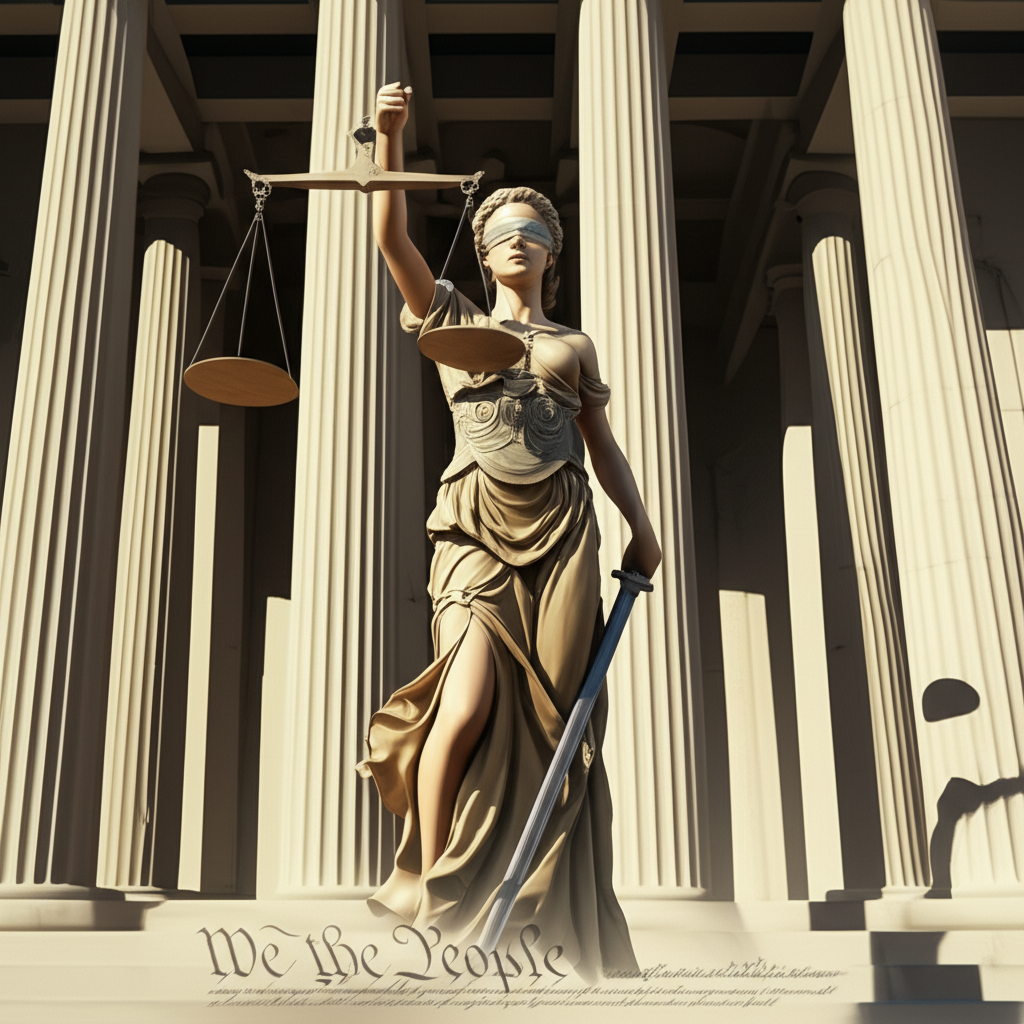
Pillars of Just Governance
Achieving justice in a democratic state requires more than mere declarations; it demands robust institutions and an unwavering commitment to certain core principles.
Constitutionalism and the Social Contract
The idea of a constitution as a foundational document limiting government power and articulating the rights of citizens is a cornerstone of modern democratic states. This concept draws heavily from Enlightenment thinkers:
- John Locke: Argued for natural rights (life, liberty, property) that government must protect. The state's legitimacy derives from the consent of the governed, and citizens have the right to resist a tyrannical government.
- Jean-Jacques Rousseau: In The Social Contract, he explored the idea of the "general will," where citizens collectively determine the laws that govern them. For Rousseau, true liberty comes from obeying laws one has prescribed for oneself, emphasizing civic participation as essential for justice.
Rights, Liberties, and the Role of Law
A just democratic state must protect individual rights and liberties, often enshrined in a Bill of Rights. This protection is not absolute, as individual freedoms must sometimes be balanced against the common good. John Stuart Mill, in On Liberty, articulated the "harm principle," suggesting that the only legitimate reason for the state to interfere with an individual's liberty is to prevent harm to others. This principle is crucial for defining the boundaries of law and government intervention.
Distributive Justice in Practice
Beyond individual rights, justice also concerns the fair distribution of societal benefits and burdens. This is where the democratic state often faces its greatest challenges:
- Economic Justice: Ensuring fair wages, opportunities, and a safety net for all citizens.
- Social Justice: Addressing systemic inequalities based on race, gender, religion, or other factors.
- Environmental Justice: Fair distribution of environmental benefits and burdens.
The government's role here is to create policies and laws that mitigate inequality and promote equitable access, often navigating complex ethical and economic considerations.
Enduring Dilemmas and Future Horizons
The quest for justice in a democratic state is an ongoing journey, fraught with inherent tensions and evolving challenges.
- Majority Rule vs. Minority Rights: A core dilemma of democracy is how to ensure that the will of the majority does not oppress or marginalize minority groups. Constitutional protections, independent judiciaries, and a vibrant civil society are crucial safeguards.
- The Evolving Role of Government: How much should the government intervene to achieve justice? From minimal state intervention to extensive social programs, the debate over the optimal role of the state is continuous.
- Global Justice: As our world becomes more interconnected, questions of justice extend beyond national borders. How should democratic states address issues like international human rights, climate change, and global economic inequality? These questions push the boundaries of traditional conceptions of the state and its responsibilities.
Ultimately, justice in a democratic state is not a static destination but a dynamic process—a continuous negotiation between individual freedoms and collective well-being, guided by the principles of law, constitution, and the active participation of its citizens. The pursuit of a more just society remains the most noble aspiration of any democratic government.
YouTube Suggestions:
-
📹 Related Video: ARISTOTLE ON: The Nicomachean Ethics
Video by: The School of Life
💡 Want different videos? Search YouTube for: ""Justice, What's The Right Thing To Do? Michael Sandel"" - This series explores various ethical dilemmas and theories of justice, highly relevant to a democratic context.
2. ## 📹 Related Video: PLATO ON: The Allegory of the Cave
Video by: The School of Life
💡 Want different videos? Search YouTube for: ""Plato's Republic: Crash Course Philosophy #15"" - A concise and engaging overview of Plato's ideas on justice and the ideal state, providing essential historical context.