

The Elusive Harmony: Justice and Democracy in the Modern State
Summary: Navigating the Moral Compass of Governance
The pursuit of justice stands as one of humanity's most enduring and profound endeavors, especially within the complex framework of a democratic state. This pillar page delves into the intricate relationship between these two fundamental ideals, exploring how a government of the people strives to embody fairness, equality, and rights through its laws and constitution. From the ancient Greek polis to the contemporary global stage, we will trace the philosophical lineage of justice within democracy, examine the mechanisms designed to uphold it, and confront the persistent challenges that threaten its realization. Ultimately, we seek to understand not just what justice is in a democratic state, but what it demands of us, its citizens, and its institutions.
1. Deconstructing the Pillars: Justice, Democracy, and the State
To grapple with the nature of justice in a democratic state, we must first clarify our terms. These are not static concepts but living ideals, constantly reinterpreted and challenged.
What is Justice? A Perennial Question
For millennia, thinkers have wrestled with the essence of justice. Is it rendering to each what is due, as Plato explored in his Republic? Is it a form of fairness, both distributive and corrective, as Aristotle articulated in his Nicomachean Ethics? Or is it the protection of individual rights, as later Enlightenment philosophers argued?
- Distributive Justice: Concerns the fair allocation of resources, opportunities, and burdens within a society. Who gets what, and why?
- Corrective Justice: Focuses on rectifying wrongs, whether through punishment for crimes or compensation for damages. It aims to restore balance.
- Procedural Justice: Emphasizes the fairness of the processes by which decisions are made and laws are applied, ensuring impartiality and consistency.
In a democratic context, justice often implies equality before the law, equal opportunity, and the protection of fundamental human rights.
Democracy: Rule of the People, For the People
At its heart, democracy is a system of government where ultimate power is vested in the people, exercised either directly or through elected representatives. It is characterized by:
- Popular Sovereignty: The people are the supreme authority.
- Majority Rule with Minority Rights: While decisions are often made by the majority, the rights and interests of minority groups must be protected.
- Free and Fair Elections: Regular opportunities for citizens to choose their leaders.
- Rule of Law: Everyone, including those in government, is subject to the law.
The inherent tension lies in how a system built on majority rule can consistently deliver justice for all.
The State: The Framework of Governance
The state is the organized political community under one government. It possesses sovereignty over a defined territory and is responsible for maintaining order, providing public services, and, crucially, upholding justice. The state manifests its authority through its laws, its institutions, and its enforcement mechanisms, all ideally guided by its constitution.
2. Echoes of Antiquity: Philosophical Roots of Justice in Governance
Our understanding of justice and its relationship to governance owes an immense debt to the foundational texts of Western philosophy.
Plato's Ideal State and the Harmony of Justice
In The Republic, Plato grappled with the question of justice by envisioning an ideal state. For Plato, justice in the state mirrored justice in the individual soul: a harmonious balance where each part performs its proper function. The state was divided into three classes – rulers (philosopher kings), auxiliaries (guardians), and producers – each contributing to the collective good. Justice was achieved when these classes functioned in their designated roles without interference. This vision, while not democratic in the modern sense, profoundly shaped the idea that the state has a moral obligation to cultivate justice.
Aristotle: Law, Virtue, and the Polis
Aristotle, in works like Politics and Nicomachean Ethics, offered a more pragmatic view. He saw justice as a virtue, both individual and civic. For Aristotle, the law was a crucial instrument of justice, ensuring fairness and order within the polis (city-state). He analyzed various forms of government, including early forms of democracy, assessing their potential to achieve the "good life" for their citizens. He emphasized the importance of a constitution not just as a set of rules, but as a way of life that shapes the character of the citizenry and the state itself.
3. The Social Contract and the Birth of Modern Democratic Justice
The Enlightenment era brought forth new theories that laid the groundwork for modern democratic thought, fundamentally reshaping our understanding of the state's legitimacy and its obligation to justice.
John Locke: Natural Rights and Consent of the Governed
John Locke, a pivotal figure, argued in his Two Treatises of Government that individuals possess inherent natural rights to life, liberty, and property. The purpose of government, formed through a social contract, is to protect these rights. Justice, in this view, is intrinsically linked to the preservation of individual freedom and property, and any government that violates these rights loses its legitimacy. This concept profoundly influenced the development of constitutional democracies.
Jean-Jacques Rousseau: The General Will and Popular Sovereignty
Rousseau's The Social Contract introduced the powerful concept of the "general will," arguing that legitimate political authority comes from the collective will of the people. Law, for Rousseau, is the expression of this general will, and true freedom lies in obeying the laws we collectively make for ourselves. While his ideas could be interpreted in various ways, they provided a strong philosophical basis for popular sovereignty and the idea that a democratic state derives its justice from the active participation of its citizens.
John Stuart Mill: Liberty, Utility, and the Harm Principle
In On Liberty, John Stuart Mill championed individual liberty, arguing that the only legitimate reason for the state to interfere with an individual's freedom is to prevent harm to others. His utilitarian framework sought to maximize overall happiness, but he recognized that a truly just society must protect the rights and freedoms of individuals, even against the tyranny of the majority. Mill's work is crucial for understanding how justice in a democracy balances collective good with individual autonomy.
4. The Architecture of Justice: Law, Rights, and the Democratic State
Within a democratic state, the quest for justice is primarily institutionalized through its legal and constitutional frameworks.
The Rule of Law: A Cornerstone of Justice
The principle of the rule of law is paramount. It dictates that all individuals and institutions, including the government itself, are accountable to laws that are publicly promulgated, equally enforced, and independently adjudicated. This ensures predictability, prevents arbitrary power, and provides a framework for justice.
The Constitution: The Supreme Law
A constitution serves as the supreme law of the state, outlining the structure of government, distributing power, and crucially, enumerating the fundamental rights and freedoms of its citizens. It acts as a bulwark against potential abuses of power and provides the foundational principles upon which all other laws must be built. The constitution is the ultimate guarantor of justice in a democracy.
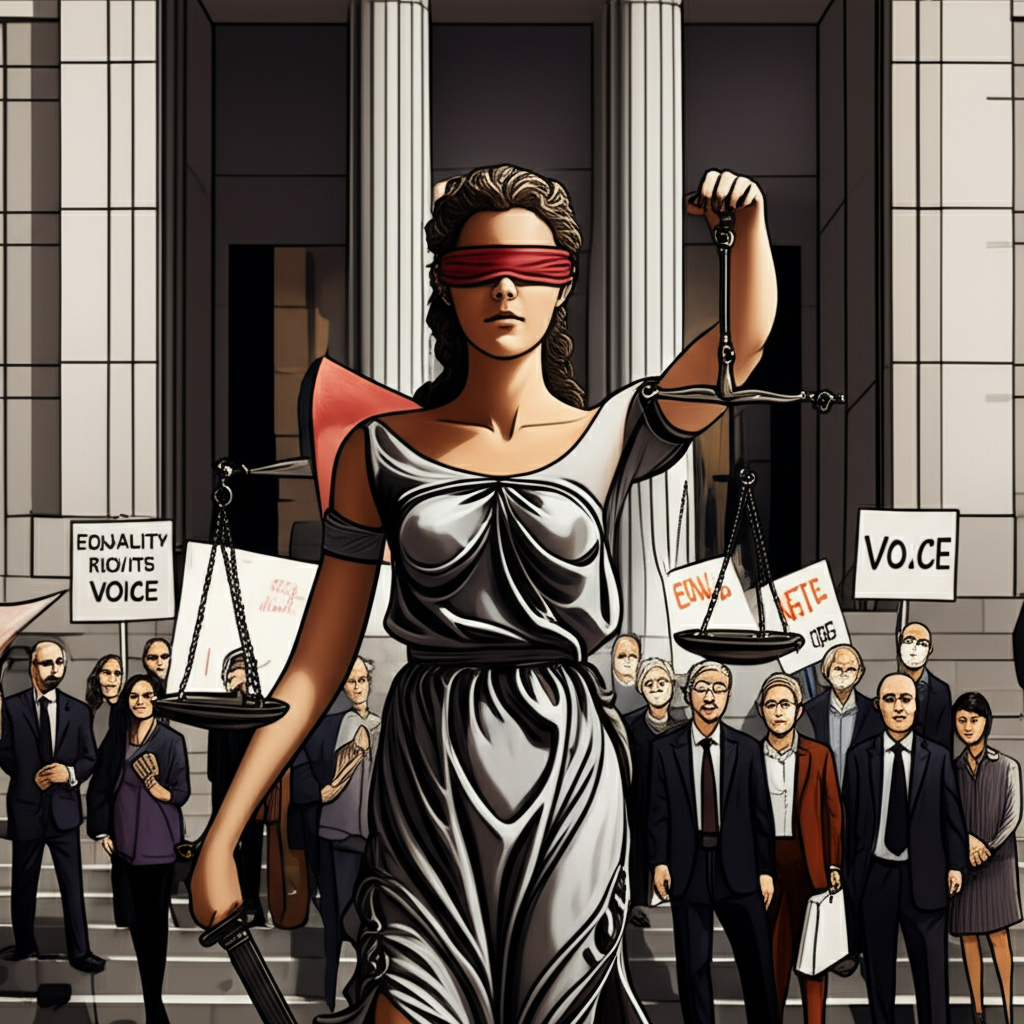
The Role of Government and Independent Institutions
A democratic government is structured to uphold justice through various branches:
- Legislative: Creates laws reflecting the will of the people.
- Executive: Implements and enforces laws fairly.
- Judicial: Interprets laws and ensures their just application, often through judicial review, which can strike down laws that violate the constitution.
Independent judiciaries, ombudsmen, and human rights commissions are vital for ensuring accountability and protecting citizens from injustice.
5. Challenges to Justice in Contemporary Democracies
Despite the elaborate architecture, the pursuit of justice in democratic states is an ongoing struggle, fraught with persistent challenges.
Persistent Inequalities
Economic, social, and racial inequalities continue to undermine the promise of equal opportunity and justice for all. Disparities in wealth, access to education, healthcare, and legal representation can create a two-tiered system where justice is not equally accessible.
The Tyranny of the Majority and Minority Rights
While democracy is often equated with majority rule, a truly just democratic state must vigilantly protect the rights of minorities. The potential for the majority to impose its will in ways that disadvantage or oppress minority groups is a constant threat that requires robust constitutional protections and an active citizenry.
Erosion of Trust and Polarization
In an era of misinformation and deep political polarization, public trust in government institutions, the law, and even the concept of objective justice can erode. This makes it harder to forge consensus and implement policies that genuinely advance the common good.
Global Justice and State Sovereignty
In an interconnected world, questions of justice often transcend national borders. How does a democratic state balance its national interests with its moral obligations to global justice, particularly concerning issues like climate change, human rights abuses, and economic exploitation in other regions?
Table: Common Challenges to Democratic Justice
| Challenge | Description | Impact on Justice |
|---|---|---|
| Socio-Economic Inequality | Disparities in wealth, income, and access to essential services. | Undermines equal opportunity and access to legal justice. |
| Political Polarization | Deep divisions in political ideology, leading to gridlock and inability to address societal problems. | Hinders consensus on just policies; can lead to erosion of civil discourse. |
| Corruption | Abuse of public power for private gain within government and institutions. | Distorts the rule of law; erodes public trust; diverts resources from public good. |
| Threats to Free Speech | Suppression of dissent or spread of misinformation that undermines informed public debate. | Limits the ability of citizens to hold government accountable; impedes truth-seeking. |
| Environmental Degradation | Unjust distribution of environmental burdens and benefits, often impacting marginalized communities. | Raises questions of intergenerational and environmental justice. |
Conclusion: The Ongoing Pursuit of a More Just Democracy
The nature of justice in a democratic state is not a settled doctrine but a dynamic, evolving aspiration. It is a continuous dialogue between ideals and realities, between what is and what ought to be. From Plato's harmonious state to Locke's rights-based government and Mill's emphasis on liberty, the great thinkers have provided us with the intellectual tools to dissect this complex relationship.
A truly just democracy requires more than just a constitution and a system of laws; it demands an active, engaged citizenry, a government committed to fairness, and institutions that are both robust and adaptable. The challenges are formidable, but the very essence of democracy lies in its capacity for self-correction and its commitment to the ideal that justice should be accessible to all, not just a privileged few. The journey towards a more perfect justice within the democratic state is an unending one, requiring constant vigilance, critical reflection, and a steadfast belief in the inherent dignity of every individual.
YouTube: "Plato's Republic Justice"
YouTube: "John Locke Social Contract Theory Explained"
📹 Related Video: What is Philosophy?
Video by: The School of Life
💡 Want different videos? Search YouTube for: "The Nature of Justice in a Democratic State philosophy"