

The Nature of Justice in a Democratic State
Summary: This pillar page explores the multifaceted concept of justice within the framework of a democratic state. We delve into classical philosophical foundations, examine how law and government structure justice, and analyze the inherent tensions and ongoing challenges in achieving a truly just society where the Constitution serves as a living document. From ancient Greek ideals to modern interpretations of the social contract, we seek to understand the dynamic pursuit of justice in a system predicated on popular sovereignty and individual rights.
The Enduring Quest: What is Justice in a Democratic Context?
Since time immemorial, humanity has grappled with the profound question of justice. What does it mean for individuals to live justly? And perhaps more critically, what does it entail for a society, a state, to be just? These questions become particularly intricate when framed within a democratic system, where the will of the people, individual liberties, and the collective good must constantly be balanced.
Our journey through this complex terrain will draw upon the wisdom of the ages, reflecting on insights from the Great Books of the Western World that have shaped our understanding of political philosophy. We aim to unravel how the foundational principles of democracy intersect with the mechanisms of law and government to forge, or sometimes fail to forge, a truly just society. The very essence of a democratic state is predicated on the promise of justice, yet its realization remains an ongoing, often contentious, project.
Foundations of Justice: Ancient Insights and Modern Interpretations
The bedrock of our understanding of justice was laid by the ancient Greeks. Philosophers like Plato and Aristotle provided frameworks that continue to resonate in contemporary discussions about the ideal state and its government.
Plato's Vision: Justice as Harmony
In his monumental work, The Republic, Plato explores justice not merely as a set of rules, but as an inherent harmony, both within the individual soul and within the ideal state. For Plato, a just individual exhibits a balance between reason, spirit, and appetite, with reason guiding the others. Similarly, a just state is one where each class – rulers (philosopher-kings), guardians, and producers – performs its designated function without infringing upon others. This hierarchical, functional view of justice, while not directly democratic, emphasizes order and the common good, concepts still vital to a stable democracy.
Aristotle's Practical Justice: Distributive and Corrective
Aristotle, in his Nicomachean Ethics and Politics, offered a more pragmatic approach. He distinguished between:
- Distributive Justice: Concerned with the fair allocation of honors, wealth, and resources according to merit. In a democratic state, this translates to questions of equitable opportunity and the fair distribution of societal burdens and benefits.
- Corrective Justice: Aims to rectify wrongs, whether in voluntary transactions (contracts) or involuntary ones (crimes). This is where the law plays its most direct role, ensuring that those who commit injustices are appropriately penalized and victims are compensated.
Aristotle's emphasis on proportionality and fairness forms a crucial part of the modern law and legal systems within any government, especially one claiming to be democratic.
The Democratic Ideal and the Rule of Law
A democratic state is fundamentally defined by the principle of popular sovereignty – the idea that power ultimately resides with the people. This ideal necessitates a robust framework of law and governance to translate popular will into a functioning society where justice can thrive.
Democracy's Promise: Equality and Liberty
At its heart, democracy promises:
- Political Equality: One person, one vote, ensuring all citizens have an equal say in their government.
- Liberty: Protection of fundamental freedoms, allowing individuals to pursue their own conception of the good life, within the bounds of the law.
These twin ideals are critical to the pursuit of justice. Without equality, some voices are silenced; without liberty, individual flourishing is stifled.
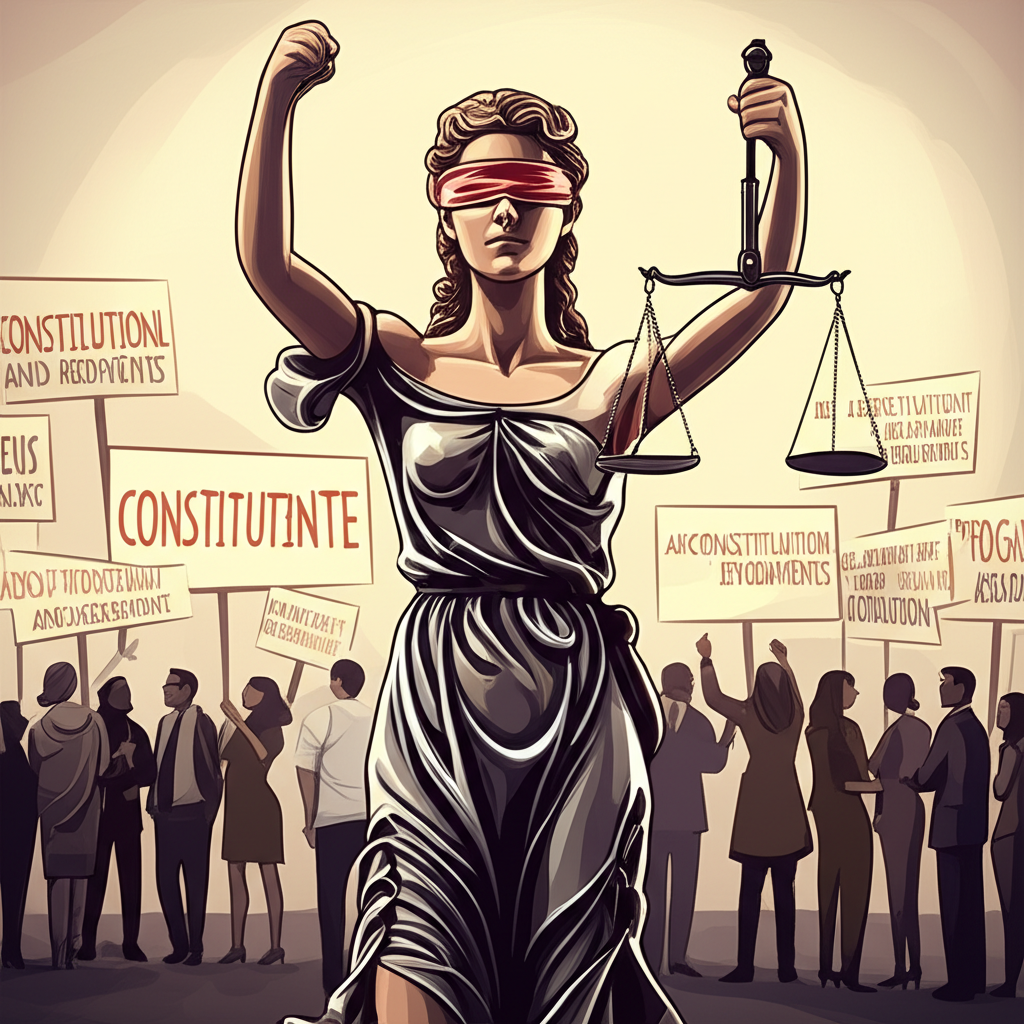
The Constitution: Blueprint for a Just State
The Constitution serves as the supreme law of the land in most democratic states. It is more than just a document; it's a social contract, a foundational agreement that outlines:
- The structure and powers of the government.
- The rights and responsibilities of citizens.
- The mechanisms for resolving disputes and ensuring justice.
A well-crafted Constitution is designed to prevent tyranny (whether of a monarch or a majority) and to establish a framework within which the principles of justice can be consistently applied. It is the ultimate safeguard against arbitrary power and the arbitrary application of law.
Balancing Rights and Responsibilities: The Social Contract in Action
The concept of the social contract is central to understanding the relationship between the individual, the state, and justice in a democracy. Thinkers like John Locke and Jean-Jacques Rousseau explored how individuals consent to be governed, sacrificing some natural freedoms for the security and benefits provided by the state.
The Role of Government: Protecting Rights, Ensuring Justice
In a democratic state, the government's primary function, as articulated by Locke, is to protect the natural rights of its citizens – life, liberty, and property. When the government fails in this duty, or acts unjustly, the people retain the right to alter or abolish it. This idea underpins the legitimacy of popular uprisings and the ongoing need for governmental accountability.
Rousseau, on the other hand, emphasized the "general will" – the collective good that emerges when citizens prioritize the common interest over individual desires. For Rousseau, true freedom lies in obeying the law that one has, in effect, prescribed for oneself as part of the collective. This highlights the tension between individual rights and the demands of the community in a democratic state.
| Philosopher | Key Contribution to Justice in a State | Emphasis |
|---|---|---|
| Plato | Justice as societal harmony | Functional order, common good |
| Aristotle | Distributive & Corrective Justice | Proportionality, fairness in allocation/redress |
| Locke | Protection of natural rights | Limited government, individual liberty |
| Rousseau | General will, civic participation | Collective good, self-legislation via law |
| Mill | Harm principle, individual freedom | Liberty from state interference, free speech |
Challenges to Justice in a Democratic Society
Despite the noble ideals, achieving perfect justice in a democratic state is an ongoing struggle, fraught with inherent tensions and complex dilemmas.
Majority Rule vs. Minority Rights
One of the most significant challenges is balancing the will of the majority with the protection of minority rights. While democracy thrives on majority rule, a truly just state must safeguard the fundamental freedoms and interests of all, especially those who are not part of the dominant group. This is where a strong Constitution and an independent judiciary become crucial, acting as bulwarks against the "tyranny of the majority."
Economic Justice and Social Inequality
The question of economic justice – how wealth and opportunity should be distributed – presents another profound challenge. While democracy typically champions equality before the law, it often struggles with significant economic disparities. Debates rage over the role of the government in addressing poverty, ensuring fair wages, providing social safety nets, and regulating markets to prevent extreme inequality. These are not merely economic questions but deeply ethical ones about what constitutes a just society.
Procedural vs. Substantive Justice
- Procedural Justice: Refers to the fairness of the processes by which decisions are made and law is applied. If the rules are fair and applied consistently, the outcome is considered just, regardless of its specific impact.
- Substantive Justice: Focuses on the fairness of the actual outcome or distribution. Is the end result itself just, irrespective of the process?
A democratic state strives for both, but they can sometimes be in tension. Strict adherence to legal procedures might, in some instances, lead to outcomes perceived as substantively unjust, prompting calls for reform of the law itself.
YouTube: "Plato's Republic Justice" or "John Locke Social Contract Theory"
The Evolving Constitution and the Pursuit of a More Just State
The Constitution of a democratic state is rarely a static document. It is designed to be adaptable, allowing the government and the people to respond to new challenges and evolving understandings of justice.
Constitutional Amendments and Judicial Review
Mechanisms like constitutional amendments allow the people, through their representatives, to formally change the fundamental law of the land, reflecting new moral consensus or addressing historical injustices. Furthermore, judicial review, where courts interpret the Constitution and can strike down laws deemed unconstitutional, plays a vital role in ensuring that legislative and executive actions remain aligned with the principles of justice and fundamental rights. This dynamic interplay ensures that the state remains accountable to its founding ideals.
The Ongoing Project of Democratic Self-Correction
The pursuit of justice in a democratic state is not a destination but an ongoing journey. It requires constant vigilance, active civic participation, and a willingness to critically examine and reform existing laws and governmental practices. Each generation inherits the responsibility to strive for a more perfect union, a more just society, and a state that truly embodies the democratic ideal.
Pillars of a Just Democratic System:
- Rule of Law: All are subject to the same laws, applied fairly and consistently.
- Independent Judiciary: Courts free from political interference, ensuring impartial application of justice.
- Protection of Rights: Constitutional guarantees of individual liberties and minority protections.
- Accountable Government: Transparency and mechanisms for holding elected officials responsible.
- Active Citizenship: Engaged populace participating in civic life and holding the state to account.
- Mechanisms for Reform: Ability to amend laws and the Constitution to address evolving needs.
Conclusion: Justice as a Democratic Imperative
The nature of justice in a democratic state is a complex tapestry woven from ancient philosophical insights, the solemn promises of a Constitution, the daily workings of law and government, and the continuous engagement of its citizens. It is a concept that demands constant re-evaluation, adaptation, and defense.
While no state can ever claim to have achieved perfect justice, the democratic ideal compels us to strive for it relentlessly. It reminds us that justice is not merely an abstract concept, but a living, breathing imperative that shapes our institutions, defines our collective character, and ultimately determines the quality of life for all within the state. The pursuit of justice is, in essence, the pursuit of a more perfect democracy.
📹 Related Video: What is Philosophy?
Video by: The School of Life
💡 Want different videos? Search YouTube for: "The Nature of Justice in a Democratic State philosophy"