

The Nature of God and Theological Reasoning
By Daniel Fletcher
This article explores the profound and enduring philosophical inquiry into the Nature of God and the intricate methods of Theological Reasoning. We delve into historical perspectives, from ancient Greek philosophy to medieval scholasticism, examining how thinkers have grappled with defining the divine, understanding its attributes, and constructing rational arguments for or against its existence. Drawing heavily from the intellectual wellspring of the Great Books of the Western World, we will trace the evolution of thought on God, Theology, and the indispensable role of Reasoning in shaping our understanding of Religion and ultimate reality.
The Enduring Quest: Defining the Divine
The question of God stands as one of humanity's oldest and most persistent intellectual challenges. It is a question that transcends mere belief, engaging the deepest faculties of Reasoning and shaping the very foundations of philosophy, ethics, and Religion. From the earliest mythologies to the most sophisticated metaphysical treatises, the concept of a supreme being, a first cause, or an ultimate reality has captivated thinkers across civilizations.
For centuries, philosophers and theologians have sought to understand the divine not merely through faith, but through rigorous intellectual pursuit. This pursuit, often termed Theology, is not simply the study of religious doctrines; it is a profound engagement with the nature of existence, causality, morality, and knowledge itself, all viewed through the lens of a divine principle.
Early Philosophical Seeds: From Forms to First Movers
The philosophical groundwork for later Christian and Islamic Theology was laid in ancient Greece. While not explicitly monotheistic, figures like Plato and Aristotle introduced concepts that would profoundly influence the understanding of God.
- Plato's Forms: In works such as The Republic, Plato posited a transcendent realm of perfect, eternal Forms, with the Form of the Good as the highest. This ultimate principle, the source of all truth and goodness, resonated deeply with later theological attempts to define God as supreme being and ultimate reality.
- Aristotle's Unmoved Mover: In his Metaphysics, Aristotle argued for the existence of a "first mover" – an eternal, immutable, and immaterial being that causes all motion in the universe without itself being moved. This concept, arrived at through pure Reasoning about causality, became a cornerstone for later cosmological arguments for God's existence.
These early philosophical excursions demonstrated the power of Reasoning to postulate a divine principle, laying the intellectual foundation for the complex Theology that would follow.
The Nature of God: Attributes and Definitions
When we speak of God in a theological context, we are often referring to a being with a specific set of attributes that distinguish it from all other entities. These attributes are not merely descriptive; they are foundational to understanding the relationship between God, humanity, and the cosmos.
Key Divine Attributes
The classical understanding of God, particularly within Abrahamic Religion, often includes several core attributes:
| Attribute | Description | Philosophical Implication |
|---|---|---|
| Omnipotence | All-powerful; capable of doing anything logically possible. | Raises questions about the problem of evil and divine free will. |
| Omniscience | All-knowing; possesses complete and perfect knowledge of all things. | Implicates debates on human free will, predestination, and divine foreknowledge. |
| Omnibenevolence | All-good; perfectly benevolent and loving. | Central to the problem of evil, challenging how a good God allows suffering. |
| Omnipresence | Present everywhere at all times. | Affects understanding of divine intervention, immanence, and transcendence. |
| Eternality | Existing outside of time, or existing for all time (without beginning or end). | Impacts theories of creation, causality, and the nature of time itself. |
| Immutability | Unchanging; constant in nature, character, and will. | Addresses divine reliability and consistency, but also flexibility and responsiveness. |
| Transcendence | Existing beyond the physical universe and human comprehension. | Emphasizes God's otherness and superiority to creation. |
| Immanence | Present and active within the created world. | Highlights God's involvement in creation and interaction with humanity. |
These attributes are not always easily reconciled, and much of Theology involves the rigorous Reasoning required to understand how such a being can exist and interact with the world we experience.
Theological Reasoning: Pathways to Understanding
Theological Reasoning employs various methods to approach the divine, often synthesizing faith, scripture, tradition, and philosophical inquiry. The tension and harmony between faith and Reason have been a central theme throughout the history of Religion and philosophy.
Faith and Reason: A Classical Dialogue
The relationship between faith and Reason is perhaps the most enduring debate in Theology. Can one arrive at an understanding of God through pure Reasoning alone, or is faith a necessary prerequisite, or perhaps even an obstacle?
- Anselm of Canterbury: In his Proslogion, Anselm famously sought "faith seeking understanding" (fides quaerens intellectum). His ontological argument for God's existence, attempting to prove God's reality from the very concept of God as "that than which nothing greater can be conceived," is a prime example of Reasoning in the service of faith.
- Thomas Aquinas: The monumental work of Thomas Aquinas in the Summa Theologica stands as a pinnacle of medieval Reasoning. Aquinas meticulously integrated Aristotelian philosophy with Christian Theology, distinguishing between truths accessible by Reason (e.g., God's existence) and truths requiring faith (e.g., the Trinity). His "Five Ways" to prove God's existence – arguments from motion, causality, contingency, degrees of perfection, and teleology – are quintessential examples of natural Theology, demonstrating how Reason can lead one to the concept of a divine creator.
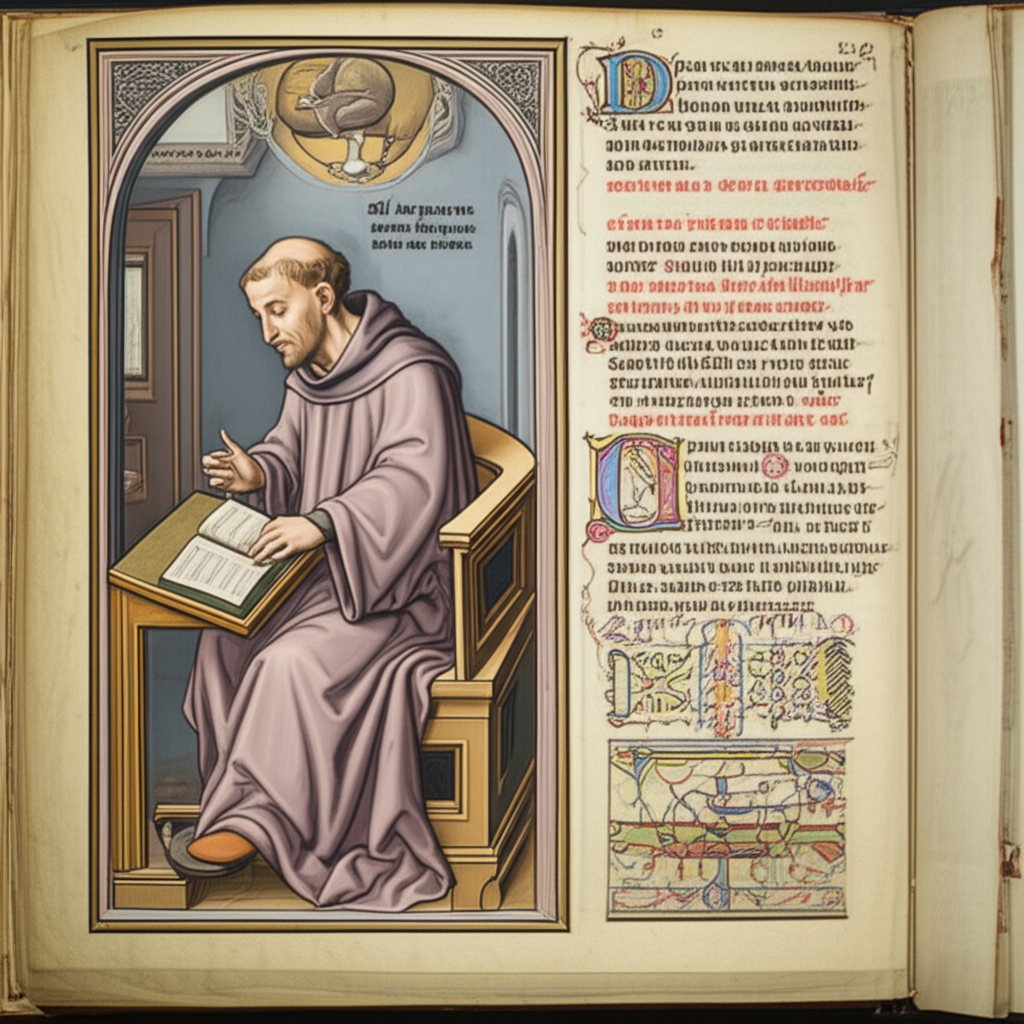
Natural vs. Revealed Theology
- Natural Theology: This branch of Theology seeks to understand God through observation of the natural world and through philosophical Reasoning, independent of special revelation. Aquinas's Five Ways are exemplary, as are arguments from design (e.g., William Paley's watchmaker analogy). It posits that Reason alone can discern certain truths about God.
- Revealed Theology: This approach relies on divine revelation, typically found in sacred scriptures (like the Bible, Torah, or Quran), mystical experiences, or prophetic traditions. Here, Reasoning is often employed to interpret, systematize, and defend revealed truths, rather than to discover them independently.
Challenges to Theological Reasoning
Despite the sophisticated arguments put forth, Theological Reasoning has faced significant challenges. The problem of evil (how an omnipotent, omniscient, and omnibenevolent God can permit suffering), logical inconsistencies in divine attributes, and the rise of scientific explanations for natural phenomena have consistently prompted re-evaluations and new forms of inquiry into the nature of God.
Key Figures from the Great Books and Their Contributions
The Great Books of the Western World provide an unparalleled journey through the intellectual history of Theology and Reasoning about God.
- Plato: His concept of the Good and the intelligible realm influenced centuries of thought on a transcendent divine reality.
- Aristotle: His Metaphysics and concept of the Unmoved Mover provided a robust philosophical framework for understanding a primary cause.
- Saint Augustine of Hippo: In Confessions and The City of God, Augustine explored God's nature through introspection, the problem of evil, and the relationship between divine grace and human will. His emphasis on God as ultimate truth and beauty shaped early Christian Theology.
- Saint Thomas Aquinas: The Summa Theologica remains the most comprehensive synthesis of Aristotelian philosophy and Christian doctrine, offering a systematic approach to understanding God's existence, attributes, and relationship to creation through rigorous Reasoning.
- René Descartes: In his Meditations on First Philosophy, Descartes used Reason to establish the existence of God as a guarantor of clear and distinct perceptions, crucial for rebuilding knowledge on a solid foundation.
- Immanuel Kant: While critically examining traditional proofs for God's existence in Critique of Pure Reason, Kant later argued for God as a necessary postulate of practical Reason for the sake of morality in Critique of Practical Reason.
These thinkers, among many others, demonstrate the continuous and evolving dialogue concerning God, Theology, and the multifaceted application of Reasoning in understanding the deepest questions of existence and Religion.
The Enduring Relevance
The inquiry into the Nature of God and the methods of Theological Reasoning are far from academic curiosities. They underpin our understanding of morality, purpose, human nature, and the ultimate meaning (or lack thereof) in the universe. Whether one ultimately embraces or rejects the concept of God, the intellectual journey through these questions enriches our philosophical toolkit, sharpens our Reasoning abilities, and deepens our appreciation for the vast complexities of human thought and experience within the realm of Religion.
📹 Related Video: KANT ON: What is Enlightenment?
Video by: The School of Life
💡 Want different videos? Search YouTube for: ""Aquinas Five Ways Explained""
📹 Related Video: PLATO ON: The Allegory of the Cave
Video by: The School of Life
💡 Want different videos? Search YouTube for: ""Plato's Theory of Forms Explained""