

Navigating the Divine: The Intersections of God, Theology, and Philosophical Reasoning
This article delves into the profound philosophical and theological quest to understand the Nature of God, exploring how human reasoning has been employed and challenged in this endeavor. Drawing from foundational texts within the Great Books of the Western World, we examine the historical evolution of theology as a discipline, its reliance on rational inquiry, and the intricate relationship it shares with religion and faith.
The human mind, ever curious, has perpetually grappled with the ultimate questions of existence. Among the most enduring and profound of these inquiries is the Nature of God. This isn't merely a theological concern but a deeply philosophical one, demanding rigorous reasoning to explore what lies beyond the empirical, what underpins reality, and what defines ultimate purpose. For centuries, thinkers, many of whose works are enshrined in the Great Books of the Western World, have sought to articulate, understand, and even prove the existence and attributes of God, laying the groundwork for what we now understand as theology.
Defining the Unseen: Early Philosophical Conceptions of God
Before theology solidified into a distinct academic discipline, philosophical inquiry laid critical foundations for conceptualizing the divine. Ancient Greek philosophers, for instance, wrestled with ideas of ultimate reality, causality, and perfection, which often bordered on or directly informed later monotheistic conceptions of God.
- Plato's Forms: In works like The Republic, Plato posits a realm of perfect, eternal Forms, with the Form of the Good serving as the ultimate source of all truth, beauty, and existence. While not a personal God in the Abrahamic sense, it functions as a transcendent, ultimate reality towards which all things aspire.
- Aristotle's Unmoved Mover: In his Metaphysics, Aristotle famously argues for the existence of a pure actuality that causes all motion in the universe without itself being moved – the Unmoved Mover. This entity is pure thought, eternally contemplating itself, serving as the ultimate efficient and final cause of the cosmos. This concept profoundly influenced later Christian theology.
These early philosophical excursions demonstrate the innate human drive to use reasoning to understand the most fundamental aspects of being, even when those aspects transcend direct observation.
Theological Reasoning: Bridging Faith and Intellect
With the advent and spread of monotheistic religions, particularly Christianity, the philosophical quest for ultimate reality transformed into a systematic discipline: theology. Theology is, at its heart, the application of reasoning to divine matters, seeking to understand the nature, attributes, and actions of God through both revelation and rational inquiry.
Table 1: Key Figures in Theological Reasoning from the Great Books
| Philosopher/Theologian | Key Work(s) | Contribution to Theological Reasoning |
|---|---|---|
| Augustine of Hippo | Confessions, City of God | Integrated Platonic thought with Christian doctrine; emphasized the role of faith seeking understanding (fides quaerens intellectum); explored the nature of time, evil, and divine grace. |
| Thomas Aquinas | Summa Theologica | Systematized Christian theology using Aristotelian philosophy; presented the "Five Ways" (cosmological and teleological arguments) for God's existence; distinguished between natural and revealed theology; reconciled faith and reason as complementary paths to truth. |
| Anselm of Canterbury | Proslogion | Developed the ontological argument for God's existence, arguing that God must exist as "that than which no greater can be conceived." This argument, purely rational, sparked centuries of debate on the limits of reasoning about existence. |
These thinkers didn't merely accept dogma; they interrogated it, using the sharpest tools of logic and metaphysics available to them. Their work highlights that theology is not antithetical to reasoning but rather a specific application of it, often seeking to reconcile revealed truths with rational principles.
The Limits and Power of Human Reasoning in Understanding God
While reasoning forms the bedrock of theology, its limits in fully grasping the infinite Nature of God have always been acknowledged. Thomas Aquinas, for example, meticulously distinguished between truths accessible through natural reason (like the existence of a First Cause) and those requiring divine revelation (like the Trinity). For Aquinas, reason can ascend to a certain point, demonstrating God's existence and some attributes, but ultimately, faith is necessary to apprehend the full mystery.
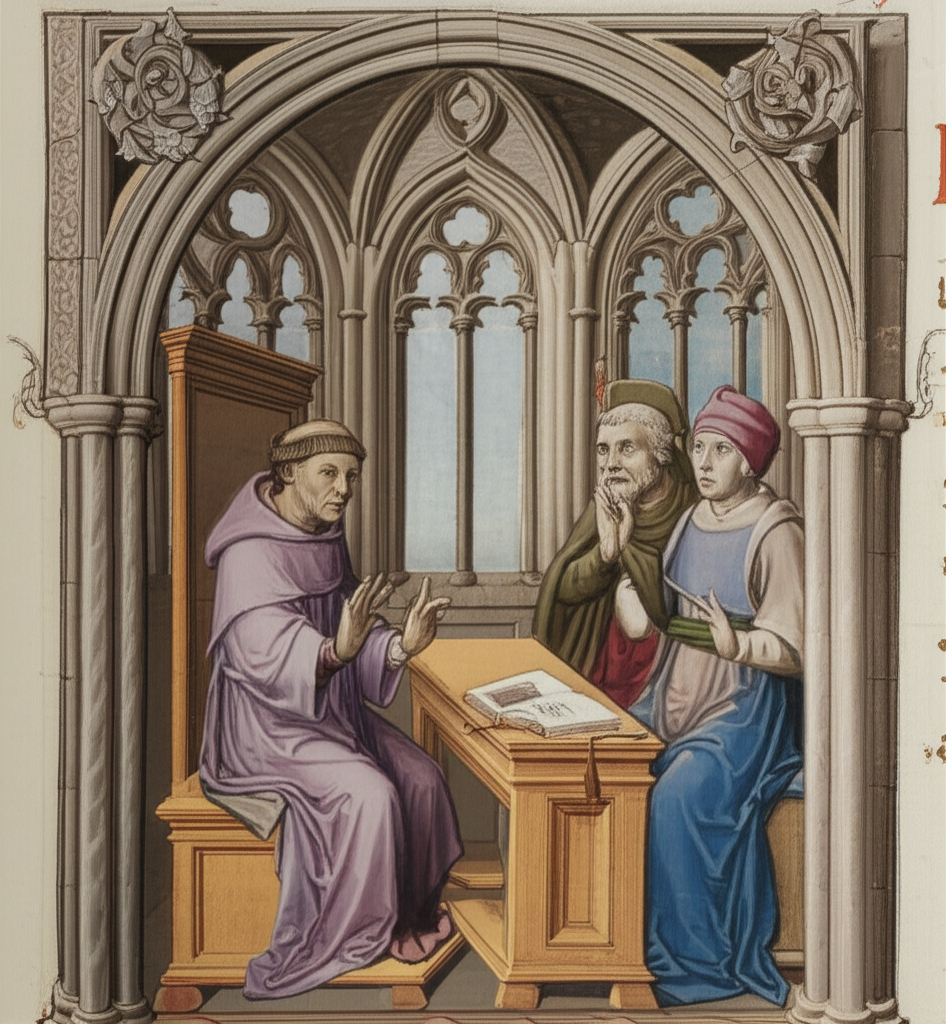
The very act of applying reason to God forces us to confront paradoxes. How can an omnipotent God allow evil? How can a timeless God interact with a temporal world? These are not questions designed to undermine belief but to deepen understanding, pushing the boundaries of human conceptualization. The ongoing dialogue between theology and philosophy continues to refine our understanding, demonstrating that the pursuit of God through reasoning is an iterative, evolving process.
Religion, Theology, and the Enduring Quest
The relationship between religion and theology is complex. Religion often provides the experiential, communal, and ritualistic framework for belief, while theology offers the intellectual structure and justification. One can be religious without being a theologian, but theology inherently seeks to make sense of religious claims through a rigorous, analytical lens.
The questions surrounding the Nature of God and the methodologies of theological reasoning remain central to contemporary thought. They challenge us to consider the boundaries of knowledge, the role of faith, and the ultimate meaning of existence. The rich tapestry woven by the Great Books of the Western World provides an invaluable guide, reminding us that this quest is not new, but a continuous human endeavor to understand the divine, using the very faculties of reasoning that define our species.
YouTube Video Suggestions:
-
📹 Related Video: PLATO ON: The Allegory of the Cave
Video by: The School of Life
💡 Want different videos? Search YouTube for: "Thomas Aquinas Five Ways Explained"
2. ## 📹 Related Video: What is Philosophy?
Video by: The School of Life
💡 Want different videos? Search YouTube for: "Augustine Confessions Philosophy Summary"