

The Nature of God and Theological Reasoning: A Philosophical Inquiry
The question of God and how we, as finite beings, might possibly comprehend the infinite, stands as one of humanity's most enduring and profound intellectual challenges. This article delves into the intricate relationship between Theology – the systematic study of the divine – and Reasoning, exploring how philosophers and thinkers throughout history have attempted to grapple with the nature of the ultimate reality. From ancient metaphysical speculations to the rigorous arguments of scholasticism and the critiques of the Enlightenment, we will trace the evolution of our attempts to understand the divine not merely through faith, but through the crucible of human intellect. This journey illuminates the very foundations of Religion and philosophy, revealing a continuous quest to find coherence and meaning in the universe.
I. Defining the Divine: What Do We Mean by "God"?
Let's be candid: before we can reason about God, we must first grapple with what, precisely, we mean by the term. It's a concept so vast and varied that its definition is often the starting point of theological and philosophical debate.
Diverse Conceptions Across Thought
Historically, conceptions of God have ranged from an anthropomorphic deity intimately involved in human affairs to an abstract, impersonal force. The Great Books of the Western World introduce us to a spectrum:
- Classical Theism: This view, deeply influenced by figures like Plato (with his "Form of the Good" as the ultimate reality) and Aristotle (whose "Unmoved Mover" acts as the final cause of all motion), posits a supreme being that is typically omnipotent (all-powerful), omniscient (all-knowing), and omnibenevolent (all-good). This God is often seen as transcendent, existing apart from the universe, yet immanent, acting within it.
- Deism: Popular during the Enlightenment, deism conceives of God as a cosmic clockmaker who designed and set the universe in motion but does not intervene in its day-to-day operations. Reasoning here often focuses on the initial design, not ongoing miracles.
- Pantheism/Panentheism: Thinkers like Baruch Spinoza articulated a pantheistic view where God is identical with the universe, or panentheism, where God is in everything, and everything is in God, but God is also more than the universe.
The very attributes we ascribe to God—infinity, perfection, timelessness—are often derived from philosophical reasoning about what a supreme being must be like, rather than solely from religious dogma.
II. The Essence of Theology: Reasoning About the Sacred
Theology is often misunderstood as merely the study of Religion or a declaration of faith. While deeply intertwined with Religion, theology is, at its core, a rigorous intellectual discipline that employs reasoning to explore the nature of the divine, religious doctrines, and spiritual truths.
Beyond Mere Belief: The Discipline of Theology
Theology seeks to systematize and rationalize beliefs, examining their coherence, implications, and relationship to other forms of knowledge. It asks not just "What do we believe?" but "Why do we believe it?" and "What does it mean?" This systematic approach distinguishes it from simple, unexamined faith.
Consider the distinction:
| Aspect | Faith-Based Approach (Fideism) | Reason-Based Approach (Rational Theology) |
|---|---|---|
| Primary Source of Truth | Revelation, sacred texts, personal experience, tradition | Logic, empirical evidence, philosophical arguments, intellectual inquiry |
| Role of Reason | Subordinate to faith; reason may clarify but not prove faith | Essential for understanding, evaluating, and justifying beliefs |
| Goal | To accept and live by divine truths | To understand, explain, and potentially prove divine truths |
| Key Proponents | Tertullian ("I believe because it is absurd"), Kierkegaard | Augustine, Aquinas, Descartes, Kant |
Theological reasoning attempts to build bridges between the seen and the unseen, the empirical and the transcendent, using the tools of logic and philosophy.
III. Historical Trajectories of Theological Reasoning
The pursuit of understanding God through reasoning has a rich and complex history, evolving significantly across different epochs.
From Ancient Philosophy to Medieval Scholasticism
The seeds of theological reasoning were sown long before formalized Theology.
- Ancient Roots: Early Greek philosophers, in their quest for first principles and ultimate causes, laid the groundwork. Plato's theory of Forms, particularly the Form of the Good, pointed towards a transcendent, perfect reality. Aristotle's concept of the Unmoved Mover provided a logical necessity for a primary cause of all motion and change in the cosmos, a concept later profoundly influential in monotheistic Theology.
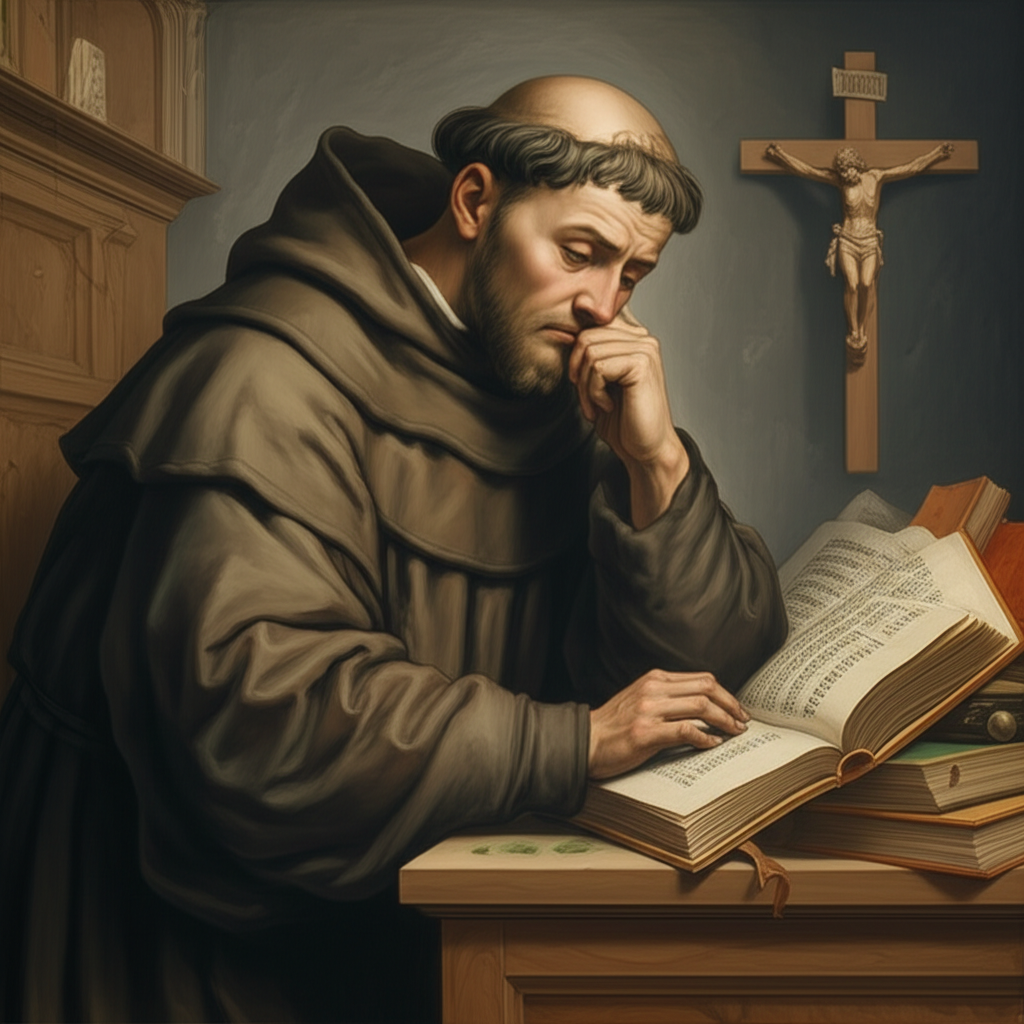
- Medieval Synthesis: The Christian era saw a concerted effort to integrate Greek philosophy with revealed truth. Augustine of Hippo, drawing heavily on Neoplatonism, sought to understand faith through reasoning, famously stating, "crede ut intelligas" (believe in order to understand). However, it was Thomas Aquinas in the 13th century who epitomized the application of rigorous philosophical reasoning to Theology. His Summa Theologica is a monumental work that systematically addresses virtually every theological question using Aristotelian logic, culminating in his famous "Five Ways" to prove the existence of God. This period represents a high point in rational Theology, where faith and reason were seen as complementary paths to truth.
The Enlightenment's Challenge and Modern Perspectives
The Enlightenment brought a new emphasis on individual reasoning and empirical evidence, leading to both new arguments for God and profound critiques.
- Descartes' Certainty: René Descartes, seeking indubitable truths, famously formulated his ontological argument for God's existence, arguing that the very concept of a perfect being necessarily implies its existence.
- Spinoza's Rationalism: Baruch Spinoza developed a complex pantheistic system where God and Nature are one, understood through rigorous geometrical reasoning, a radical departure from traditional anthropomorphic deities.
- Hume's Skepticism: David Hume, an empiricist, cast significant doubt on traditional arguments for God's existence, particularly the teleological (design) argument, by highlighting the limits of human experience and the leap of faith required to infer a divine designer from the natural world.
- Kant's Moral Imperative: Immanuel Kant, while dismantling many traditional metaphysical proofs, found a new basis for belief in God through practical reasoning. For Kant, God's existence, along with freedom and immortality, became postulates necessary for the coherence of moral experience and the pursuit of the highest good.
This period marked a shift: while God remained a central concern, the reasoning moved from proving God's existence as a metaphysical necessity to exploring its role in ethics, human experience, and the limits of knowledge itself.
IV. Modes of Theological Reasoning: Pathways to Understanding
The history of Theology is replete with various types of arguments used to articulate the nature and existence of God. These are not mere assertions but elaborate structures of reasoning.
A Spectrum of Philosophical Approaches
Here are some of the most influential types of arguments found in the Great Books:
- A. Ontological Arguments: These arguments attempt to prove God's existence from the very concept of God.
- Proponents: Anselm of Canterbury (God as that than which no greater can be conceived, whose non-existence is inconceivable), René Descartes (existence is a perfection, and God is a perfect being).
- Core Idea: If God is defined as a perfect being, and existence is a perfection, then God must exist.
- B. Cosmological Arguments: These arguments infer God's existence from observed features of the universe (cosmos).
- Proponents: Thomas Aquinas (his first three ways: argument from motion, from efficient cause, from contingency), Gottfried Leibniz (principle of sufficient reason).
- Core Idea: The universe, with its motion, causes, and contingent existence, requires an ultimate, uncaused cause or necessary being, which is God.
- C. Teleological Arguments (Design Arguments): These arguments infer God's existence from the apparent design, order, and purpose in the universe.
- Proponents: William Paley (watchmaker analogy), but David Hume famously critiqued these arguments, questioning the analogy between human artifacts and the universe.
- Core Idea: The complexity and apparent fine-tuning of the universe point to an intelligent designer, God.
- D. Moral Arguments: These arguments suggest that the existence of objective moral values and duties implies God.
- Proponents: Immanuel Kant (postulating God as necessary for the highest good and moral accountability), C.S. Lewis.
- Core Idea: Our universal experience of moral law, justice, and the desire for ultimate good points to a divine lawgiver or moral ground.
- E. Experiential/Phenomenological Approaches: While not strictly reasoning in the logical sense, these approaches consider the profound impact of religious experience and the lived reality of Religion as evidence.
- Proponents: William James (though he examined, rather than proved), various mystics and spiritual writers.
- Core Idea: The universality and transformative power of religious and mystical experiences suggest a reality beyond the purely material, which can be interpreted as divine.
V. Critiques and Contemporary Debates
The journey of theological reasoning is not without its formidable challenges. The Enlightenment's emphasis on empirical evidence and critical thought opened the door to widespread critiques of traditional arguments for God.
The Limits of Human Reasoning in Divine Matters
- Empiricist Challenges: Thinkers like David Hume argued that our knowledge is limited to what can be experienced. Since God is beyond empirical observation, any reasoning about God's nature or existence becomes speculative and unprovable. The problem of evil—how an all-good, all-powerful God can permit suffering—also presents a significant challenge to the coherence of classical theism.
- Logical Inconsistencies: Some critics point to logical inconsistencies within the attributes ascribed to God (e.g., how can an omniscient God allow for true free will?).
- Scientific Naturalism: Modern scientific understanding, particularly in cosmology and evolutionary biology, often provides explanations for the universe's order and complexity that do not necessitate a divine creator, challenging the basis of teleological arguments.
- The Problem of Verification: In an age that values falsifiability and empirical verification, claims about God often fall outside the scope of scientific inquiry, leading some to deem them meaningless or unfalsifiable.
The contemporary landscape of Theology and Religion is a vibrant debate, navigating between traditional faith, philosophical inquiry, and scientific understanding. The quest to reconcile these different modes of understanding remains a central task for modern thinkers.
Conclusion: An Ever-Unfolding Inquiry
The nature of God and the intricate dance of theological reasoning represent a philosophical endeavor as old as human consciousness itself. From the metaphysical inquiries of Plato and Aristotle to the systematic brilliance of Aquinas, the radical skepticism of Hume, and the moral imperatives of Kant, humanity has continuously sought to understand the ultimate reality through the power of reasoning.
This journey, far from being settled, continues to evolve. It underscores our innate drive to find meaning, to question our origins, and to ponder the existence of a transcendent dimension. Whether one arrives at faith, skepticism, or a nuanced agnosticism, the process of engaging with Theology through Reasoning is an essential part of the human intellectual adventure, a testament to our relentless pursuit of truth in the grand tapestry of existence and Religion.
YouTube Video Suggestions:
-
📹 Related Video: PLATO ON: The Allegory of the Cave
Video by: The School of Life
💡 Want different videos? Search YouTube for: "The Five Ways of Thomas Aquinas Explained"
-
📹 Related Video: KANT ON: What is Enlightenment?
Video by: The School of Life
💡 Want different videos? Search YouTube for: "Immanuel Kant's Moral Argument for God"