

The Unfolding Enigma: A Deep Dive into the Nature of Eternity and Time
By Chloe Fitzgerald
The concepts of Eternity and Time are not merely abstract notions; they are the very fabric of our existence, shaping our understanding of reality, causality, and even our place in the cosmos. From the ticking of a clock to the boundless expanse of the universe, we are constantly confronted with these twin mysteries. This pillar page embarks on a philosophical journey, delving into the rich history of thought from the Great Books of the Western World to unravel the intricate relation between the temporal and the eternal. We will explore various definitions, grapple with profound metaphysical questions, and ultimately seek a deeper appreciation for the elusive nature of both time and eternity. Prepare to challenge your assumptions and expand your temporal horizons.
Table of Contents
- What is Time, Anyway? Unpacking a Fundamental Mystery
- Eternity: Beyond the Sands of Chronos
- The Metaphysical Canvas: Painting the Relation Between Time and Eternity
- Our Human Experience: Living Within and Beyond Time
- Voices from the Great Books: A Philosophical Chorus on Time and Eternity
- Conclusion: The Enduring Mystery
- Frequently Asked Questions
1. What is Time, Anyway? Unpacking a Fundamental Mystery
Before we can even begin to comprehend Eternity, we must first confront its seemingly mundane counterpart: Time. Yet, Time is anything but mundane. It's a concept so pervasive that we rarely pause to question its fundamental nature, despite its profound philosophical implications.
The Aristotelian Lens: Time as a Measure of Change
In his Physics, Aristotle famously posited that time is the "number of motion with respect to 'before' and 'after'." For Aristotle, time isn't an independent entity flowing on its own; it's intrinsically linked to change and movement. If nothing changed, there would be no time. This perspective grounds time in the observable world, making it a property of events rather than a container for them.
Augustine's Inner Clock: Time as a Distention of the Soul
Centuries later, Saint Augustine, in his Confessions, grappled with an even deeper mystery: "What then is time? If no one asks me, I know what it is. If I wish to explain it to him who asks, I do not know." Augustine's profound insight was that time – past, present, and future – exists primarily within the human mind, as a "distention" or stretching of the soul. The past is memory, the future is expectation, and the present is a fleeting instant of attention. This subjective view shifts the focus from external motion to internal consciousness.
Absolute vs. Relative: Newton, Leibniz, and Einstein
The scientific revolution brought new perspectives. Isaac Newton, in his Principia Mathematica, introduced the concept of absolute time: a universal, uniform flow independent of any external events or observers. This "God's clock" provided a foundational framework for classical physics.
However, Gottfried Wilhelm Leibniz challenged Newton, arguing that time is merely a system of relations between events, not an entity in itself. This relational view paved the way for Albert Einstein's revolutionary theories of relativity, which demonstrated that time is not absolute but relative to the observer's motion and gravitational field. Time and space are intertwined into a single fabric: spacetime.
| Philosopher/Scientist | Key Concept of Time | Primary Relation |
|---|---|---|
| Aristotle | Measure of Motion | Events & Change |
| Augustine | Distention of the Soul | Consciousness & Memory |
| Newton | Absolute Flow | Independent Reality |
| Leibniz | Order of Events | Events & Their Order |
| Einstein | Relative Spacetime | Observer & Gravity |
2. Eternity: Beyond the Sands of Chronos
If Time is the measure of change, what then is Eternity? Is it simply infinite time, or something fundamentally different? This question delves deep into metaphysics.
Timelessness vs. Everlastingness: A Crucial Distinction
A critical distinction in understanding Eternity is between everlastingness and timelessness.
- Everlastingness refers to existence throughout infinite time – without beginning or end, but still within time. Think of an infinitely long line stretching in both directions.
- Timelessness, on the other hand, implies an existence outside of time altogether. It's not a duration, but a state of being that is wholly present, lacking temporal sequence or succession.
Divine Eternity: The View from Boethius and Aquinas
For many philosophers and theologians, particularly those influenced by Christian thought found in the Great Books, Eternity is primarily associated with the divine. Boethius, in his profound Consolation of Philosophy, offers one of the most influential definitions: "Eternity, therefore, is the whole, perfect, and simultaneous possession of interminable life." This is not just endless life, but life possessed all at once, without past, present, or future.
Thomas Aquinas, building on Boethius, further elaborated on this concept, arguing that God's Eternity is a state of simultaneity, where all moments of time are present to Him at once. This implies a radical difference from our temporal experience, where we move from one moment to the next.
The Platonic Ideal: Eternity as the Model for Time
Even before the Christian era, Plato, in his Timaeus, presented Eternity as the perfect, unchanging model, with time being its "moving image." For Plato, the realm of Forms is eternal in a timeless sense, while the sensible world, with its constant flux, participates in time. This establishes a hierarchical relation where Eternity is superior and primary, and time is a derivative, albeit necessary, aspect of our reality.
3. The Metaphysical Canvas: Painting the Relation Between Time and Eternity
The metaphysical questions surrounding Time and Eternity are among the most profound in philosophy. They touch upon the nature of reality itself, causality, and even free will. Understanding their relation is key.
Presentism vs. Eternalism: Does the Past and Future Exist?
Two dominant metaphysical theories attempt to describe the reality of time:
- Presentism: Only the present moment is real. The past is gone, and the future does not yet exist. This aligns with our common intuition of time flowing.
- Eternalism (Block Universe Theory): All points in time – past, present, and future – are equally real. Time is like a spatial dimension, and all events simply are, existing tenselessly. This view is often supported by relativistic physics, where the distinction between past, present, and future can be relative to an observer.
The concept of Eternity as timelessness aligns more readily with Eternalism, where a timeless God could perceive all of time (the entire block) simultaneously.
Causality, Free Will, and the Temporal Flow
The flow of time is intimately connected to causality. Events unfold in a sequence, with causes preceding effects. But if Eternity implies a timeless realm where all is simultaneously present, what does this mean for our perception of cause and effect? Does a timeless perspective negate free will, suggesting all actions are pre-determined? These are complex questions with no easy answers, often explored in texts like Boethius's Consolation when discussing divine foreknowledge and human liberty.
The Interplay: How Eternity Informs Our Understanding of Time (and vice versa)
The relation between Eternity and Time is not one of mere opposition but of profound interdependence. Our grasp of Eternity helps us contextualize time's finitude and linearity, while our experience of time provides the very framework through which we attempt to conceptualize the eternal.
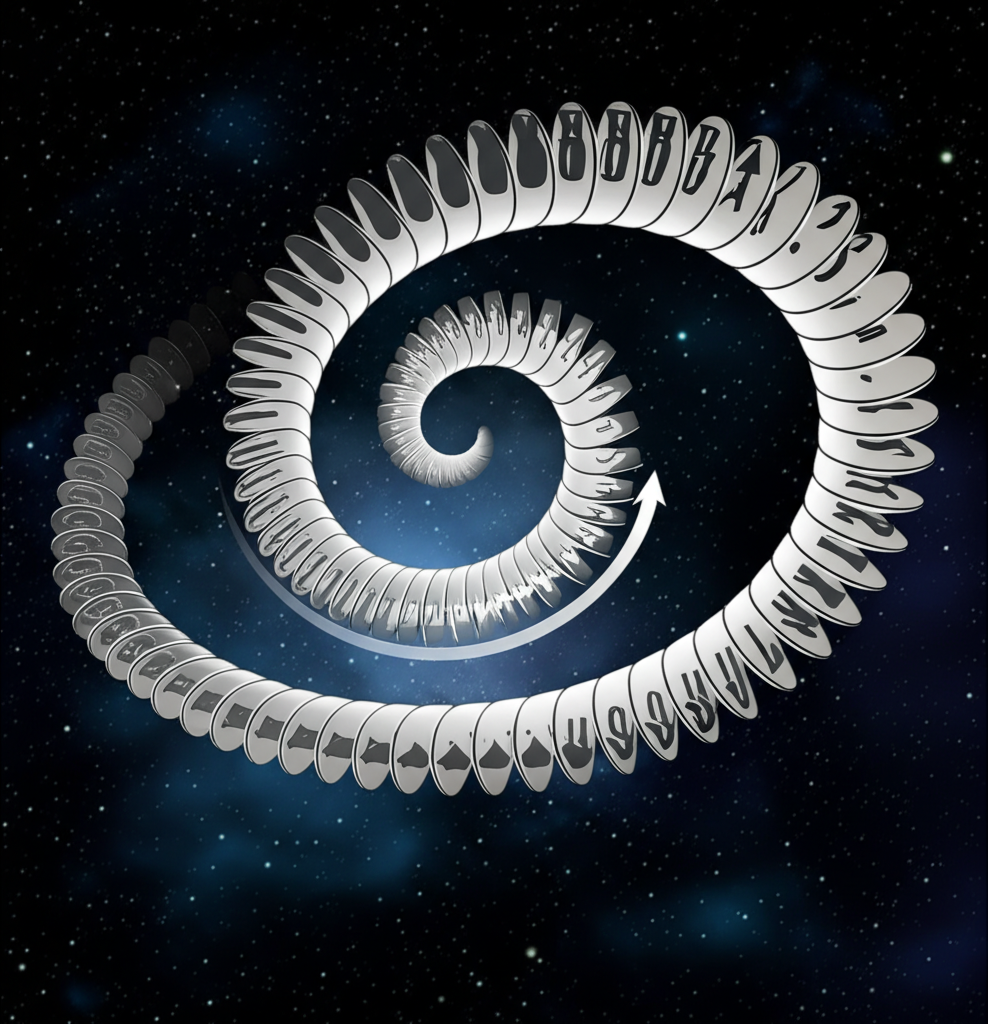
4. Our Human Experience: Living Within and Beyond Time
Our philosophical understanding of Time and Eternity is not just an academic exercise; it profoundly shapes our lived experience, our sense of self, and our engagement with the world.
The Subjectivity of Temporal Perception: Bergson's Duration
Henri Bergson, in works like Time and Free Will, argued against the spatialization of time, proposing instead the concept of duration (durée). For Bergson, true time is not a series of discrete, measurable moments, but a continuous, flowing, qualitative experience unique to consciousness. This subjective time is lived, felt, and indivisible, resisting the analytical divisions of clocks and calendars. Our internal experience of time can stretch or contract, highlighting its deeply personal and non-uniform nature.
Existential Time: Heidegger and the Horizon of Being-towards-Death
Martin Heidegger, in Being and Time, brought an existential dimension to the discussion. For Heidegger, human existence (Dasein) is fundamentally temporal. Our being is a "being-towards-death," and it is this finite horizon that gives meaning and urgency to our projects and choices. Time is not merely something we are in; it is constitutive of our very being. This perspective highlights the profound relation between our mortality and our experience of time.
Psychological Time: Memory, Anticipation, and the Present Moment
Psychology further illuminates the subjective nature of time. Our perception of time is heavily influenced by our emotional state, attention, and memory. Moments of joy may fly by, while periods of boredom drag. Our consciousness constantly navigates between remembering the past, experiencing the fleeting present, and anticipating the future. This internal dance is a testament to Augustine's "distention of the soul" and our intricate relation with the temporal flow.
📹 Related Video: What is Philosophy?
Video by: The School of Life
💡 Want different videos? Search YouTube for: ""What is Time? Philosophy Explained" or "The Philosophy of Time and Eternity""
5. Voices from the Great Books: A Philosophical Chorus on Time and Eternity
The Great Books of the Western World offer an unparalleled repository of thought on Eternity and Time. Let's revisit some key contributions:
Plato's Timaeus: Time as a Moving Image
Plato's cosmology in the Timaeus posits a divine craftsman (Demiurge) who creates the cosmos. Because the created world could not possess the complete, timeless perfection of the Forms (the realm of Eternity), the Demiurge created time as a "moving image of Eternity." This means time is a lesser, temporal reflection of a higher, eternal reality, characterized by cyclical motions and numerical regularities.
Augustine's Confessions: The Puzzle of Time's Nature
As mentioned, Augustine's profound meditation on time in his Confessions (Book XI) remains one of the most honest and insightful explorations. He grapples with the paradox of how we speak of past and future when only the present truly exists, ultimately concluding that time is a "distention" of the mind itself. His work highlights the deep relation between human consciousness and the experience of time.
Boethius's Consolation of Philosophy: The Fullness of Eternal Life
Boethius, writing from prison, sought solace in philosophy. His definition of Eternity as the "whole, perfect, and simultaneous possession of interminable life" profoundly influenced subsequent medieval thought. He argued that God's Eternity is not an endless succession of moments but an utterly timeless present, where all time is simultaneously grasped. This concept attempts to reconcile divine omniscience with human free will, a perennial metaphysical problem.
Kant's Critique of Pure Reason: Time as an A Priori Intuition
Immanuel Kant revolutionized our understanding by arguing that time is not an external reality but an a priori form of intuition, a fundamental structure of the human mind through which we perceive the world. We cannot experience anything without time because time is a necessary condition for our experience. This means time is subjective in a transcendental sense – it's how we are wired to perceive, rather than an inherent property of things-in-themselves.
Modern Perspectives: From Bergson to Einstein
The 20th century continued to challenge and refine these ideas. Bergson emphasized the subjective, lived experience of duration over measurable time. Einstein's theories of relativity shattered the notion of absolute time, demonstrating its relation to space and gravity. These modern thinkers, while departing from classical metaphysics, continue the grand philosophical tradition of interrogating the fundamental nature of Time and Eternity.
Conclusion: The Enduring Mystery
The journey through the Nature of Eternity and Time reveals not a simple answer, but a profound tapestry woven from metaphysics, physics, psychology, and theology. From Aristotle's measurement of motion to Augustine's inner clock, Boethius's timeless God to Einstein's relativistic spacetime, the human mind has relentlessly pursued the essence of these fundamental concepts.
We've seen that Time is multifaceted: an external measure, an internal experience, and a dimension of reality. Eternity stands as its enigmatic counterpart, sometimes understood as infinite duration, but more often as a timeless, simultaneous present. The relation between them is one of constant philosophical tension and fruitful exploration.
Ultimately, the quest to understand Eternity and Time is a quest to understand ourselves, our consciousness, and the very structure of the universe. While definitive answers remain elusive, the pursuit itself enriches our philosophical landscape, inviting us to ponder the most fundamental aspects of existence.
Frequently Asked Questions
Q: What's the difference between "timeless" and "everlasting"?
A: Everlasting means existing for an infinite duration within time (without beginning or end). Timeless means existing outside of time altogether, without temporal sequence or succession, in an eternal present.
Q: Can time travel exist according to philosophy?
A: Philosophical perspectives vary. Presentists, who believe only the present is real, would generally find time travel impossible. Eternalists (Block Universe theorists), who believe all points in time are equally real, might find it metaphysically plausible, though still fraught with logical paradoxes (e.g., the grandfather paradox).
Q: How does our understanding of time affect our lives?
A: Our understanding of time profoundly shapes our values, priorities, and sense of meaning. Believing in a linear, finite time often emphasizes progress and achieving goals, while a more cyclical or eternal perspective might foster patience, contemplation, or a focus on timeless truths. It influences everything from how we plan our day to how we confront our mortality.