

The Eloquent Dance: Unpacking the Nature of Democracy and Rhetoric
A Concise Overview
Democracy, in its purest nature, is often envisioned as the rule of the people, a system built on informed deliberation and collective will. Yet, the path to this ideal is perpetually paved by rhetoric – the art of persuasion. This article delves into the intricate and often fraught relationship between these two fundamental forces, exploring how rhetoric shapes public opinion, influences policy, and ultimately defines the character of democratic governance. Drawing insights from the Great Books of the Western World, we examine historical philosophical perspectives on their interplay, recognizing rhetoric as both a vital tool for civic engagement and a potential instrument for manipulation, thereby perpetually challenging the very essence of democratic ideals.
The Inseparable Threads: Democracy and Persuasion
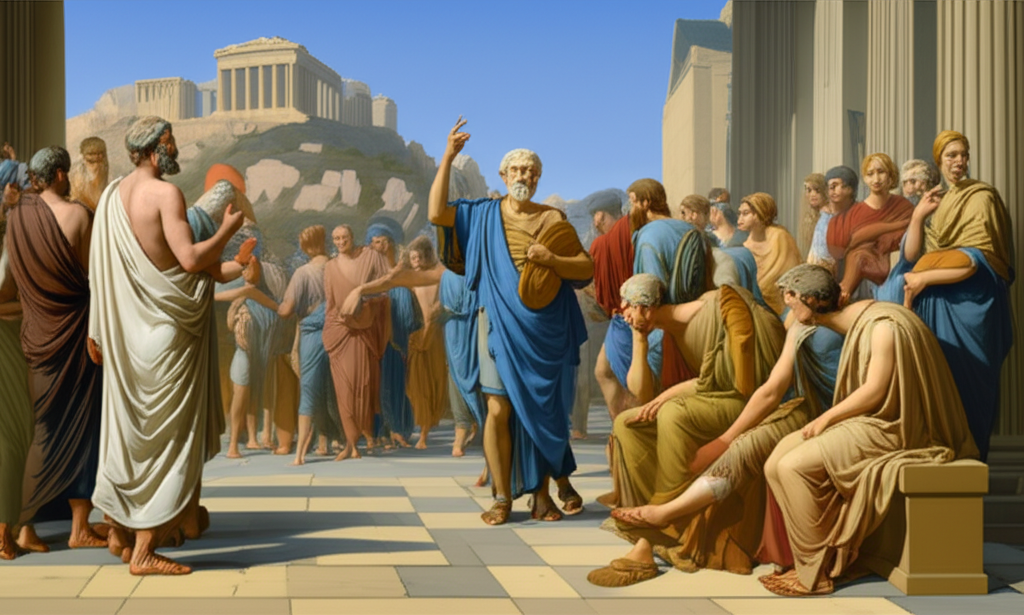
From the bustling Athenian agora to the digital town squares of today, the democratic experiment has always been a conversation. It's a system that, by its very design, necessitates the articulation and contestation of ideas. But how do these ideas gain traction? How do diverse individuals coalesce around a shared vision or policy? The answer, unequivocally, lies in rhetoric.
Rhetoric, far from being mere ornamentation, is the engine of public discourse. It is the art by which arguments are constructed, emotions are stirred, and opinion is swayed. In a democracy, where power theoretically resides with the people, the ability to communicate effectively and persuasively becomes not just a skill, but a cornerstone of the political process.
Ancient Echoes: Plato, Aristotle, and the Democratic Dilemma
The thinkers of the Great Books of the Western World grappled extensively with the nature of both democracy and rhetoric, often viewing their interaction with a mix of admiration and apprehension.
Plato's Skepticism: The Sophists and the Peril of Persuasion
Plato, as evidenced in dialogues like Gorgias and The Republic, harbored a deep suspicion of democracy and its reliance on rhetoric. He observed the Sophists, masters of persuasion, who could make "the weaker argument appear the stronger." For Plato, rhetoric untethered from truth or justice was dangerous, capable of manipulating the ignorant masses and leading the state astray. He feared that a democracy, susceptible to eloquent but misleading speech, would devolve into mob rule, prioritizing fleeting desires over enduring wisdom. His ideal philosopher-king, by contrast, would rule based on immutable truths, not popular opinion crafted by persuasive speech.
Aristotle's Pragmatism: Rhetoric as a Tool for the Polis
Aristotle, in his seminal work Rhetoric, offered a more nuanced and pragmatic view. He recognized rhetoric as an art (techne), a neutral tool that could be used for good or ill. For Aristotle, rhetoric was essential for civic life, particularly in a political system where citizens needed to deliberate and make decisions. He categorized the appeals of rhetoric into three modes:
- Ethos: The speaker's credibility or character.
- Pathos: Appealing to the audience's emotions.
- Logos: The logical reasoning of the argument.
Aristotle believed that a well-functioning polis required citizens capable of discerning good arguments from bad, and that rhetoric, properly understood and ethically employed, was indispensable for public deliberation and the pursuit of justice. He understood that in a democracy, decisions are made by persuasion, and therefore, understanding the mechanics of persuasion is crucial for both speakers and listeners.
The Modern Democratic Landscape: A Rhetorical Battleground
The challenges identified by these ancient philosophers remain strikingly relevant today. Modern democracies, with their vast media landscapes and rapid information dissemination, are intensely rhetorical environments. Every election, every policy debate, every social movement is a testament to the power of rhetoric in shaping public opinion.
Table: The Dual Nature of Rhetoric in Democracy
| Aspect | Beneficial Role in Democracy | Potentially Harmful Role in Democracy |
|---|---|---|
| Information | Clarifies complex issues, educates the public. | Spreads misinformation, distorts facts, creates echo chambers. |
| Deliberation | Facilitates reasoned debate, encourages diverse viewpoints. | Exploits emotions, polarizes discourse, stifles dissent. |
| Mobilization | Inspires collective action for positive change. | Incites fear or hatred, manipulates for selfish gain. |
| Accountability | Holds leaders to account through persuasive critique. | Undermines trust in institutions, promotes baseless accusations. |
| Identity | Fosters shared values and national cohesion. | Exacerbates divisions, promotes tribalism. |
The Shaping of Opinion: Rhetoric's Enduring Influence
The very nature of democracy hinges on the concept of informed opinion. Citizens are expected to weigh arguments, consider evidence, and arrive at reasoned conclusions. However, rhetoric constantly intervenes in this process. It can:
- Frame Issues: How a problem is described often dictates how it is perceived and what solutions are considered.
- Create Consensus (or Dissensus): Powerful rhetoric can unite people behind a cause or deepen existing divisions.
- Legitimize or Delegitimize: Persuasive communication can bolster or erode the credibility of leaders, institutions, and ideas.
The challenge for any democracy is to cultivate a citizenry that is not merely susceptible to rhetoric, but capable of critically evaluating it. This requires a commitment to education, media literacy, and fostering environments where diverse perspectives can be heard and scrutinised without resorting to demagoguery.
Conclusion: The Unending Dialogue
The relationship between democracy and rhetoric is not one of simple cause and effect, but a complex, symbiotic dance. Rhetoric is not an optional accessory to democracy; it is woven into its very fabric. While it holds the potential to elevate public discourse, enlighten citizens, and inspire collective action, it also carries the inherent risk of manipulation, demagoguery, and the erosion of truth.
Understanding the nature of this relationship, as explored by the great minds of our philosophical heritage, is crucial. It reminds us that the health of a democracy is perpetually tied to the quality of its rhetoric and the critical discernment of its citizens. The ongoing task, then, is to strive for a rhetoric that serves truth and justice, fostering an informed opinion that truly reflects the collective wisdom of the people.
YouTube Video Suggestions:
- YouTube: "Plato Gorgias Rhetoric Philosophy"
- YouTube: "Aristotle Rhetoric Summary Political Philosophy"
📹 Related Video: What is Philosophy?
Video by: The School of Life
💡 Want different videos? Search YouTube for: "The Nature of Democracy and Rhetoric philosophy"