

The Evolving Nature of Democracy: A Philosophical Journey
Democracy, at its core, is a system of government where power is vested in the people, either directly or through elected representatives. However, its nature is far from static. From its ancient Athenian origins to its modern manifestations, democracy has been a subject of intense philosophical debate, constantly undergoing change as societies grapple with questions of governance, freedom, and collective will. This article explores the philosophical underpinnings of democracy's essence and its historical transformations, drawing insights from the "Great Books of the Western World" to illuminate its complex, dynamic character.
I. The Ancient Contours: Defining Democracy's Early Nature
The concept of democracy first took discernible shape in ancient Greece, particularly in Athens. Yet, even then, its nature was hotly contested.
- Plato's Critique: In The Republic, Plato viewed democracy with skepticism, portraying it as a step towards tyranny. He argued that it prioritizes unbridled freedom, leading to a lack of discipline and a rule by popular opinion rather than by wisdom. For Plato, the ideal government was an aristocracy of philosopher-kings, guided by reason, not the fickle desires of the masses. He saw the change inherent in democratic cycles as a descent into chaos.
- Aristotle's Classification: Aristotle, in Politics, offered a more nuanced analysis. He classified democracy as one of the three "deviant" forms of government (alongside oligarchy and tyranny), where the many rule in their own interest, not the common good. However, he also recognized a "polity" – a constitutional government blending elements of oligarchy and democracy – as a more stable and desirable form. Aristotle understood that the nature of any government depended on the character of its citizens and the goals it pursued.
These ancient perspectives highlight an early understanding of democracy as a form of government prone to inherent instability and the potential for mob rule, a nature that subsequent thinkers would seek to redefine and refine.
II. The Enlightenment's Reimagining: A New Nature of Government
Centuries later, the Enlightenment brought a profound change to the philosophical understanding of democracy. Thinkers began to emphasize individual rights, consent of the governed, and the social contract, fundamentally altering the perceived nature of legitimate government.
- John Locke and the Social Contract: In his Two Treatises of Government, Locke posited that individuals possess inherent natural rights (life, liberty, and property) that pre-exist government. The purpose of government, then, is to protect these rights, and its legitimacy derives from the consent of the governed. This marked a significant change from ancient views, establishing a contractual nature for political authority and laying foundational principles for modern liberal democracy.
- Jean-Jacques Rousseau and the General Will: Rousseau, in The Social Contract, further developed the idea of popular sovereignty. He argued that true freedom lies in obedience to the "general will," a collective moral force that aims for the common good. While his vision of democracy could be interpreted as direct and potentially illiberal, it profoundly influenced revolutionary movements and the belief that the people themselves are the ultimate source of legislative power, representing a radical change in the nature of political participation.
These philosophers shifted the focus from the dangers of popular rule to the imperative of popular consent, reshaping the very nature of what a just government should be.
III. Mechanisms of Change: Adapting and Evolving
The nature of democracy is not static; it is constantly subjected to internal and external pressures that compel its change.
- Alexis de Tocqueville on American Democracy: In Democracy in America, Tocqueville observed the unique nature of American democracy, noting its egalitarian spirit, the power of associations, and the potential for the "tyranny of the majority." He meticulously documented how the social and cultural fabric of a nation influences the practical workings and change of its democratic institutions. His work serves as a powerful reminder that democracy is not merely a set of rules but a living system shaped by its people.
- John Stuart Mill and Liberty: Mill, in On Liberty and Considerations on Representative Government, wrestled with the tension between individual freedom and collective authority. He advocated for robust protections for individual expression and minority rights, recognizing that democracy needs mechanisms to prevent the suppression of dissenting voices. Mill's contributions highlight the ongoing philosophical change within democracy itself, striving to perfect its nature by balancing popular rule with individual autonomy.
Factors Driving Democratic Change:
| Factor | Description | Philosophical Implication |
|---|---|---|
| Social Shifts | Demographic changes, evolving cultural values, and new forms of social organization. | Challenges traditional notions of representation and majority rule. |
| Technological Advancements | Communication technologies, digital platforms, and artificial intelligence. | Alters political discourse, civic engagement, and the nature of public opinion formation. |
| Economic Pressures | Inequality, globalization, and resource scarcity. | Tests the capacity of democratic government to deliver equitable outcomes and stability. |
| Geopolitical Events | Wars, international alliances, and global challenges (e.g., climate change, pandemics). | Forces adaptation in national policies and international cooperation, influencing governance. |
These factors demonstrate that the nature of democracy is perpetually in flux, demanding constant re-evaluation and adaptation from its citizens and institutions.
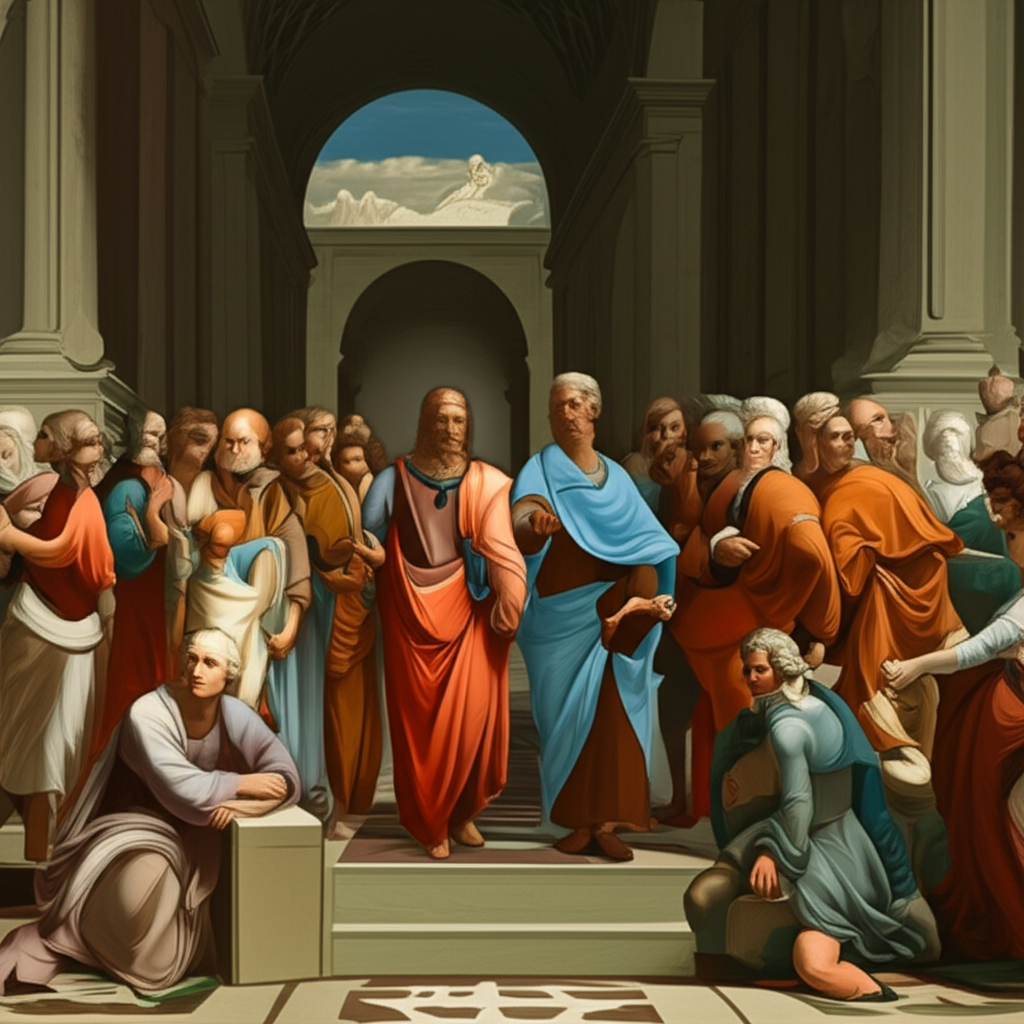 engaging in a lively, but respectful, debate around a central, illuminated scroll titled "The Social Contract." In the background, abstract representations of different forms of government subtly shift and evolve, from a classical temple to a modern parliament building, symbolizing the ongoing change and evolution of democratic ideals.)
IV. Contemporary Challenges and the Future of Democratic Government
Today, the nature of democracy faces renewed scrutiny. From the rise of populism to the impact of digital disinformation, the fundamental tenets of democratic government are being tested. The philosophical debate continues: How can democracy maintain its core values of freedom and equality while adapting to unprecedented global change?
The ongoing philosophical journey through the nature of democracy reveals it not as a fixed ideal, but as a dynamic experiment in collective self-governance. Its resilience and capacity for change depend on continuous engagement with its foundational principles and a willingness to adapt its forms to meet new challenges, always striving towards a more just and inclusive government.
YouTube: specific search terms for relevant philosophy videos
- "Plato Aristotle Democracy Philosophy"
- "Locke Rousseau Mill Social Contract Theory"
📹 Related Video: What is Philosophy?
Video by: The School of Life
💡 Want different videos? Search YouTube for: "The Nature of Democracy and its Change philosophy"