

The Nature of Art and Form: An Enduring Philosophical Inquiry
Summary:
This article delves into the profound and often overlooked relationship between Art and Form, arguing that the essence of artistic expression lies in its embodiment of intelligible structures. Drawing from the rich tapestry of Western philosophy, particularly the insights found within the Great Books, we explore how Form provides the underlying blueprint for Art, how Beauty emerges as the harmonious manifestation of this Form, and how the discerning eye recognizes Quality in the artist's successful realization of these principles. Far from being mere subjective preference, the appreciation of art is presented as an engagement with objective structures of meaning and order, connecting us to timeless truths.
The Inseparable Essence: Art and Form
To speak of Art without acknowledging Form is to discuss a shadow without its substance. For millennia, philosophers have grappled with the fundamental principles that elevate mere craft to profound expression, and time and again, the concept of Form emerges as the bedrock. From the meticulous structure of a sonnet to the architectural grandeur of a cathedral, Form is the underlying order, the intelligible shape that gives Art its very being. It is the framework, the pattern, the eidos that an artist seeks to manifest.
Consider the ancient Greeks, whose contributions form the very bedrock of the Great Books. Plato, in his theory of Forms, posited an eternal, unchanging realm of perfect Forms, of which all earthly phenomena are but imperfect copies. While he often viewed imitative art with suspicion, his philosophy undeniably grounds the idea that true Beauty and meaning derive from these perfect, archetypal Forms. An artist, in this sense, isn't just creating something new; they are, perhaps unconsciously, striving to touch upon or reveal an existing, perfect Form.
Aristotle, ever the empiricist, brought these Forms down to earth, seeing them as immanent within the objects themselves, inseparable from their matter. For him, the Form of a statue is not an external ideal but the very essence that makes it a statue, distinct from the block of marble it once was. The artist, therefore, imposes Form upon matter, giving it purpose and identity. This act of giving Form is central to the very definition of Art.
- Platonic Echoes: The pursuit of ideal, transcendent structures.
- Aristotelian Immanence: The shaping of matter into meaningful, purposeful entities.
Beauty: The Resplendent Manifestation of Form
If Form is the underlying structure, then Beauty is its radiant outward expression. We are drawn to Art that exhibits Beauty, and this attraction is not purely arbitrary. Rather, it often stems from our innate recognition of harmonious Form. When elements are arranged in proportion, balance, and unity, a sense of Beauty arises. This is not merely an aesthetic preference but, as many classical thinkers argued, a recognition of an inherent order, a reflection of cosmic Quality.
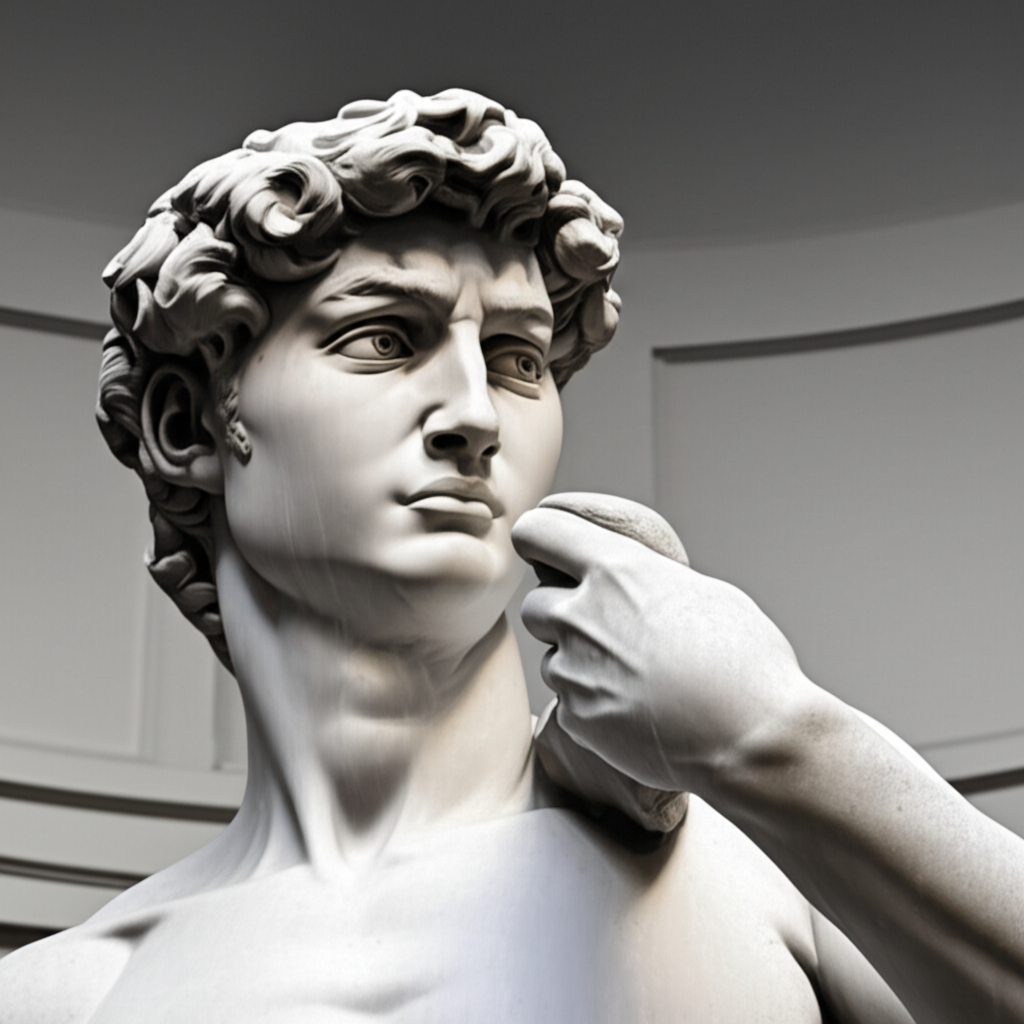
Think of the golden ratio, the mathematical proportion found repeatedly in nature and classical Art. Its appeal isn't accidental; it speaks to a fundamental Form that our minds perceive as inherently pleasing. When a sculptor renders the human body with anatomical precision and graceful lines, the Beauty we perceive is a testament to the artist's ability to capture and refine the Form of the human physique, elevating it beyond the mundane.
However, the perception of Beauty is not always simple. While some Forms seem universally appealing, cultural and individual experiences inevitably shape our appreciation. Yet, even in diverse expressions of Beauty, there often lies a common thread: the successful integration of disparate elements into a coherent and meaningful whole – a testament to underlying Form.
Table: Philosophical Perspectives on Beauty
| Philosophical Stance | Description | Relationship to Form |
|---|---|---|
| Platonic Idealism | Beauty is an objective, transcendent Form, perceived through reason and intuition. | Beauty is Form itself, or a direct manifestation of it. |
| Aristotelian Realism | Beauty is inherent in objects, arising from their proper internal arrangement, order, and purpose. | Beauty is the harmonious manifestation of immanent Form within matter. |
| Kantian Aesthetics | Beauty is a subjective judgment of taste, yet implies a universal communicability based on the harmonious free play of cognitive faculties. | Form facilitates the "free play" of understanding and imagination, leading to a disinterested pleasure and sense of Beauty. |
The Pursuit of Quality: The Artist's Vocation
The artist, then, is not merely a technician but a seeker of Form and a purveyor of Quality. The painstaking process of creation—whether it be painting, composing, writing, or sculpting—is an endeavor to bring a particular Form into being with the highest possible Quality. This pursuit involves deep understanding, rigorous discipline, and often, profound intuition.
Quality in Art is not just about technical proficiency, though that is often a prerequisite. It is about the successful translation of an idea, an emotion, or a concept into a tangible Form that resonates with the viewer or listener. A work of high Quality reveals a mastery of its medium, a clarity of intention, and a compelling embodiment of its chosen Form. It is the difference between a simple sketch and a master drawing, both depicting the same subject, yet one imbued with a richness and depth that the other lacks.
The masters revered in the Great Books tradition—Homer, Virgil, Shakespeare—achieved their immortality not just through compelling narratives but through the Quality of their Form: their mastery of language, rhythm, metaphor, and structure. Their works are not merely stories; they are exquisitely crafted Forms that continue to impart truth and Beauty across generations.
The Viewer's Engagement: Encountering Form and Quality
Our experience of Art is, at its core, an engagement with Form and a recognition of Quality. When we stand before a masterpiece, our minds are not merely processing visual data; they are interpreting structures, discerning patterns, and connecting with the artist's intent. The emotional resonance we feel, the intellectual stimulation we receive, all spring from the harmonious interplay of Form and content.
A truly great work of Art invites us to look beyond the superficial, to delve into its underlying Form, and to appreciate the Quality of its execution. It challenges our perceptions, expands our understanding, and often, reveals a glimpse of universal truths. This is why Art endures: because the fundamental Forms it embodies—love, loss, heroism, the human condition—are timeless, and when rendered with exceptional Quality, they speak to the core of our shared existence.
Conclusion: The Enduring Dialogue of Art, Form, Beauty, and Quality
The relationship between Art and Form is not a mere academic curiosity; it is the very pulse of creative endeavor and aesthetic appreciation. From the earliest cave paintings to the most avant-garde installations, artists have been, consciously or unconsciously, engaged in the act of giving Form to the inchoate, of shaping raw material into something meaningful, beautiful, and enduring. The Beauty we perceive is often a direct result of harmonious Form, and the Quality we admire is the measure of an artist's success in realizing that Form. To understand Art deeply is to understand its Forms, and in doing so, we unlock a richer appreciation for the profound human capacity to create order, meaning, and Beauty in the world.
YouTube Video Suggestions:
-
📹 Related Video: PLATO ON: The Allegory of the Cave
Video by: The School of Life
💡 Want different videos? Search YouTube for: ""Plato's Theory of Forms Explained - Philosophy""
2. ## 📹 Related Video: ARISTOTLE ON: The Nicomachean Ethics
Video by: The School of Life
💡 Want different videos? Search YouTube for: ""Aristotle's Poetics - The Nature of Art and Tragedy""


