

The Enduring Interplay: Unpacking the Nature of Art and Form
The philosophical inquiry into Art is as ancient as human creativity itself. At its core, this exploration often leads us to confront the concept of Form, the very structure and organization that gives art its being. This article delves into how Form is not merely an aesthetic choice but a fundamental aspect through which Art achieves its purpose, evokes Beauty, and establishes its enduring Quality. We will navigate the historical perspectives from the Great Books of the Western World to understand this intricate relationship, asserting that true artistic expression is inseparable from its formal embodiment, which in turn dictates its capacity to move, enlighten, and persist.
The Ever-Present Question: What Is Art?
From Plato's Republic questioning the mimetic nature of art to Aristotle's Poetics dissecting its dramatic structures, philosophers have long grappled with the essence of artistic creation. Is art merely an imitation of nature, a craft, a vehicle for moral instruction, or something more profound? Daniel Fletcher posits that Art transcends simple mimesis; it is a human endeavor to give tangible, audible, or visible Form to an idea, an emotion, or a vision that exists first in the mind's eye. It is an act of bringing something new into being, or re-presenting the familiar in an unfamiliar, often illuminating, way.
- Art as Expression: The artist translates an internal state into an external manifestation.
- Art as Communication: It conveys meaning, feeling, or insight to an audience.
- Art as Creation: It involves the deliberate arrangement of elements to achieve a specific effect.
The Indispensable Role of Form
If Art is the act of creation, then Form is the very architecture of that creation. It is the shape, structure, composition, and organization of the artistic work. Without Form, art would be an undifferentiated chaos, an unarticulated impulse. Think of the sonnet's strict rhyme scheme and meter, the symphony's movement structure, or the sculpture's carefully carved planes and volumes. These are all manifestations of Form.
From Plato's Forms to Aristotelian Structure
The concept of Form itself has deep philosophical roots. Plato, in works like Phaedo and Republic, posited his Theory of Forms, suggesting that perfect, eternal, and unchanging Forms exist independently of the physical world, and that earthly objects are mere imperfect copies. While Plato was often critical of art for being a copy of a copy, his emphasis on Form as an ideal essence is profoundly influential.
Aristotle, in contrast, brought Form down to earth. For him, as discussed in Metaphysics and Poetics, Form is not separate from matter but is intrinsic to it. It is the organizing principle, the "what it is to be" for any given thing. In art, this translates to the structure of a tragedy, the arrangement of colors in a painting, or the melodic contour of a musical piece. The Form is what makes a tragedy a tragedy, distinct from an epic poem, even if both tell stories of heroes.
- Form as Structure: The arrangement of parts within a whole.
- Form as Content's Vehicle: It shapes how meaning is conveyed.
- Form as Aesthetic Principle: It guides the creation of harmony, balance, and rhythm.
Beauty: The Unifying Principle?
The pursuit of Beauty has been a constant companion to the creation of Art. But what is Beauty? Is it purely subjective, "in the eye of the beholder," or does it possess objective qualities? Philosophers from Augustine to Aquinas (who spoke of integritas, consonantia, and claritas – integrity, proportion, and clarity – as conditions for beauty) and later Kant, have wrestled with this.
Often, Beauty emerges from the masterful application of Form. A well-proportioned sculpture, a harmoniously colored painting, or a perfectly structured piece of music often strike us as beautiful. This suggests that while personal taste plays a role, there are underlying principles of balance, symmetry, rhythm, and unity—all aspects of Form—that contribute to our perception of Beauty.
- Elements often associated with Beauty:
- Harmony: A pleasing arrangement of parts.
- Proportion: The pleasing relation of parts to each other and to the whole.
- Clarity: The distinctness and vividness of presentation.
- Unity: The sense that all parts belong together.
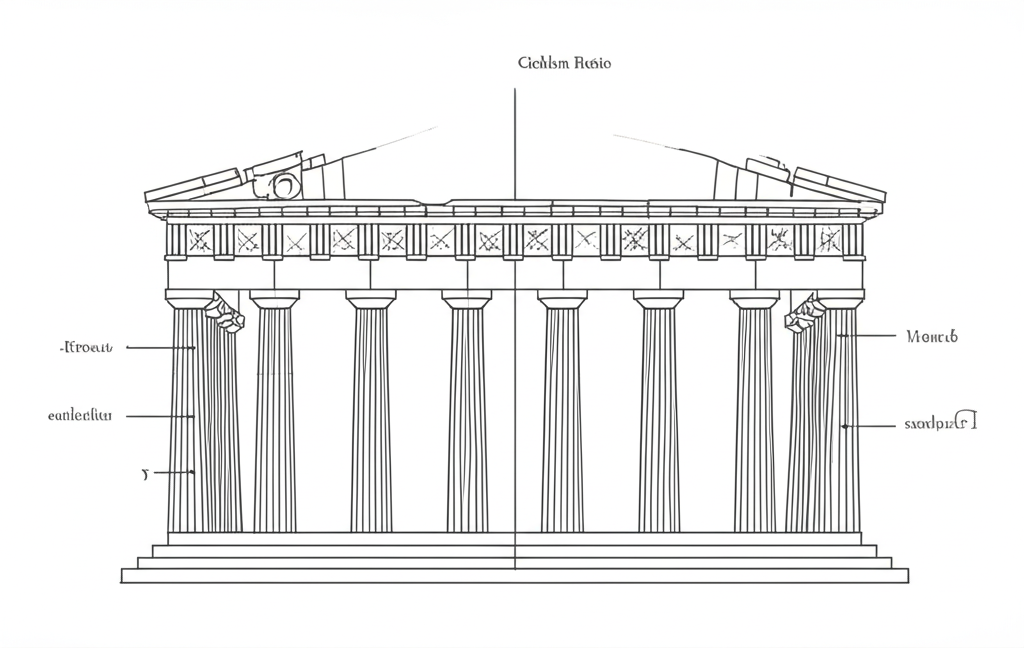
Quality: The Mark of Enduring Art
Not all Art is created equal; some works possess an undeniable Quality that elevates them above the ephemeral. This Quality is often inextricably linked to the artist's mastery of Form and their ability to imbue the work with profound Beauty or meaning. A work of high Quality demonstrates not just technical skill, but also depth of insight, originality, and a resonant impact on the human spirit.
For Aristotle, the Quality of a tragedy lay in its ability to evoke catharsis through a well-constructed plot (a form) and compelling characters. For critics of later eras, Quality might be found in the innovative use of a medium, the emotional resonance, or the intellectual challenge posed by the work. It is the enduring power of a work to speak across generations, to spark new interpretations, and to stand as a testament to human potential.
- Quality in Art often reflects:
- Mastery of Form: Expert handling of medium and structure.
- Depth of Content: Profound ideas, emotions, or insights.
- Originality: Innovation in expression or concept.
- Enduring Impact: The ability to resonate over time and across cultures.
The Interplay: Art, Form, Beauty, and Quality
Ultimately, Art, Form, Beauty, and Quality are not isolated concepts but deeply interwoven threads in the tapestry of human creativity. Art is the act; Form is its embodiment; Beauty is often its outcome or aspiration; and Quality is its measure. A profound piece of Art achieves its Quality precisely because its Form is meticulously crafted to convey its intended meaning, often leading to a perception of Beauty that transcends mere personal preference.
Consider Michelangelo's David: its Form—the anatomical precision, the contrapposto stance, the scale—is masterful. This Form contributes immensely to its perceived Beauty and its undeniable Quality as a lasting work of Art. It is a testament to the idea that the most impactful art is that which perfectly marries its conceptual vision with its physical manifestation.
Conclusion: The Ongoing Dialogue
The nature of Art and Form remains a rich field for philosophical exploration. As Daniel Fletcher, I am compelled to acknowledge that while we seek definitions and frameworks, the essence of artistic creation often lies in its ability to defy easy categorization, pushing the boundaries of Form to express new dimensions of Beauty and Quality. The conversation, initiated by the ancients and continued through the Great Books of the Western World, is far from over. It is an invitation to engage with the world around us, to perceive the structures that underpin our experiences, and to appreciate the profound human drive to create meaning through tangible Form.
📹 Related Video: PLATO ON: The Allegory of the Cave
Video by: The School of Life
💡 Want different videos? Search YouTube for: ""Plato Aristotle Art Philosophy""
📹 Related Video: KANT ON: What is Enlightenment?
Video by: The School of Life
💡 Want different videos? Search YouTube for: ""Kant Aesthetics Beauty Philosophy""


