

The Enigma of Embodiment: Unpacking the Nature of Animal Matter
The question of what constitutes an animal – not merely as a biological specimen, but as a philosophical entity – takes us to the very core of existence. It's a journey from the raw, undifferentiated matter of the cosmos to the complex, living, sensing beings we are and observe. This article delves into the philosophical inquiry of animal matter, exploring how ancient thinkers grappled with the distinction between animate and inanimate, and how modern physics continues to inform, yet not entirely resolve, the profound nature of life's physical substrate. We'll examine the historical perspectives from the Great Books of the Western World that lay the groundwork for understanding how matter becomes animated, organized, and ultimately, an animal.
The Stuff of Life: Classical Inquiries into Animal Matter
For millennia, philosophers have pondered the fundamental components of reality. When considering an animal, the challenge immediately arises: how does its matter differ from a rock's, or a river's? The Great Books introduce us to thinkers like Aristotle, who posited a compelling framework.
From Pure Potentiality to Organized Being
Aristotle's concept of hylomorphism is central here. He argued that every physical substance is a composite of matter (hyle) and form (morphe). Matter is the potentiality, the "stuff" from which things are made, while form is what makes a thing what it is, its essence, its actuality.
- Inanimate Matter: A lump of clay has the matter of clay, and its form might be "lump." If shaped into a cup, it retains the matter but acquires the form of a "cup." Its nature is relatively static.
- Animal Matter: An animal, however, possesses a unique form – its soul (psyche) – which acts as its organizing principle. This form isn't merely shape; it's the very principle of life, growth, sensation, and movement. The matter of an animal (flesh, bone, blood) is always in the service of this living form.
Thus, the nature of animal matter isn't just about its chemical composition, but about its inherent organization and purpose, directed by its vital form.
The Soul's Imprint: Animating Matter
The distinction between living and non-living matter was often understood through the concept of the soul. For classical philosophers, the soul wasn't necessarily a disembodied spirit, but the animating principle that gives matter its vital nature.
Beyond the Inorganic: Sensation and Movement
Consider the following hierarchy of souls, as often discussed in ancient texts:
| Type of Soul | Primary Capacities | Examples of Beings |
|---|---|---|
| Vegetative | Growth, nutrition, reproduction | Plants |
| Sensitive | Sensation (sight, hearing, touch), desire, movement | Animals |
| Rational | Thought, reason, intellect | Humans (encompassing vegetative and sensitive) |
The matter of an animal is infused with a sensitive soul, enabling it to perceive its environment, experience pleasure and pain, and move purposefully. This is a profound leap from vegetative matter, which simply grows and reproduces. The nature of animal matter is therefore characterized by its capacity for interaction with the world through senses and locomotion.
Modern Lenses: Physics and the Material World
While ancient philosophy provided conceptual frameworks, modern physics offers insights into the elemental constituents of matter. We now understand that all matter, whether in a rock or an animal, is composed of atoms and their subatomic particles.
Reductionism and the Enduring Philosophical Question
Physics can explain the forces that bind atoms into molecules, and molecules into complex organic compounds like proteins, DNA, and cells. It can describe the electrical impulses in an animal's nervous system or the mechanics of its muscles. However, the reduction of an animal to its fundamental physical components, while scientifically powerful, doesn't fully answer the philosophical question of its nature.
- The "Hard Problem": Even if we understand every atom in an animal's brain, how does that matter give rise to subjective experience, consciousness, or the unique nature of an individual? This remains a vibrant area of philosophical inquiry, bridging the gap between scientific observation and metaphysical understanding.
- Emergent Properties: Many argue that life, consciousness, and the unique nature of an animal are emergent properties – qualities that arise from the complex organization and interaction of simpler components, but cannot be reduced to or predicted from those components alone. The matter is necessary, but its specific arrangement and dynamic processes are what truly define the animal.
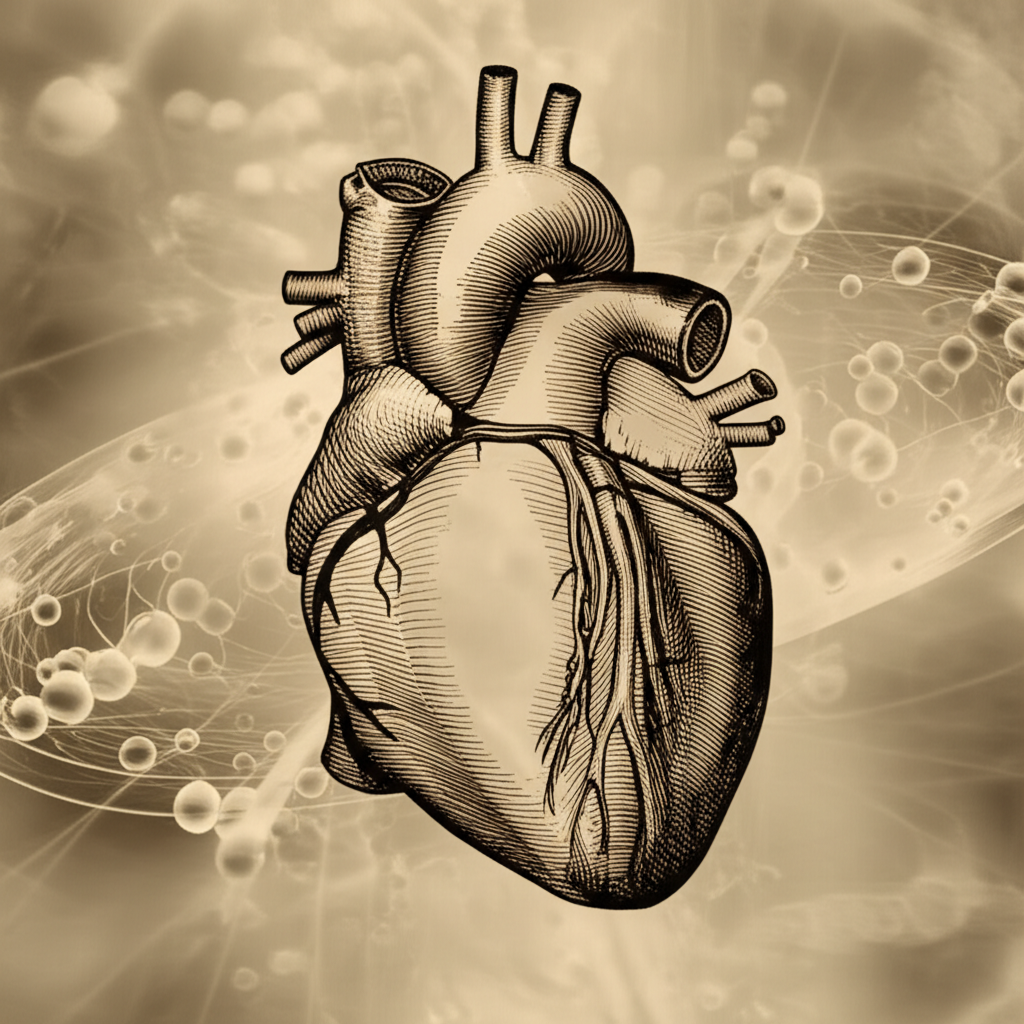
The Unique Nature of Animal Existence
The nature of animal matter is thus a testament to complexity and dynamic organization. It is matter that breathes, feels, adapts, and evolves.
Complexity, Adaptation, and the Dance of Life
- Self-Organization: Unlike inert matter, animal matter is self-organizing and self-maintaining. It actively resists entropy, repairing itself, growing, and reproducing.
- Purposeful Action: The matter of an animal is arranged to facilitate purposeful action – seeking food, avoiding predators, finding mates. This teleological aspect (goal-directedness) is a hallmark of living matter.
- Interconnectedness: An animal's matter is not isolated; it constantly exchanges with its environment, taking in nutrients, expelling waste, and interacting through sensory input and motor output. This dynamic interplay defines its living nature.
In essence, the nature of animal matter is not merely the sum of its physical parts, but the intricate, living system those parts form. It is the miraculous transformation of base matter into a sentient, adaptive, and often beautiful expression of life. The philosophical journey, from ancient Greek inquiries to contemporary discussions in physics and philosophy of mind, continues to illuminate the profound mystery of how matter comes to life as an animal.
📹 Related Video: ARISTOTLE ON: The Nicomachean Ethics
Video by: The School of Life
💡 Want different videos? Search YouTube for: ""Aristotle on the Soul and Living Beings - Philosophy Core Concepts""
📹 Related Video: What is Philosophy?
Video by: The School of Life
💡 Want different videos? Search YouTube for: ""What is Emergentism? Philosophy of Mind Explained""