

The Enduring Enigma: A Philosophical Journey Through Animal Life and Death
Summary: From the classical inquiries of antiquity to the insights of modern biology, the nature of animal life and death presents a profound philosophical challenge. This article delves into how we define "animal," explore the role of evolution in shaping their existence, and grapple with the ultimate cessation of their life and death. By examining these fundamental aspects of the natural world, we uncover not only the intricate tapestry of non-human existence but also gain deeper insights into our own place within it.
The Stirring of Being: What Defines an Animal?
For millennia, philosophers have pondered the essence of an animal. What separates a living creature from inanimate matter, or indeed, from a plant? The great thinkers of the Western tradition, such as Aristotle, meticulously observed and categorized the natural world, laying foundational concepts that still resonate today. He posited that animals, unlike plants, possess sensation and the capacity for self-motion. This "animal soul" (anima) allowed for perception, desire, and purposeful movement, marking a distinct form of life.
- Classical Distinctions:
- Nutritive Soul (Plants): Responsible for growth, reproduction, and sustenance.
- Sensitive Soul (Animals): Encompasses the nutritive soul, plus sensation (sight, hearing, touch, taste, smell) and locomotion.
- Rational Soul (Humans): Includes both nutritive and sensitive aspects, with the added faculty of reason and intellect.
This classical view, while refined by centuries of scientific discovery, still provides a framework for understanding the unique properties of animal existence. It compels us to consider the richness of their sensory worlds and their inherent drives, which, though often distinct from our own, are undeniably forms of conscious experience.
The Grand Tapestry: Evolution and the Shaping of Life
The advent of the theory of Evolution irrevocably transformed our understanding of the natural world and the origins of animal life. No longer seen as static creations, species were revealed as dynamic entities, constantly adapting and changing over vast stretches of time. Charles Darwin's revolutionary insights, while outside the Great Books canon, built upon centuries of natural philosophy, offering a powerful mechanism for the diversity and complexity we observe.
Evolutionary Principles in Animal Life:
- Adaptation: The remarkable ways animals develop traits suited to their environments, from the camouflage of a chameleon to the migration patterns of birds.
- Natural Selection: The relentless process by which individuals better suited to their environment are more likely to survive and reproduce, passing on advantageous traits.
- Interconnectedness: Evolution highlights the shared ancestry of all animal life, drawing a continuous thread from the simplest organisms to the most complex.
This understanding forces us to confront the profound interconnectedness of all living things, blurring the sharp lines once drawn between species and fostering a deeper appreciation for the intricate dance of existence. The struggle for life and death in the wild is not merely chaotic but a fundamental engine of creation and transformation.
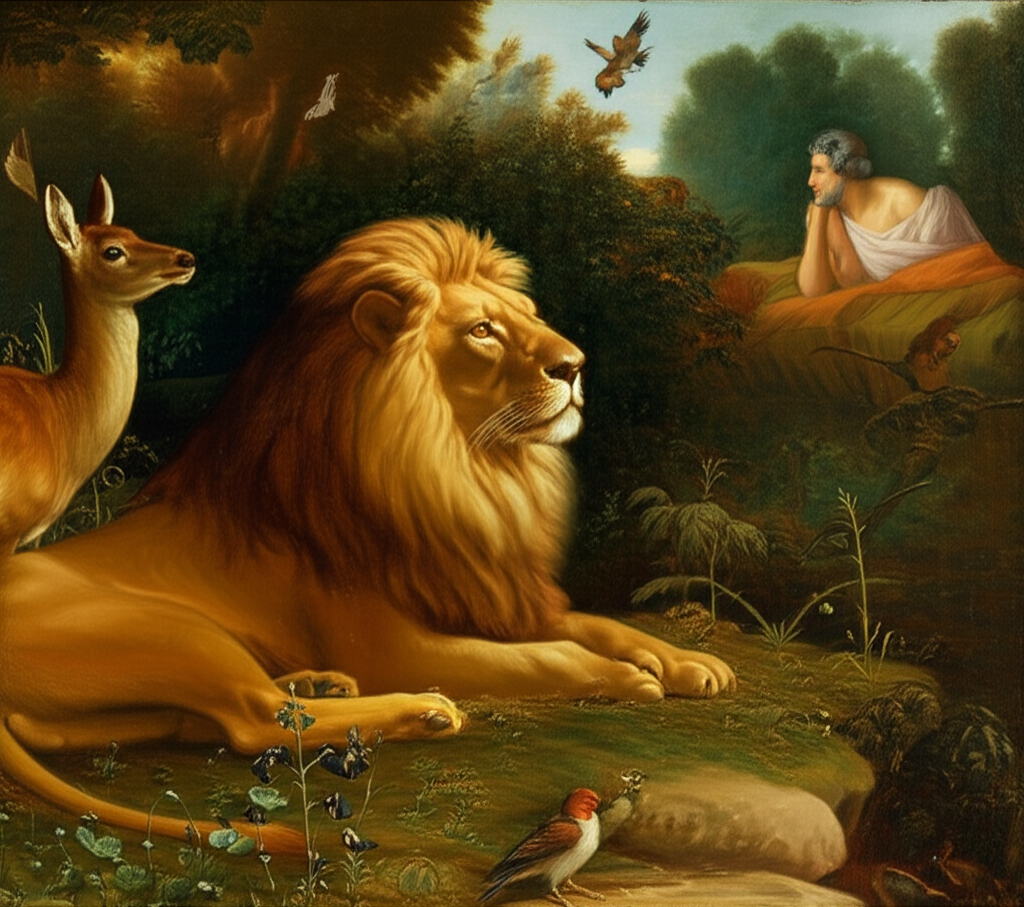
The Inevitable Silence: Animal Death and Its Meaning
The cessation of life is as fundamental to the natural world as its beginning. Animal death, in its myriad forms, is an omnipresent reality, shaping ecosystems and serving as a constant reminder of finitude. Philosophically, animal death raises questions that echo our own existential concerns, albeit with crucial differences.
Perspectives on Animal Death:
| Aspect | Human Perspective (Often) | Animal Perspective (Inferred) |
|---|---|---|
| Awareness | Conscious anticipation, fear of non-existence, grief. | Likely an instinctive avoidance of danger, pain; lack of abstract concept of "death." |
| Meaning/Ritual | Cultural rites, spiritual beliefs, legacy. | Primarily biological: return of nutrients to the ecosystem. |
| Ethical Implications | Deep moral considerations, dignity, end-of-life care. | Focus on suffering, humane treatment, conservation. |
| Impact on Others | Profound emotional, social, and spiritual impact. | Ecological impact, predator-prey dynamics. |
Unlike humans, who often possess a profound and abstract awareness of their own mortality, animals generally experience death as the ultimate failure of the biological imperative to survive. Yet, the loss of an animal, whether in the wild or as a beloved companion, often evokes deep emotional responses in us, compelling us to reflect on the value of their life and the mystery of their passing. The cycle of life and death is the very rhythm of Nature.
📹 Related Video: What is Philosophy?
Video by: The School of Life
💡 Want different videos? Search YouTube for: "Philosophy of Animal Consciousness and Rights"
Our Place in the Wild: Reflections on Responsibility
Contemplating the nature of animal life and death inevitably leads us to consider our own role and responsibilities. From ancient fables to modern ethical treatises, humanity has wrestled with its relationship to other species. Are animals mere resources, or do they possess intrinsic value? The philosophical journey through the animal kingdom is not just an academic exercise; it's a call to re-evaluate our ethical frameworks and our position within the grand scheme of Evolution.
The profound beauty and often brutal realities of Nature underscore the delicate balance of existence. Understanding the life and death of animals—their struggles, their joys, their ultimate end—offers a mirror to our own fleeting existence and encourages a more compassionate and informed engagement with the world beyond ourselves. It is a continuous invitation to wonder, to question, and to connect with the primal pulse of life itself.
📹 Related Video: ARISTOTLE ON: The Nicomachean Ethics
Video by: The School of Life
💡 Want different videos? Search YouTube for: "Aristotle on the Soul and Living Beings"