

The Unfolding Tapestry: A Philosophical Inquiry into The Nature of Animal Evolution
The concept of animal evolution is far more than a mere biological theory; it is a profound philosophical lens through which we re-evaluate the very essence of nature, the identity of the animal kingdom, and the pervasive reality of change. This article delves into the philosophical implications of evolution, moving beyond its scientific mechanisms to explore how it fundamentally alters our understanding of being, purpose, and the dynamic unfolding of life on Earth, echoing intellectual shifts found throughout the "Great Books of the Western World."
From Fixed Forms to Dynamic Flux: The Shifting Sands of Being
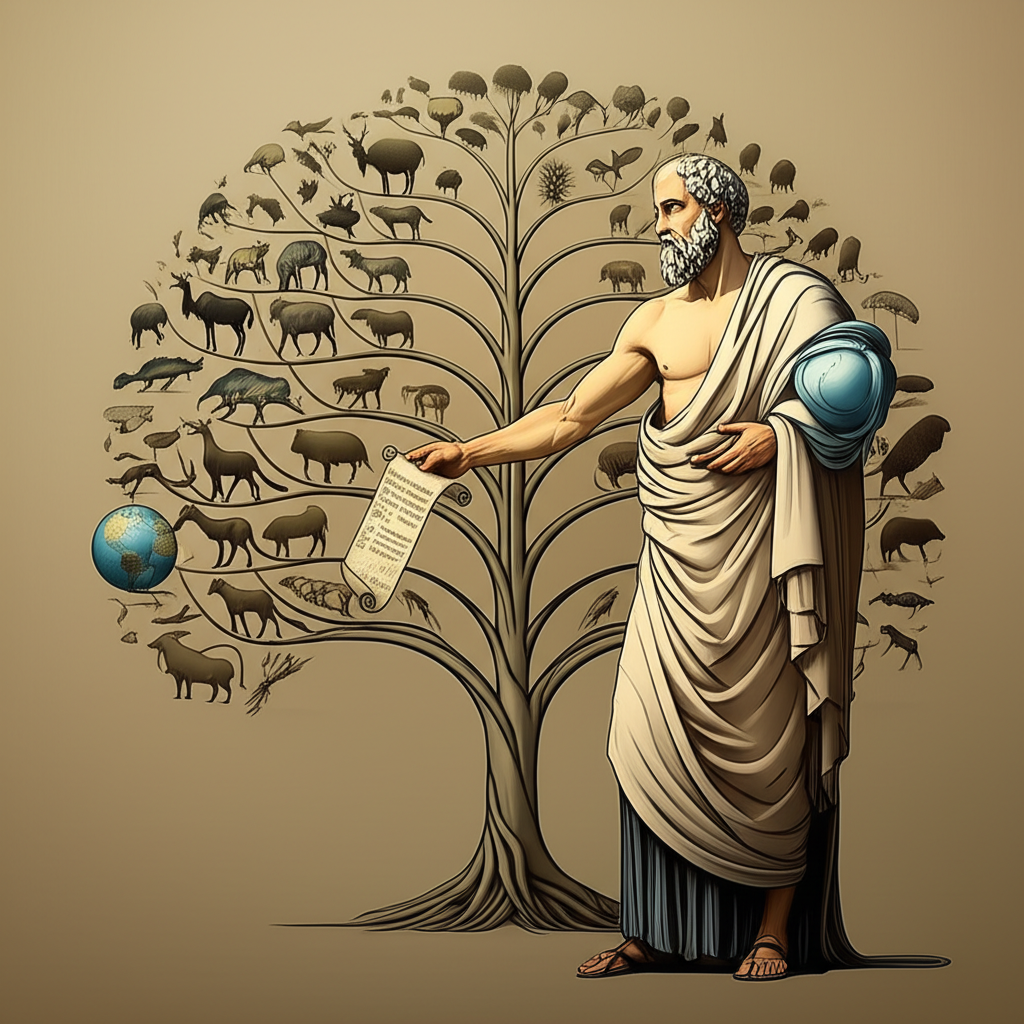
For millennia, the nature of animals was often conceived through the lens of fixed forms. Ancient thinkers, prominently Aristotle, meticulously categorized life, discerning inherent essences and purposes (telos) within each species. The "Great Books" reveal a long tradition of understanding the world as ordered and largely static, with each animal occupying its specific, unchanging niche within the natural hierarchy. This perspective provided a comforting sense of permanence and divine design.
However, the advent of evolutionary thought, most notably through Charles Darwin, introduced a radical change to this bedrock understanding. It proposed that species are not immutable creations but are instead products of gradual, continuous transformation over vast stretches of time. This shift wasn't just a scientific update; it was a philosophical earthquake, challenging the very notion of fixed essences and inviting us to embrace a world defined by dynamic processes rather than static states.
The Nature of Change: Evolution's Philosophical Challenge
At its heart, animal evolution is a testament to the power of change. But what kind of change is it, philosophically speaking? Is it a random drift, a directed progress, or merely a series of adaptations without inherent purpose?
- Contingency vs. Teleology: If species change through natural selection acting on random variations, does this negate any inherent telos or ultimate purpose for a species, as might have been conceived by classical philosophers? The evolutionary perspective suggests that the nature of an animal is not a predetermined blueprint but an emergent outcome of historical processes.
- Continuity and Discontinuity: Evolution posits a fundamental continuity among all living things, blurring the sharp distinctions between species that earlier philosophers might have drawn. The animal kingdom is revealed as an intricate, interconnected web, where even the most disparate forms share common ancestry. This continuity demands a re-evaluation of how we define and categorize life.
- The Role of Environment: The nature of an animal is inextricably linked to its environment. Evolution highlights how change in external conditions drives internal adaptations, suggesting that being is always in relation to its surroundings, a concept that resonates with existential inquiries into context and being-in-the-world.
Redefining the Animal: A Shared Heritage
The most profound philosophical implication of animal evolution is perhaps its redefinition of the animal itself, particularly concerning humanity's place within the natural world. If humans are also products of evolution, sharing a common ancestry with all other animals, what does this change about our unique self-conception?
- Humility and Connection: Evolution fosters a sense of humility, placing humanity firmly within the broader animal kingdom rather than above it. This shared heritage encourages a deeper empathy and understanding of other species, recognizing their intrinsic worth not just as resources but as fellow travelers on the evolutionary journey.
- Ethics and Responsibility: The understanding of evolutionary kinship has significant ethical ramifications. If we acknowledge a shared nature and evolutionary history with other animals, our responsibilities towards them expand. The boundaries of moral consideration become fluid, prompting questions about animal rights, welfare, and our stewardship of the natural world.
- The Evolving Self: Our own nature is not static. We are an animal species still undergoing evolution, culturally and perhaps biologically. This perspective invites introspection into the ongoing change within ourselves and our societies, prompting us to consider what it means to be a conscious, evolving entity.
Philosophical Questions Arising from Animal Evolution
The ongoing dialogue surrounding animal evolution continues to generate vital philosophical questions:
- How does the concept of evolution reconcile with traditional ideas of creation or divine design?
- Does the randomness inherent in mutation undermine or reinforce notions of meaning and purpose in nature?
- What does the continuity of animal life imply for the concept of consciousness across species?
- How should our understanding of evolution inform our ethical obligations to the environment and other animals?
- Is there an ultimate direction or goal to evolutionary change, or is it an endless process of adaptation?
| Philosophical Concept | Pre-Evolutionary View (e.g., Aristotle) | Evolutionary View (e.g., Darwin) | Key Shift |
|---|---|---|---|
| Species Nature | Fixed, immutable essence (eidos) | Dynamic, contingent, evolving | Static to Dynamic |
| Change | Cyclical, accidental, or directed by form | Continuous, gradual, driven by selection | Limited to Pervasive |
| Animal Identity | Defined by fixed characteristics | Defined by ancestry and adaptation | Essential to Historical |
| Human Place | Distinct, often superior, divinely set | Part of the animal kingdom, shared ancestry | Apart to Connected |
| Purpose (Telos) | Inherent, species-specific goal | Emergent, adaptive, often debated | Innate to Acquired/Absent |
📹 Related Video: PLATO ON: The Allegory of the Cave
Video by: The School of Life
💡 Want different videos? Search YouTube for: ""Philosophical Implications of Darwin's Theory""
📹 Related Video: ARISTOTLE ON: The Nicomachean Ethics
Video by: The School of Life
💡 Want different videos? Search YouTube for: ""Aristotle on Nature and Biology vs. Modern Science""