

The Nature of Animal Evolution: A Philosophical Inquiry
The concept of animal evolution, while firmly rooted in biological science, presents a profound philosophical challenge, compelling us to re-examine our understanding of Nature, the very essence of what constitutes an Animal, and the ceaseless reality of Change. This article delves into the philosophical implications of evolution, moving beyond mere biological description to explore how this scientific paradigm shifts our metaphysical, ethical, and epistemological landscapes, drawing insights from the enduring questions posed by the Great Books of the Western World.
Unpacking the Philosophical Dimensions of Evolution
The scientific theory of evolution by natural selection describes the gradual Change in the inherited characteristics of biological populations over successive generations. From a philosophical vantage point, this isn't merely a factual account of biological history; it's a radical reframing of existence. It forces us to confront the fluidity of species, the interconnectedness of all life, and the mechanisms that drive the unfolding drama of Nature. Historically, many philosophical traditions, as seen in the works of Plato and Aristotle, often posited fixed essences or ideal forms for species. Evolution, however, introduces a dynamic, contingent Nature where forms are not static but perpetually in flux.
Historical Philosophical Views on Change and Permanence
Before Darwin, the dominant philosophical and scientific paradigms often struggled with the concept of radical biological Change.
- Platonic Forms: Plato, in dialogues like Timaeus, suggested that the physical world is a mere shadow of perfect, unchanging Forms. An Animal species, in this view, would have an ideal, eternal Form, with individual creatures being imperfect copies. The idea of one Form transforming into another was antithetical to this framework.
- Aristotelian Teleology: Aristotle, a keen observer of Nature, emphasized the inherent telos (purpose or end) within organisms. He saw species as having fixed essences, striving to fulfill their potential within a hierarchical ladder of being (scala naturae). While he recognized Change within individuals (growth, development), the transmutation of one species into another was not part of his system, as each species possessed a distinct, unchanging substantial form.
- Pre-Socratic Flux: Conversely, figures like Heraclitus, with his famous dictum "panta rhei" (everything flows), offered an early philosophical recognition of universal Change. Yet, even his insights were often interpreted as the Nature of individual existence rather than the Evolution of fundamental categories of being.
The advent of evolutionary thought fundamentally challenged these static ontologies, asserting that Change is not just an attribute of individual existence but the very engine of species formation.
The Evolving Definition of "Animal"
What does it mean to be an Animal? Philosophically, this question has been debated for millennia. Is it sentience, mobility, the capacity for pleasure and pain, or the absence of rationality (as often contrasted with humans)?
| Philosophical Trait | Pre-Evolutionary View (e.g., Aristotle) | Post-Evolutionary View (e.g., Darwin) |
|---|---|---|
| Essence | Fixed, inherent form (species-specific) | Fluid, subject to gradual Change |
| Relationship to Other Life | Hierarchical, distinct categories | Continuous, shared ancestry, common origin |
| Origin | Creation, spontaneous generation | Descent with modification, natural selection |
| Purpose (Telos) | Intrinsic drive to fulfill species-specific form | Emergent, shaped by environmental pressures |
The theory of Evolution blurs the lines, demonstrating a continuum of traits across species. The very definition of "Animal" becomes less about a static, essential category and more about a position on a vast, branching tree of life, constantly undergoing Change. The differences between species, including human beings, are no longer seen as qualitative leaps but as quantitative accumulations of variations.
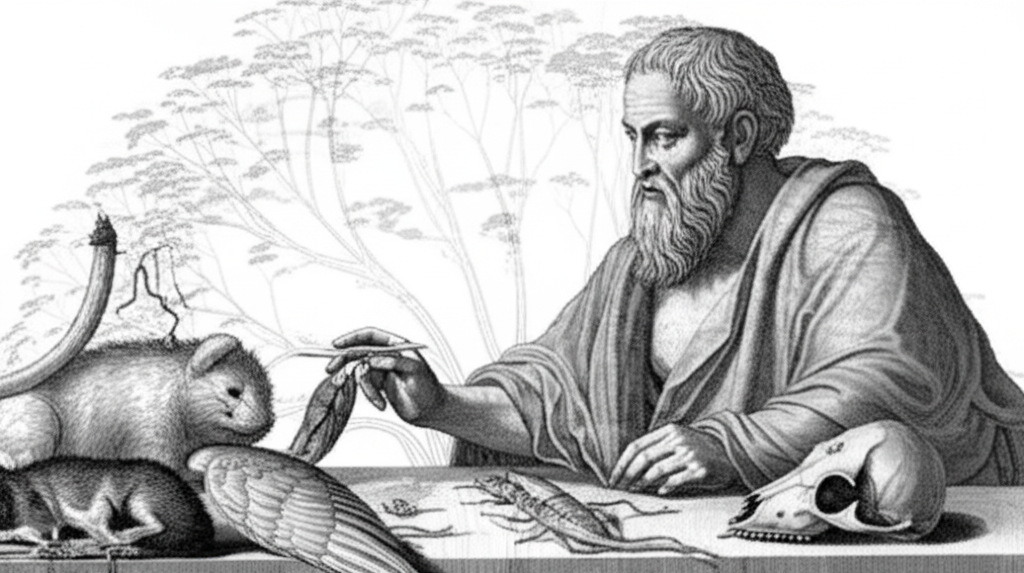
Evolution as a Principle of Change in Nature
The profound philosophical impact of Evolution lies in its assertion of Change as an intrinsic, shaping force in Nature. It moves beyond merely describing Change to explaining its mechanism and its cumulative effects.
- Contingency vs. Necessity: Does Evolution imply a purely contingent Nature, where the forms of life are accidental products of natural selection? Or is there a deeper necessity or order within the Change? This question resonates with ancient debates on fate and free will, now applied to the grand scale of biological history.
- The Problem of Design: For centuries, the intricate design of organisms was seen as evidence of a divine creator, a philosophical argument from design. Evolution offers an alternative explanation for apparent design, attributing it to the cumulative effects of natural selection acting on random variation, thus transforming our understanding of purpose and teleology in Nature.
- Implications for Human Identity: Perhaps the most significant philosophical challenge of Animal Evolution is its impact on human self-understanding. If humans are also products of this same process of Change, what does this mean for our unique capacities, our moral status, and our place in the cosmos? The idea of a continuous spectrum of life, rather than a sharp ontological break, calls for a profound re-evaluation of human exceptionalism.
The Ongoing Dialogue
The philosophical journey sparked by Animal Evolution is far from over. It continues to prompt questions about:
- The Nature of causality in biological systems.
- The relationship between mind and body in an evolving Animal.
- The ethical implications of our shared ancestry with all life, influencing our responsibilities towards the environment and other species.
By embracing the reality of Change as the fundamental driver of Evolution, we are invited to view Nature not as a static backdrop, but as a dynamic, unfolding narrative, rich with philosophical complexities and continuous wonder.
📹 Related Video: What is Philosophy?
Video by: The School of Life
💡 Want different videos? Search YouTube for: ""Philosophy of Evolution: Teleology and Chance"
YouTube: "What is an Animal? Philosophical Perspectives""