

The Enigma of Animal Consciousness: Exploring the Minds Beyond Our Own
The question of whether animals possess consciousness—a subjective inner life, a capacity for feeling, perception, and even thought—is one of philosophy's most enduring and ethically charged inquiries. It challenges our anthropocentric assumptions and forces us to reconsider our place within the vast tapestry of Nature. This pillar page delves into the multifaceted nature of animal consciousness, examining historical philosophical perspectives, modern scientific evidence, and the profound implications of recognizing minds beyond the human.
From the ancient Greeks pondering the souls of beasts to contemporary neuroscientists mapping neural correlates of awareness, the journey to understand animal consciousness is a quest to unravel the very essence of subjective experience. Are animals mere biological machines, or do they navigate a world rich with sensation, emotion, and perhaps even rudimentary forms of self-awareness? The answer profoundly shapes our ethical obligations and our understanding of life itself.
What is Consciousness? Defining the Elusive Concept
Before we can ask if animals are conscious, we must first grapple with what consciousness itself entails. Philosophically, it refers to the state of being aware of one's own existence and surroundings, characterized by subjective experience, sentience, and often, self-awareness. It's the "what it's like" to be something, the raw qualitative feel of sensations known as qualia.
The "hard problem of consciousness," famously articulated by David Chalmers, highlights the difficulty in explaining how physical processes in the brain give rise to subjective experience. This problem is magnified when we extend the inquiry to non-human minds, as we lack direct access to their inner worlds.
Key Facets of Consciousness Often Considered:
- Sentience: The capacity to feel, perceive, or experience subjectivity (e.g., pain, pleasure).
- Awareness: The state of being cognizant of one's environment and internal states.
- Self-Awareness: The capacity for introspection and recognition of oneself as an individual entity distinct from others.
- Cognition: Processes like memory, learning, problem-solving, and decision-making.
Understanding these distinctions is crucial, as different species may exhibit varying degrees and types of consciousness.
Historical Perspectives: From Automata to Shared Minds
The philosophical discourse on animal minds has a rich and often contentious history, deeply embedded in the Great Books of the Western World.
Ancient and Medieval Views: A Hierarchy of Souls
Ancient Greek philosophers, notably Aristotle in De Anima (On the Soul), proposed a hierarchical classification of souls. He posited three types:
- Nutritive Soul: Possessed by plants, responsible for growth and reproduction.
- Sensitive Soul: Found in animals, enabling sensation, desire, and movement.
- Rational Soul: Unique to humans, endowing reason, thought, and moral deliberation.
While Aristotle granted animals sensation, he clearly distinguished human rationality as a higher order of mind. This framework influenced Western thought for centuries, establishing a clear separation between human and animal capacities.
The Cartesian Divide: Animals as Machines
Perhaps the most influential—and controversial—historical view on animal consciousness came from René Descartes in the 17th century. In works like Discourse on Method, Descartes argued that animals were mere "automata" or complex machines, devoid of a rational soul, thought, or true feeling. He believed their cries of pain were no different from the creaking of a broken machine, lacking any subjective experience. For Descartes, consciousness was inextricably linked to language and rational thought, faculties he deemed exclusive to humans. This perspective profoundly shaped scientific and philosophical inquiry for centuries, legitimizing the treatment of animals as objects rather than subjects.
The Enlightenment and Darwinian Shift: Glimmers of Continuity
The Enlightenment began to challenge the strict Cartesian dualism. Philosophers like John Locke, while primarily focused on human understanding in An Essay Concerning Human Understanding, explored how all ideas originate from sensation and reflection. This opened the door, albeit indirectly, to considering how sensation might operate in non-human beings.
However, it was Charles Darwin's theory of evolution, particularly as outlined in On the Origin of Species, that truly revolutionized our understanding of animal minds. By demonstrating the continuity of species and the gradual development of traits through natural selection, Darwin suggested that human minds were not fundamentally distinct but rather an evolved continuum from animal capacities. This evolutionary perspective provided a powerful framework for seeing animal consciousness as a matter of degree, not kind, challenging the notion of an unbridgeable gap between humans and other species.
Evidence for Animal Consciousness: A Multidisciplinary Approach
Modern science, drawing on ethology, neuroscience, and cognitive psychology, has amassed compelling evidence suggesting that many animals possess sophisticated forms of consciousness.
Behavioral Indicators: Problem-Solving and Communication
Observations of animal behavior reveal complex cognitive abilities that hint at an inner mind:
- Tool Use: Chimpanzees using sticks to fish for termites, crows crafting hooks from wire.
- Problem-Solving: Octopuses escaping complex enclosures, birds solving multi-step puzzles to access food.
- Communication: Whales and dolphins using complex vocalizations, vervet monkeys employing alarm calls specific to different predators.
- Self-Recognition: The "mirror test" (recognizing oneself in a mirror) has been passed by great apes, dolphins, elephants, and some birds, suggesting a form of self-awareness.
Neuroscientific Evidence: Brain Structures and Neural Correlates
Advances in neuroscience provide physiological support for animal consciousness:
- Brain Structures: Many animals possess brain structures homologous to those in humans associated with consciousness, such as the cerebral cortex, limbic system, and brainstem.
- Neural Correlates of Pain: Studies show that animals exhibit similar neural activity and physiological responses to painful stimuli as humans, suggesting a subjective experience of pain.
- Sleep Patterns: Many animals experience REM sleep and slow-wave sleep, indicative of complex brain activity and potentially dreaming states.
The Cambridge Declaration on Consciousness (2012)
A pivotal moment in the scientific recognition of animal consciousness was the Cambridge Declaration on Consciousness. Signed by a prominent group of neuroscientists, cognitive scientists, neuropharmacologists, and computational neuroscientists, it stated:
"Convergent evidence indicates that non-human animals have the neuroanatomical, neurochemical, and neurophysiological substrates of conscious states along with the capacity to exhibit intentional behaviors. Consequently, the weight of evidence indicates that humans are not unique in possessing the neurological substrates that generate consciousness. Non-human animals, including all mammals and birds, and many other creatures, including octopuses, also possess these neurological substrates."
This declaration underscored the scientific consensus that consciousness is a widespread phenomenon in the animal kingdom.
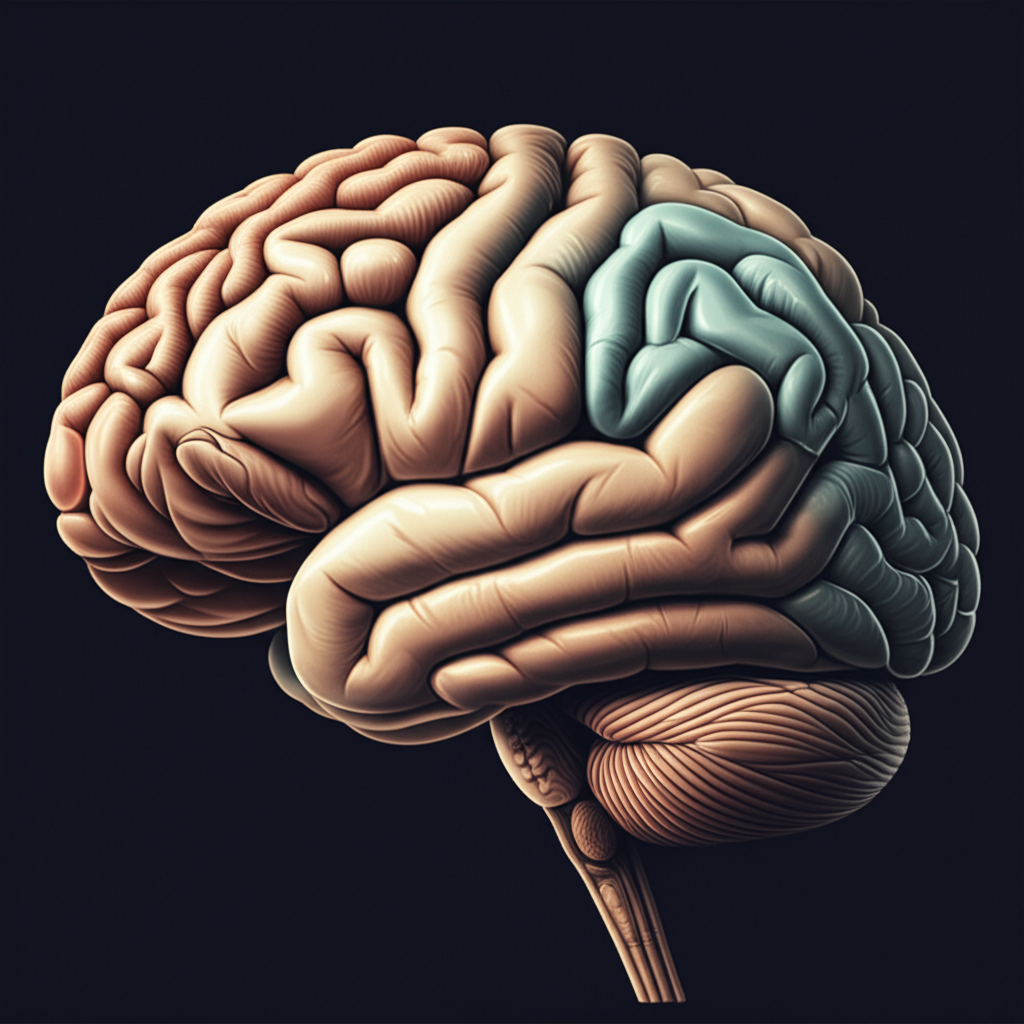 seamlessly integrated, radiating faint lines of neural activity, symbolizing the shared biological underpinnings of consciousness across species. The background is a soft, ethereal glow, suggesting the mystery and universality of the mind.)
Dimensions of Animal Consciousness
The spectrum of animal consciousness is not monolithic. Different species likely experience the world in vastly different ways, exhibiting varying dimensions of awareness and cognitive complexity.
Sentience and Emotion: Do Animals Feel?
The capacity for sentience—the ability to feel pleasure, pain, fear, and other emotions—is perhaps the most widely accepted aspect of animal consciousness. Behavioral and physiological responses to stimuli strongly suggest that many animals experience a rich emotional life. Dogs show joy, elephants grieve, and primates exhibit empathy. Recognizing animal sentience has profound ethical implications, shaping debates around animal welfare, factory farming, and scientific experimentation.
Awareness vs. Self-Awareness: Knowing One's Own Existence
While many animals are clearly aware of their surroundings, the question of self-awareness is more complex. Does a chimpanzee merely see its reflection, or does it recognize itself as an individual? The mirror test and other studies suggest that some animals possess at least a rudimentary form of self-awareness. However, whether this extends to a full human-like sense of personal identity, a continuous narrative of "I," remains an open philosophical question.
Problem-Solving and Intelligence: The Mind at Work
Cognitive abilities like memory, learning, and problem-solving are evident across the animal kingdom. Crows solving multi-step puzzles, dolphins understanding complex commands, and bees communicating the location of food sources all point to sophisticated cognitive processes. While intelligence isn't synonymous with consciousness, complex cognitive abilities often correlate with more developed forms of mind, suggesting a richer inner experience.
Challenges and Open Questions
Despite mounting evidence, the study of animal consciousness faces significant challenges and leaves many questions unanswered.
The Problem of Other Minds
The fundamental philosophical hurdle is the "problem of other minds": we can never directly access another being's subjective experience, whether human or animal. We infer consciousness based on behavior, physiology, and analogy to our own experience, but this remains an inference.
Anthropomorphism vs. Objective Observation
A crucial challenge is avoiding anthropomorphism—attributing human emotions and motivations to animals without sufficient evidence. While empathy is a powerful driver for understanding animal minds, rigorous scientific methodology must distinguish between genuine animal consciousness and our own projections.
The Spectrum of Consciousness
Is consciousness an all-or-nothing phenomenon, or does it exist on a spectrum? It's highly probable that a jellyfish's mind differs vastly from a chimpanzee's, and a chimpanzee's from a human's. Understanding this spectrum, from basic sentience to complex self-awareness, is a major frontier in the study of animal minds and the nature of consciousness itself.
Conclusion: A Shared Tapestry of Existence
The journey into the nature of animal consciousness is far from complete, yet it has profoundly reshaped our understanding of life on Earth. From Aristotle's hierarchical souls to Descartes' mechanical beasts, and finally to Darwin's evolutionary continuum, our perspectives have evolved dramatically. Modern science increasingly affirms that consciousness is not an exclusively human domain but a widespread, diverse phenomenon woven into the fabric of Nature.
Recognizing the minds of animals compels us to re-evaluate our ethical responsibilities, fostering greater empathy and a more nuanced appreciation for the complex inner lives that share our planet. As we continue to probe the mysteries of the animal mind, we not only learn more about them but also gain deeper insights into the fundamental nature of consciousness itself, and our own place within the grand, interconnected web of existence. The philosophical quest for understanding animal consciousness is, ultimately, a quest for a more complete understanding of ourselves and the living world around us.
📹 Related Video: ARISTOTLE ON: The Nicomachean Ethics
Video by: The School of Life
💡 Want different videos? Search YouTube for: ""Philosophy of Animal Consciousness: Sentience and Ethics""
📹 Related Video: KANT ON: What is Enlightenment?
Video by: The School of Life
💡 Want different videos? Search YouTube for: ""Neuroscience of Animal Minds: Evidence for Awareness""