

The Enduring Enigma: Navigating the Mind-Body Problem in Modern Science
Summary: The mind-body problem, a foundational question in metaphysics concerning the relationship between our conscious experience (mind) and our physical being (body), continues to perplex scholars and scientists alike. Far from being relegated to ancient philosophy, this profound dilemma is actively engaged by modern science, which seeks to unravel consciousness through neuroscience, artificial intelligence, and quantum physics. This article explores the historical roots of the problem, its contemporary scientific manifestations, and the philosophical frameworks that attempt to bridge the chasm between subjective experience and objective reality.
Introduction: The Ancient Riddle's Modern Resonance
For millennia, humanity has grappled with a fundamental question: What is the relationship between our inner world of thoughts, feelings, and perceptions – our mind – and the physical substance of our brains and bodies? This is the venerable mind-body problem, a cornerstone of metaphysics that asks whether the mind is distinct from the body, an emergent property, or merely an illusion. While ancient philosophers laid its foundational stones, modern science has inherited this profound enigma, bringing sophisticated tools and empirical methods to bear on a question once confined to abstract speculation.
From the dialogues of Plato to the intricate anatomical studies of the Renaissance, the distinction, and potential interaction, between the non-physical and the physical has captivated thinkers. Today, as neuroscience maps the brain with unprecedented detail and artificial intelligence pushes the boundaries of machine cognition, the mind-body problem remains not just relevant, but critically urgent.
Historical Echoes: From Ancient Greece to Cartesian Dualism
The seeds of the mind-body problem were sown early in the Western philosophical tradition, well documented within the Great Books of the Western World.
- Plato's Dualism: In works like Phaedo, Plato posits a clear distinction between the immortal, non-physical soul (mind) and the mortal, physical body. The soul, for Plato, is the true self, capable of apprehending eternal Forms, while the body is a temporary vessel, often a hindrance.
- Aristotle's Hylomorphism: Contrasting Plato, Aristotle, in De Anima, proposed a more integrated view. He saw the soul (mind) not as a separate entity but as the form of the body, its organizing principle and animating essence. Just as the shape of an axe is inseparable from the axe itself, so too is the soul inseparable from the living body.
- Descartes' Radical Separation: Perhaps the most influential articulation of the problem came from René Descartes in his Meditations on First Philosophy. His famous dictum, "Cogito, ergo sum" ("I think, therefore I am"), established the undeniable reality of the thinking mind as distinct from the extended, non-thinking body. This Cartesian dualism posited two fundamentally different substances: res cogitans (thinking substance) and res extensa (extended substance), with interaction purportedly occurring in the pineal gland.
This historical journey underscores that the problem is not new; rather, it is a persistent challenge to our understanding of reality, constantly re-evaluated with each new intellectual paradigm.
Modern Science's Approach: Mapping the Brain, Probing Consciousness
Modern science has taken up the mantle, transforming the purely philosophical inquiry into an interdisciplinary quest. Neuroscientists delve into the brain's intricate neural networks, psychologists study cognitive processes, and physicists ponder the fundamental nature of reality.
The Rise of Neuroscience:
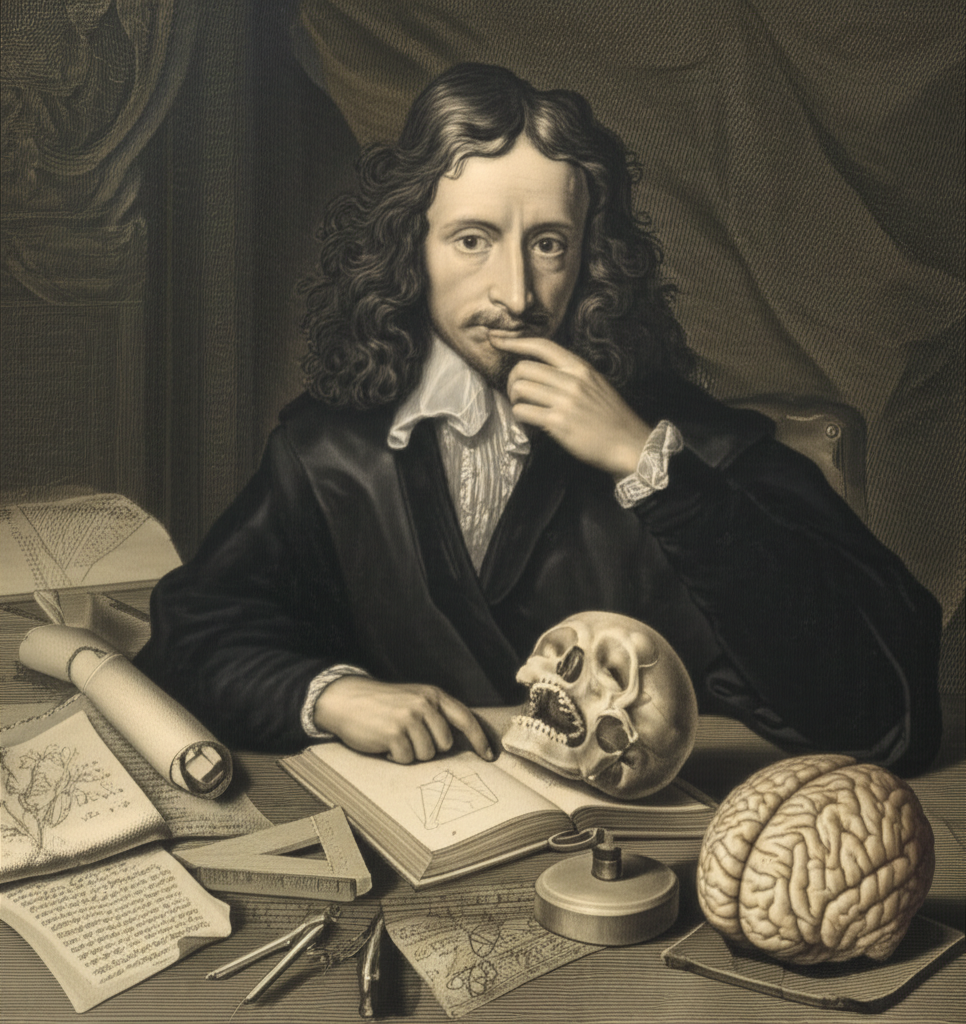
The explosion of neuroscience in recent decades has provided unparalleled insights into the brain's structure and function. Techniques like fMRI, EEG, and optogenetics allow researchers to observe brain activity in real-time, correlating specific neural patterns with thoughts, emotions, and perceptions. Yet, despite mapping the brain's every fold and neuron, the leap from electrochemical signals to subjective experience – the "what it's like" to see red or feel joy – remains elusive. This gap is often termed "the hard problem of consciousness."
Artificial Intelligence and Machine Consciousness:
The rapid advancements in Artificial Intelligence (AI) present another fascinating frontier. As AI systems become increasingly sophisticated, capable of learning, problem-solving, and even generating creative content, questions inevitably arise: Can machines truly think? If an AI passes the Turing Test, does it possess a mind? The debate surrounding strong AI (which posits that a suitably programmed computer is a mind) versus weak AI (which views computers as merely simulating mental states) directly engages the mind-body problem, albeit in a synthetic context.
Quantum Physics and the Observer:
Even quantum science has entered the fray, albeit in a more speculative capacity. Some interpretations of quantum mechanics, particularly those emphasizing the role of the observer in collapsing wave functions, have led some to ponder if consciousness itself plays a fundamental role in shaping reality, blurring the lines between mind and the physical universe at its most basic level. While highly debated, these ideas represent a radical re-thinking of the body's purely material existence.
Contemporary Frameworks: Bridging the Divide
To address the mind-body problem in light of modern scientific discoveries, various philosophical and scientific frameworks have emerged:
| Framework | Core Idea | Challenges |
|---|---|---|
| Dualism | Mind and body are distinct substances (e.g., Cartesian dualism) or properties (property dualism). | How do non-physical minds interact with physical bodies? Where does this interaction occur? |
| Monism | Reality is ultimately one substance. | |
| Materialism | Only physical matter exists; mind is a product of the brain (e.g., identity theory, functionalism). | Explaining subjective experience (qualia) solely through physical processes; the "hard problem." |
| Idealism | Only mind or consciousness exists; the physical world is a manifestation of mind. | Reconciling with scientific understanding of an objective, independent physical world. |
| Emergentism | Mind emerges from complex organization of physical matter (e.g., brain), but has novel properties. | How and why does consciousness emerge? Is it reducible to its physical components or truly novel? |
| Panpsychism | Consciousness is a fundamental property of matter, present (perhaps in rudimentary form) throughout the universe. | How do these micro-consciousnesses combine to form complex human consciousness? Lacks strong empirical evidence. |
Each of these perspectives attempts to provide a coherent account, yet none has definitively "solved" the problem. The metaphysics of consciousness remains a fertile ground for debate, demonstrating the limitations of purely empirical science when confronted with subjective experience.
The Unfolding Future: Beyond the Brain Scan
The mind-body problem is not merely an academic exercise; it has profound implications for ethics, artificial intelligence, medicine, and our very understanding of what it means to be human. As science continues to map neural correlates of consciousness, the philosophical challenge shifts: from where in the brain consciousness resides, to how physical processes give rise to subjective experience.
The journey initiated by the ancient Greeks and refined by thinkers like Descartes continues. While modern science provides increasingly granular data about the body, the mind's qualitative, subjective essence often seems to slip through its empirical net. It behooves us, then, to maintain a dialogue between rigorous scientific inquiry and profound philosophical reflection, recognizing that the complete picture may require insights from both domains. The ultimate resolution, if one exists, may lie in a paradigm shift that redefines our fundamental understanding of both matter and consciousness.
Conclusion: An Enduring Quest for Understanding
The mind-body problem, a profound query at the intersection of metaphysics and science, continues to challenge our most basic assumptions about existence. From the classical dualities explored in the Great Books of the Western World to the cutting-edge research in neuroscience and AI, the quest to understand the relationship between mind and body remains one of humanity's most compelling intellectual adventures. While modern science offers unprecedented tools for investigation, the subjective nature of consciousness ensures that philosophical inquiry will forever play a crucial role in piecing together this most intricate of puzzles.
YouTube Video Suggestions:
-
📹 Related Video: KANT ON: What is Enlightenment?
Video by: The School of Life
💡 Want different videos? Search YouTube for: "The Hard Problem of Consciousness Explained"
-
📹 Related Video: ARISTOTLE ON: The Nicomachean Ethics
Video by: The School of Life
💡 Want different videos? Search YouTube for: "Daniel Dennett Consciousness Explained"