

Bridging the Chasm: The Mind-Body Problem's Enduring Challenge to Modern Science
Summary: The mind-body problem, a foundational question in philosophy concerning the relationship between our subjective experiences (the Mind) and our physical being (the Body), remains a profoundly vexing puzzle, even in an age dominated by neuroscience and advanced empirical science. Despite unprecedented insights into brain function, the fundamental question of how conscious experience arises from mere matter, and whether Mind can be reduced entirely to Body, continues to push the boundaries of both scientific inquiry and philosophical metaphysics.
The Ancient Roots of a Modern Quandary
For millennia, thinkers have wrestled with the profound distinction between the inner world of thought, sensation, and emotion, and the external, tangible world of physical objects. From the earliest philosophical inquiries, particularly those captured in the Great Books of the Western World, the nature of the Mind and its connection to the Body has been a central preoccupation. Plato posited a soul distinct from the body, capable of apprehending eternal forms, while Aristotle, though emphasizing the soul as the "form" of the body, still acknowledged a unique, immaterial aspect to thought.
However, it was René Descartes in the 17th century who gave the problem its most enduring modern formulation: substance dualism. He argued that Mind and Body are two fundamentally different kinds of substances – the Mind (or soul) being unextended and thinking, and the Body being extended and non-thinking. This stark division, while intuitively appealing to many, immediately raised the intractable question: How do these two disparate substances interact? How can an immaterial Mind move a material Body, and how can physical sensations translate into subjective experiences? This question, far from being settled, continues to haunt our most advanced scientific endeavors.
Modern Science's Embrace of the Body
The explosion of scientific knowledge, particularly in biology and neuroscience, has undeniably shifted the focus towards the Body. We now possess incredibly sophisticated tools to observe, measure, and even manipulate the brain. Functional MRI scans reveal which brain regions activate during specific thoughts or emotions. Neurotransmitters are understood to mediate mood and cognition. Neurological disorders are increasingly linked to specific physical pathologies in the brain.
This progress has led many in science to adopt various forms of physicalism or materialism, asserting that the Mind is not separate from the Body, but rather a product or property of it. The prevailing scientific paradigm largely assumes that all mental phenomena can, in principle, be explained by the physical processes of the brain. The "ghost in the machine," as Gilbert Ryle famously critiqued Descartes' dualism, seems to have been exorcised by the relentless march of empirical discovery.
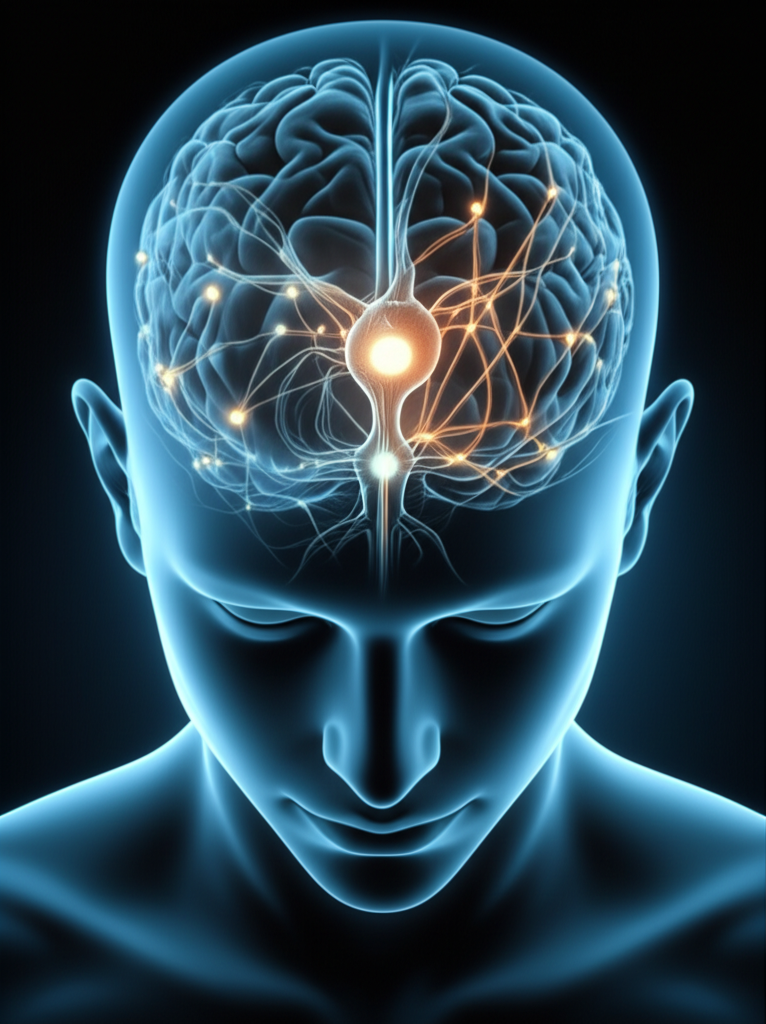
Key Perspectives on the Mind-Body Relation in Modern Science
While physicalism is dominant, it manifests in several forms, each grappling with the nuances of how Mind emerges from Body:
- Identity Theory: This posits a direct identity between mental states and brain states. For example, the experience of pain is identical to the firing of C-fibers in the brain. It’s a bold assertion that aims to fully reduce Mind to Body.
- Eliminative Materialism: A more radical view, suggesting that our common-sense concepts of Mind (beliefs, desires, intentions) are akin to "folk psychology" and will eventually be eliminated and replaced by a more accurate, purely neuroscientific description of brain states.
- Functionalism: This perspective views mental states not by what they are made of, but by what they do. A mental state is defined by its causal role – its inputs (sensory data), its internal relations to other mental states, and its outputs (behavior). This allows for the possibility of Mind in different physical substrates (e.g., AI), moving beyond strict biological reductionism.
- Property Dualism: A softer form of dualism that accepts there is only one substance (the Body), but argues that this substance can have two distinct kinds of properties – physical properties and non-physical (mental) properties. Consciousness is seen as an emergent property of complex physical systems, not reducible to them, yet not a separate substance.
The Persistent Shadow of Metaphysics: The Hard Problem
Despite the impressive strides of science, a significant challenge persists: the "hard problem" of consciousness, articulated by philosopher David Chalmers. While science excels at explaining the "easy problems"—how the brain processes information, integrates sensory inputs, and controls behavior—it struggles to account for why these physical processes give rise to subjective experience, or qualia. Why does the specific firing pattern of neurons feel like the color red, or the taste of coffee?
This is where metaphysics reasserts its critical role. Even the most rigorous scientific theories about the brain carry implicit metaphysical assumptions about the nature of reality, causality, and what constitutes an explanation. To simply declare that Mind is Body without explaining the qualitative leap from objective brain activity to subjective experience is, for many, to sidestep the core of the problem rather than solve it.
The hard problem highlights the limitations of current scientific methodology when confronted with subjective, first-person phenomena. While we can observe and measure brain activity, we cannot directly access another's conscious experience. This gap between objective observation and subjective reality remains the most formidable barrier in understanding the Mind-Body connection.
The Future of the Inquiry
The Mind-Body problem is not merely an academic curiosity; it has profound implications for our understanding of free will, morality, artificial intelligence, and what it means to be human. Modern science, far from rendering philosophy obsolete, has in many ways reinvigorated the need for deep philosophical inquiry.
New theories, such as Integrated Information Theory (IIT) and various quantum consciousness hypotheses, attempt to bridge the gap, often by exploring fundamental properties of information or the very fabric of reality. However, these are still speculative and subject to intense debate.
The journey to understand the Mind and its profound relationship to the Body is an ongoing dialogue, one that demands an interdisciplinary approach, where the rigorous empirical methods of science are continuously informed and challenged by the conceptual clarity and critical questioning of metaphysics. The Great Books of the Western World remind us that these questions are perennial, and modern science offers us unprecedented tools to explore them, even if definitive answers remain elusive.
YouTube:
- "The Hard Problem of Consciousness Explained"
- "Mind-Body Problem: Crash Course Philosophy #26"
📹 Related Video: What is Philosophy?
Video by: The School of Life
💡 Want different videos? Search YouTube for: "The Mind-Body Problem in Modern Science philosophy"