

The Enduring Enigma: Navigating the Mind-Body Problem in Modern Scientific Inquiry
The relationship between our subjective consciousness—the Mind—and our physical being—the Body—constitutes one of philosophy's most profound and enduring questions: the mind-body problem. This ancient metaphysical puzzle, explored by thinkers from Plato to Descartes, has taken on new urgency and complexity in the age of modern Science. Despite unprecedented advances in neuroscience, which meticulously maps the brain's intricate mechanisms, the fundamental question of how physical processes give rise to conscious experience remains elusive. This article delves into the historical philosophical foundations of this problem, examines how modern Science confronts it, and explores the ongoing dialogue between empirical investigation and Metaphysics in our quest to understand ourselves.
Echoes of Antiquity: Foundations of the Mind-Body Divide
The mind-body problem is not a modern invention; its roots delve deep into the annals of Western thought, as chronicled in the Great Books of the Western World. Ancient philosophers grappled with the distinction between the ephemeral realm of thought and the tangible world of matter, laying the groundwork for centuries of debate.
From Platonic Forms to Aristotelian Hylomorphism
Plato, in works like the Phaedo, posited a clear separation between the immortal, non-physical soul (the Mind) and the mortal, physical Body. For Plato, the soul pre-existed the Body, inhabiting a realm of perfect Forms before being imprisoned in the physical world. True knowledge, he argued, came from the soul's recollection of these Forms, not from sensory experience. This established an early, influential form of dualism.
Aristotle, while acknowledging a distinction, offered a more integrated view in De Anima. For him, the soul was not a separate entity but the "form" of the Body, its animating principle. Just as the shape of an axe is inseparable from the axe itself, so too is the soul (or Mind) inseparable from the Body. This hylomorphic perspective suggested a functional relationship, where mental processes were intrinsically linked to biological organization, a view that resonates with some contemporary scientific approaches.
Descartes' Enduring Legacy: The Dualistic Chasm
It was René Descartes, however, whose formulation in works like Meditations on First Philosophy most sharply defined the mind-body problem for the modern era. Descartes proposed a radical substance dualism, asserting that the Mind (res cogitans—thinking substance) and the Body (res extensa—extended substance) are two fundamentally different kinds of entities. The Mind is unextended, indivisible, and conscious, while the Body is extended, divisible, and unconscious.
Descartes' challenge lay in explaining how these two distinct substances could interact. He famously suggested the pineal gland as the point of connection, where the immaterial Mind could influence the physical Body and vice versa. While his specific mechanism has been largely rejected by Science, Descartes' clear articulation of the problem—how the subjective, private world of thought connects with the objective, public world of matter—remains the benchmark against which subsequent theories are measured.
Modern Science's Grasp: The Brain as the Seat of Consciousness
With the advent of modern Science, particularly neuroscience, the focus shifted from purely philosophical speculation to empirical investigation. The brain, once a mysterious organ, became the primary locus for understanding the Mind.
Neuroscience's Ascent: Mapping the Neural Correlates of Mind
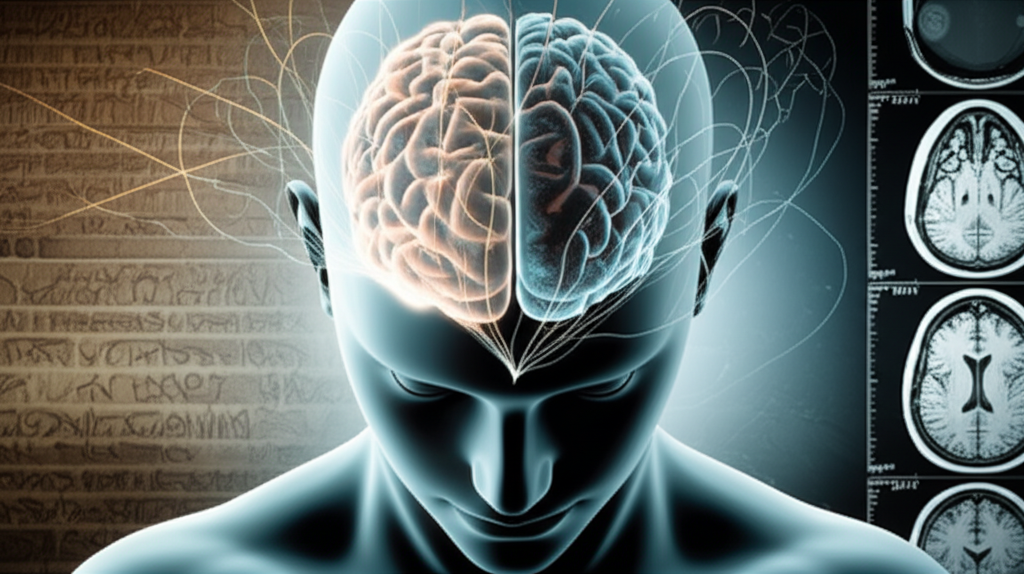
Contemporary Science has made astounding progress in understanding the brain. Techniques such as fMRI, EEG, and optogenetics allow researchers to observe brain activity in unprecedented detail. We can now map neural pathways, identify areas associated with specific cognitive functions (memory, emotion, language), and even manipulate neural circuits to alter behaviour and perception. The discovery of "neural correlates of consciousness" (NCCs)—the minimal set of neuronal events sufficient for a specific conscious percept—represents a major triumph in linking Mind to Body.
The Materialist Predicament: Is Mind Simply Brain?
The overwhelming success of neuroscience has led many scientists and philosophers to embrace various forms of physicalism or materialism. This view asserts that the Mind is not a separate entity but rather a product of, or identical to, the brain. There is no "ghost in the machine"; there is only the machine.
Within this broad category, several specific theories attempt to explain the Mind in purely physical terms:
- Identity Theory: The Mind is identical to the brain. Mental states are simply brain states. For example, "pain" is nothing more than the firing of C-fibers.
- Eliminative Materialism: Our common-sense psychological terms (folk psychology) like "belief," "desire," and "consciousness" are ultimately flawed and will be replaced by a more accurate neuroscientific vocabulary as Science progresses.
- Functionalism: Mental states are defined by their functional role—what they do—rather than their physical composition. Just as a "mouse trap" can be made of various materials but serves the same function, the Mind could theoretically be instantiated in different physical systems (e.g., a silicon-based artificial intelligence).
| Philosophical Stance | Core Idea | Key Proponents (Historical) | Modern Scientific Relevance |
|---|---|---|---|
| Dualism | Mind and Body are distinct substances. | Plato, Descartes | Challenges materialist assumptions; highlights the "hard problem." |
| Monism | Only one fundamental substance exists (either mental or physical). | Spinoza (neutral monism), Hobbes (materialism), Berkeley (idealism) | Physicalist monism dominates modern neuroscience. |
| Functionalism | Mental states are defined by their causal roles, not their substance. | Hilary Putnam, Jerry Fodor | Basis for AI and cognitive science; allows for multiple realizability. |
| Emergentism | Mind emerges from complex brain organization but is not reducible to it. | Samuel Alexander, Roger Sperry | Offers a middle ground between strong reductionism and dualism. |
The Hard Problem and the Explanatory Gap
Despite the powerful explanatory framework offered by physicalism and the empirical successes of neuroscience, a significant challenge persists: the "hard problem" of consciousness, famously articulated by David Chalmers.
Chalmers' Challenge: Why Does it Feel Like Something?
The "easy problems" of consciousness, according to Chalmers, are those that can be explained in terms of functional or computational mechanisms: how we discriminate, categorize, integrate information, or report on mental states. These are the problems that Science is making great strides in solving.
The "hard problem," however, asks: Why does all this information processing give rise to subjective, qualitative experience? Why is there an "inner feel" to seeing red, tasting chocolate, or experiencing pain? Why does it feel like something to be us? This qualitative aspect of consciousness, known as qualia, seems to resist purely physical explanation. We can describe the neural activity associated with seeing red, but this doesn't explain the subjective experience of redness itself. This is where the limits of empirical Science butt against the persistent questions of Metaphysics.
Beyond Reductionism: Emergentism and Functionalism
In response to the hard problem, some theories offer alternatives to strict reductionism:
- Emergentism: This view suggests that the Mind is an emergent property of complex brain activity. Just as wetness emerges from the interaction of water molecules but is not a property of individual molecules, consciousness emerges from the intricate organization and interaction of billions of neurons. While still rooted in the Body, emergentism suggests that the Mind is more than the sum of its parts and possesses properties not present at lower levels of organization.
- Functionalism: As mentioned, functionalism defines mental states by their causal roles. While it offers a robust framework for cognitive Science and AI, it faces challenges in fully accounting for qualia. Can a functionally identical system truly experience the same subjective qualia?
Interdisciplinary Frontiers: AI, Quantum Mechanics, and the Future of Mind
The mind-body problem continues to inspire research across diverse fields, pushing the boundaries of what we understand about consciousness and reality.
Artificial Intelligence: Simulating Consciousness, Understanding Mind
The rapid advancement of Artificial Intelligence (AI) offers a new lens through which to view the mind-body problem. As AI systems become increasingly sophisticated, capable of learning, problem-solving, and even generating creative content, they prompt us to reconsider what constitutes "intelligence" and "consciousness." If an AI could perfectly simulate human thought, would it truly be conscious? Or would it merely be a complex functional imitation? These questions force us to refine our definitions of Mind and to confront the potential for non-biological forms of intelligence, further blurring the lines between Body (biological substrate) and Mind (cognitive function).
Quantum Explorations: A New Frontier for Consciousness?
Some theorists, grappling with the hard problem, have explored the potential role of quantum mechanics in consciousness. Hypotheses, such as those proposed by Roger Penrose and Stuart Hameroff, suggest that consciousness might arise from quantum processes occurring within microtubules in neurons, rather than purely classical computations. While these theories remain highly speculative and are not widely accepted within mainstream neuroscience, they represent an attempt to look beyond conventional physical explanations and explore the deepest levels of physical reality for clues to the nature of the Mind. Such approaches highlight the profound interplay between fundamental Science and the Metaphysics of consciousness.
Conclusion: The Unfolding Dialogue Between Metaphysics and Science
The mind-body problem, born in the philosophical inquiries of antiquity and refined by the penetrating insights of Descartes, remains a central challenge in modern Science. While neuroscience has provided an unparalleled understanding of the Body's intricate mechanisms, the leap from neural activity to subjective conscious experience—the Mind—continues to represent an "explanatory gap."
The ongoing dialogue between Metaphysics and empirical Science is not merely academic; it shapes our understanding of what it means to be human, our place in the universe, and the very nature of reality. As we push the boundaries of scientific discovery, from mapping the connectome to developing advanced AI, the philosophical questions persist, reminding us that some of the deepest truths about the Mind may require not just more data, but a profound re-evaluation of our fundamental assumptions about the Body and its relationship to consciousness. The quest to bridge this chasm is perhaps the ultimate scientific and philosophical adventure, an enduring testament to humanity's relentless pursuit of self-understanding.
📹 Related Video: KANT ON: What is Enlightenment?
Video by: The School of Life
💡 Want different videos? Search YouTube for: ""David Chalmers hard problem of consciousness" or "Mind-Body Problem Explained""