

The Enduring Enigma: Navigating the Mind-Body Problem in Modern Science
Summary: The mind-body problem, a foundational question in metaphysics concerning the relationship between our mental lives and our physical selves, remains one of philosophy's most persistent and perplexing challenges. Far from being a relic of ancient thought, it has been profoundly recontextualized by the astonishing advancements of modern science, particularly in neuroscience, psychology, and artificial intelligence. This article explores the historical trajectory of this debate, from classical philosophical inquiries to contemporary scientific investigations, examining how our understanding of the mind and body has evolved and why their fundamental connection continues to elude a definitive, universally accepted explanation, pushing the boundaries of what science can explain and what metaphysics must ponder.
I. The Age-Old Question Reimagined: Bridging the Mental and the Material
For millennia, thinkers have grappled with the profound mystery of how subjective experience – our thoughts, emotions, perceptions, and consciousness itself – arises from, or interacts with, the physical stuff of the body, particularly the brain. Is the mind merely an epiphenomenon, a byproduct of complex neural activity, or does it possess a distinct, non-physical nature? This isn't just an academic exercise; it touches upon our deepest understanding of self, free will, morality, and the very fabric of reality. Modern science, with its powerful tools for observing and manipulating the physical world, has brought unprecedented insights, yet the core philosophical conundrum persists, compelling us to revisit the foundational metaphysics that underpin our inquiries.
II. Echoes from the Ancients: A Philosophical Lineage
The mind-body problem is not a modern invention; its roots stretch deep into the annals of philosophy, as chronicled in the Great Books of the Western World.
A. From Platonic Forms to Aristotelian Souls
Ancient Greek philosophers laid much of the groundwork. Plato, in works like the Phaedo, posited a clear dualism, viewing the soul as an immortal, non-physical entity temporarily housed within the mortal body. For him, the true reality lay in the realm of perfect Forms, accessible only to the mind. Aristotle, while also acknowledging a "soul" (psyche), offered a more integrated view in De Anima, seeing the soul as the form of the body – its organizing principle, inseparable from the living organism itself, much like the shape of an axe is inseparable from the axe itself. These early distinctions set the stage for centuries of debate.
B. Descartes and the Dawn of Modern Dualism
The 17th century brought a radical reformulation with René Descartes, whose Meditations on First Philosophy established a stark distinction between two fundamentally different substances: res cogitans (thinking substance, the mind) and res extensa (extended substance, the body). For Descartes, the mind was unextended, indivisible, and conscious, while the body was extended, divisible, and mechanistic. This "Cartesian dualism" presented a formidable challenge: how could these two utterly distinct substances interact? Descartes famously (and somewhat unsatisfactorily) proposed the pineal gland as the seat of interaction, a hypothesis that merely deferred the problem. Nevertheless, his clear delineation created the modern framework for the mind-body problem.
Table: Key Historical Perspectives on Mind-Body Interaction
| Philosopher/Era | Core Viewpoint | Mind's Nature | Body's Nature | Interaction Mechanism |
|---|---|---|---|---|
| Plato (Ancient) | Substance Dualism | Immortal, non-physical soul | Mortal, physical vessel | Soul "inhabits" body |
| Aristotle (Ancient) | Hylomorphism | Form/principle of the body | Matter of the organism | Inseparable, soul is the body's form |
| Descartes (Modern) | Substance Dualism | Non-physical, thinking substance | Physical, extended substance | Pineal gland (problematic) |
III. Modern Science Takes Up the Gauntlet
The scientific revolution, particularly the rise of biology and neuroscience, shifted the focus from purely philosophical speculation to empirical investigation. The body, especially the brain, became the primary locus of inquiry into the mind.
A. Neuroscience: Mapping the Brain, Finding the Mind?
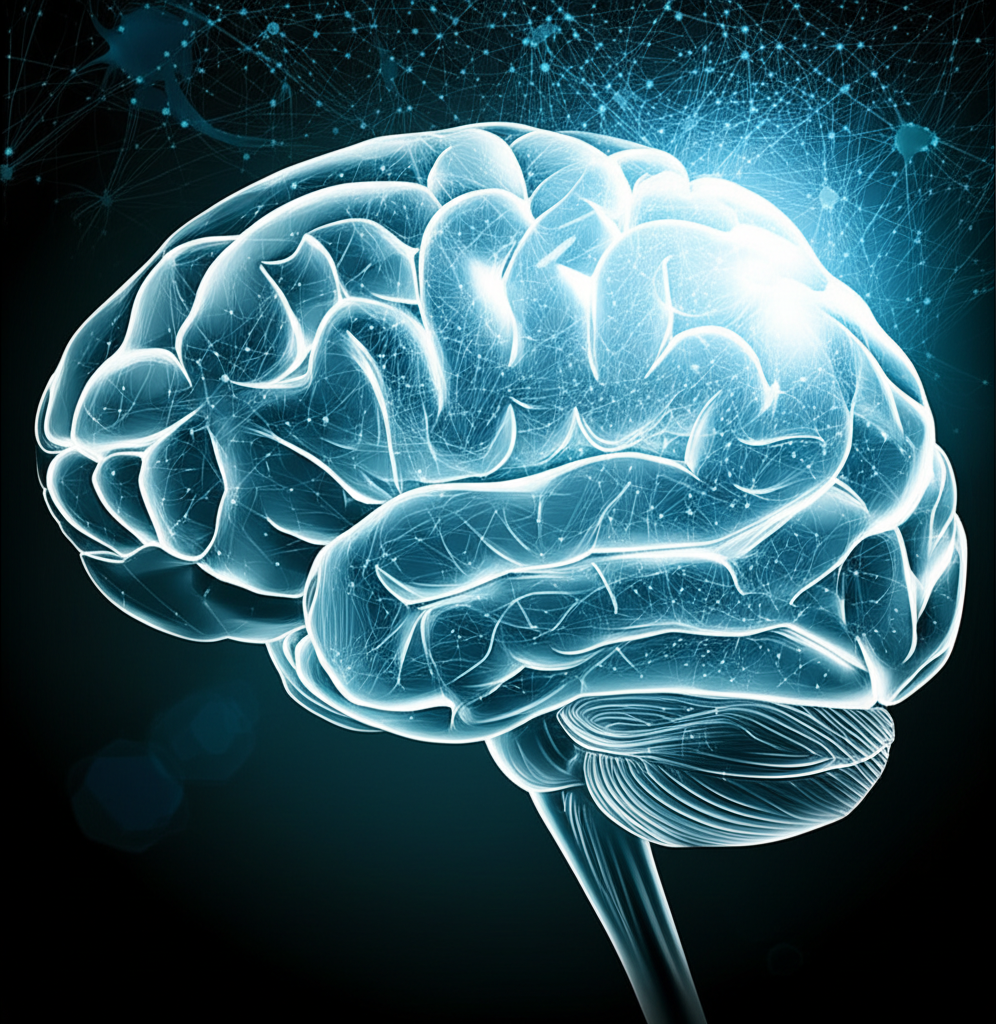
Modern neuroscience has made breathtaking strides in understanding the brain's intricate mechanisms. Techniques like fMRI, EEG, and optogenetics allow us to observe neural activity in unprecedented detail. We can now correlate specific mental states – emotions, thoughts, decisions – with particular patterns of brain activity, identifying "neural correlates of consciousness" (NCC). Damage to specific brain regions can demonstrably alter personality, memory, and perception, strongly suggesting that the mind is intimately tied to the body's most complex organ.
However, correlation is not identity. While science can map the brain's electrical and chemical processes, the subjective experience itself – the feeling of "red," the pain of a headache, the joy of a melody – remains stubbornly elusive. We can see what the brain does, but not why it feels like something to be a conscious organism. This gap highlights the persistence of the metaphysics beneath the science.
B. Psychology and Cognitive Science: Beyond the Neural Substrate
Cognitive science and psychology approach the mind from a functional perspective. Rather than focusing solely on the brain's physical structure, they analyze mental processes as information processing systems. This has led to influential theories like functionalism, which suggests that mental states are defined by their functional role – what they do – rather than their underlying physical composition. A thought, for instance, might be seen as a particular computation, potentially realizable in different physical substrates (biological brains, silicon chips, etc.). This shifts the focus from what the mind is made of to how it works, offering a powerful framework for understanding intelligence and perception.
IV. Contemporary Philosophical Frameworks
Despite scientific progress, philosophy continues to refine and develop theories to address the mind-body problem, grappling with the implications of new data.
A. Dualism's Enduring Forms
While substance dualism, as proposed by Descartes, faces significant challenges from science, variations of dualism persist:
- Property Dualism: This view argues that while there is only one kind of substance (physical), there are two distinct kinds of properties: physical properties (mass, charge) and mental properties (consciousness, qualia), which are non-reducible to physical properties. The mind is not a separate entity but a set of emergent properties of the body.
- Epiphenomenalism: A form of property dualism where mental states are seen as byproducts of physical processes but have no causal influence on the physical world. The whistle of a train is a byproduct of the engine's operation, but doesn't cause the train to move.
B. Monism's Dominance: Physicalism and Its Variants
In contemporary science-informed philosophy, monism – the view that there is only one kind of substance – is highly influential, particularly in the form of physicalism (or materialism).
- Identity Theory (Type Physicalism): This theory posits a direct identity between mental states and brain states. "Pain is C-fiber firing." The mind is simply the brain.
- Eliminative Materialism: A more radical view, suggesting that many of our common-sense "folk psychological" concepts (beliefs, desires, intentions) are fundamentally flawed and will eventually be eliminated by a more mature neuroscience. The mind as we conceive it doesn't truly exist.
- Functionalism: As mentioned, this theory defines mental states by their causal roles and relationships rather than their intrinsic composition. It's less about what the mind is made of, and more about what it does.
List: Major Mind-Body Theories in Modern Philosophy
- Substance Dualism: Mind and body are distinct, separate substances.
- Property Dualism: Only physical substance exists, but it has both physical and non-physical (mental) properties.
- Identity Theory: Mental states are identical to specific brain states.
- Eliminative Materialism: Folk psychology's mental concepts are false and will be discarded.
- Functionalism: Mental states are defined by their functional roles, not their physical composition.
- Emergentism: Mental properties emerge from complex physical systems (like the brain) but are not reducible to them.
V. The Hard Problem of Consciousness and Qualia
Even with the robust explanatory power of physicalism, a significant challenge remains: the "Hard Problem of Consciousness," famously articulated by David Chalmers. While science can explain the "easy problems" – how the brain processes information, integrates data, and produces behavior – it struggles to explain why there is a subjective, qualitative experience associated with these processes. This is the problem of qualia – the raw, private feel of experiences: the redness of red, the taste of chocolate, the ache of a tooth.
Why does C-fiber firing feel like pain? Why isn't a brain simply a complex, unconscious computer? This subjective "what it's like" aspect of consciousness is precisely where the mind seems to resist full reduction to purely physical terms, pushing the boundaries of metaphysics even in the age of advanced science.
VI. Implications and Future Horizons
The mind-body problem is not merely a philosophical curiosity; its resolution (or continued exploration) has profound implications for numerous fields and our understanding of ourselves.
A. Artificial Intelligence and the Synthetic Mind
As artificial intelligence advances, the question of whether a machine can achieve genuine consciousness – and thus possess a "mind" – becomes increasingly pressing. If consciousness is purely a matter of complex computation, then perhaps AI could replicate it. If, however, consciousness involves non-physical properties or emergent phenomena unique to biological systems, then true AI consciousness might remain elusive. This debate forces us to confront our definitions of mind and intelligence.
B. Ethical Considerations and Self-Understanding
Our stance on the mind-body problem impacts fundamental ethical questions:
- Free Will: If the mind is entirely determined by physical laws, what becomes of free will and moral responsibility?
- Personal Identity: What constitutes "me" over time? Is it my continuous mind, my evolving body, or both?
- Medical Ethics: How do we treat conditions like persistent vegetative states if we are unsure of the presence or nature of consciousness?
Understanding the relationship between mind and body profoundly shapes our self-conception, our legal systems, and our approach to mental and physical health. The ongoing dialogue between science and metaphysics is essential for navigating these complex terrains.
YouTube: "David Chalmers Hard Problem of Consciousness"
YouTube: "Neuroscience Mind Body Problem"
Conclusion: The Unfinished Symphony
The mind-body problem, traversing millennia of intellectual inquiry, stands as a testament to humanity's enduring quest for self-understanding. From the ancient Greeks to Descartes, and now to the cutting edge of neuroscience and AI, each era has brought new perspectives and new challenges. While modern science has illuminated the intricate workings of the body and its undeniable connection to the mind, the subjective, qualitative essence of consciousness continues to be a profound mystery. It remains an unfinished symphony, with science providing the instruments and the score, but metaphysics still searching for the conductor who can harmonize the physical and the phenomenal into a unified understanding of what it means to be a conscious being.
📹 Related Video: What is Philosophy?
Video by: The School of Life
💡 Want different videos? Search YouTube for: "The Mind-Body Problem in Modern Science philosophy"