

The Enduring Enigma: The Mind-Body Problem in Modern Science
The question of how our thoughts, feelings, and consciousness arise from the physical matter of our brains is perhaps the most profound and persistent challenge in philosophy and science. This article delves into the historical philosophical roots of the mind-body problem, tracing its evolution from ancient Metaphysics to the cutting-edge inquiries of modern Science. We will explore how the concept of the Mind has been grappled with in relation to the Body, examining various theories that attempt to bridge or explain this fundamental divide, and ultimately, how contemporary scientific advancements are reshaping our understanding, even as the core enigma endures.
Ancient Roots and Enduring Questions
The contemplation of the Mind's relationship to the Body is far from a modern preoccupation. Philosophers throughout history have grappled with the nature of consciousness and its connection to our physical being.
The Philosophical Genesis
Early Greek thinkers, such as Plato and Aristotle, laid foundational groundwork. Plato, in works like Phaedo, posited a clear separation: the soul (mind) is immortal and distinct from the mortal Body. Aristotle, while also acknowledging a non-physical aspect (the psyche or soul), viewed it as the form of the Body, inseparable from it, as discussed in his treatise De Anima – a monumental work found within the Great Books of the Western World. These early inquiries established the two primary poles of the debate: dualism (separation) and monism (unity).
Descartes and the Birth of Modern Dualism
The mind-body problem as we largely understand it today was most sharply articulated by René Descartes in the 17th century. In his Meditations on First Philosophy, another cornerstone text in the Great Books of the Western World, Descartes famously distinguished between two fundamentally different substances:
- Res cogitans: Thinking substance (the Mind, consciousness, soul).
- Res extensa: Extended substance (the Body, physical matter).
Descartes argued that the Mind is non-physical and unextended, while the Body is physical and extended. The perplexing question, then, became: How do these two distinct substances interact? His proposed solution, interactionism via the pineal gland, raised more questions than answers, spawning centuries of philosophical debate. This Cartesian dualism profoundly shaped subsequent Western thought and remains a crucial reference point for discussions on Metaphysics and consciousness.
Alternative Early Views:
| Philosopher | Viewpoint | Description |
|---|---|---|
| Spinoza | Monism | Argued that Mind and Body are two attributes of a single, infinite substance (God or Nature). |
| Leibniz | Pre-established Harmony | Proposed that Mind and Body are separate but synchronized by God from the beginning, like two clocks. |
The Rise of Materialism and Scientific Inquiry
With the Enlightenment and the subsequent explosion of scientific discovery, the focus began to shift from purely Metaphysical speculation to empirical investigation. The remarkable success of Science in explaining the physical world led many to question the necessity of a non-physical Mind.
From Philosophy to Physiology
The 19th and 20th centuries saw significant advancements in understanding the brain. Localizing functions within the brain, understanding neural pathways, and observing the effects of brain damage on personality and cognition increasingly pointed towards the Mind being intimately tied to, if not identical with, the brain. This paved the way for various materialist theories.
Identity Theory and Eliminative Materialism
- Identity Theory: Proposes that mental states are identical to brain states. For instance, the feeling of pain is the firing of C-fibers in the brain. This is a direct reduction of Mind to Body at a neurological level.
- Eliminative Materialism: A more radical stance, suggesting that our common-sense understanding of the Mind (folk psychology) is fundamentally flawed and will eventually be replaced by a purely neuroscientific account. Concepts like "belief" or "desire" might be eliminated from our vocabulary as Science progresses.
Despite the elegance of these theories, they face challenges, particularly in explaining the subjective, qualitative aspects of experience, often referred to as qualia.
The Hard Problem of Consciousness
Philosopher David Chalmers articulated this challenge as "the hard problem of consciousness." While Science can explain how the brain processes information (the "easy problems"), it struggles to explain why there is a subjective, qualitative experience associated with it – why does it feel like something to be conscious? This "explanatory gap" remains a significant hurdle for purely materialist accounts of the Mind.
Modern Science Confronts the Mind
Contemporary Science is making unprecedented strides in understanding the brain, providing new lenses through which to view the mind-body problem.
Neuroscience and the Brain
Neuroscience is at the forefront of exploring the neural underpinnings of consciousness.
- Brain Imaging: Techniques like fMRI (functional Magnetic Resonance Imaging) and EEG (Electroencephalography) allow researchers to observe brain activity in real-time as individuals think, feel, and perceive. This has led to the identification of neural correlates of consciousness (NCCs) – the minimal neuronal mechanisms sufficient for conscious experience.
- Challenges: While neuroscience can show where and when consciousness occurs in the brain, it still struggles with the how and why. Correlation does not equal causation, and even a complete map of brain activity doesn't inherently explain the subjective experience of that activity.
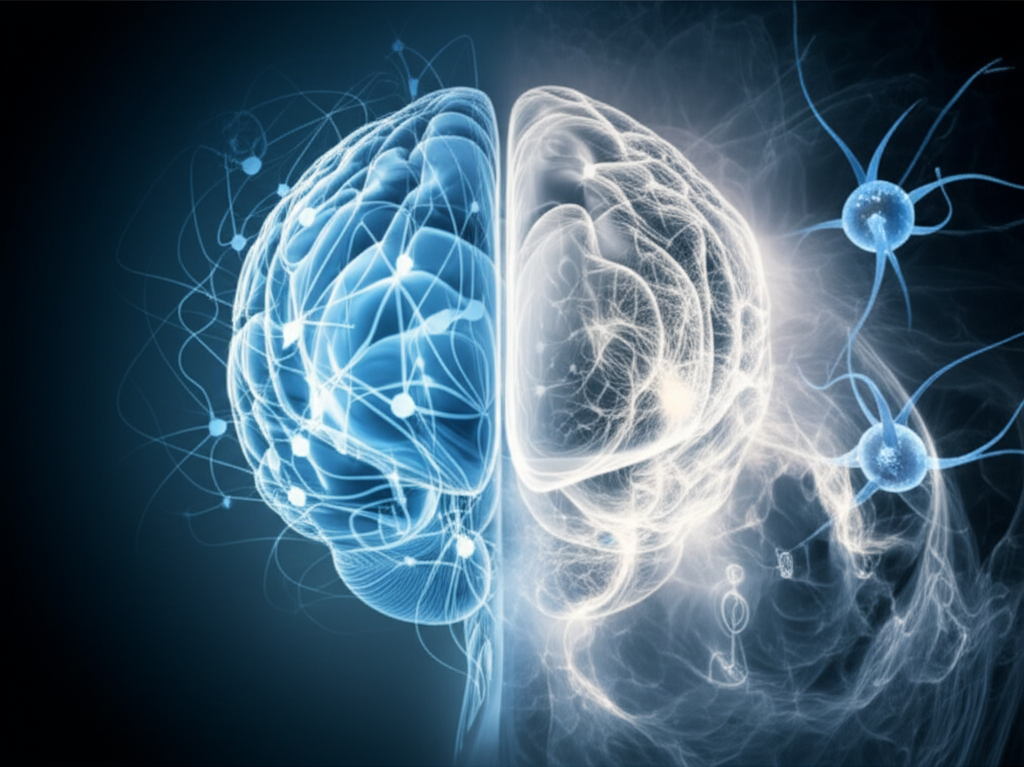
Cognitive Science and Artificial Intelligence
Cognitive Science, an interdisciplinary field encompassing psychology, linguistics, computer science, and philosophy, models the mind as an information-processing system.
- Computational Models: AI research attempts to replicate mental functions in machines. While AI excels at complex tasks, the question of whether it can achieve genuine consciousness or understanding remains open.
- The Chinese Room Argument: John Searle's famous thought experiment challenges the idea that a computer running a program can truly understand, arguing that syntax (manipulating symbols) is not the same as semantics (understanding meaning). This highlights the distinction between functional simulation and genuine subjective experience.
Quantum Physics and Consciousness (Briefly)
Some fringe theories attempt to link consciousness to quantum phenomena, suggesting that the brain might exploit quantum mechanics to produce non-computable aspects of consciousness. While intriguing, these ideas, such as Roger Penrose and Stuart Hameroff's Orch-OR theory, are highly speculative and lack widespread scientific consensus.
Contemporary Debates and Philosophical Nuances
The mind-body problem continues to fuel vibrant debates, with new theories emerging to address the persistent challenges.
Functionalism and Emergentism
- Functionalism: Views mental states not by their internal constitution (e.g., brain states) but by their functional role – what they do. A mental state is defined by its causal relations to other mental states, sensory inputs, and behavioral outputs. This allows for the possibility of Mind in different physical substrates, like AI.
- Emergentism: Suggests that the Mind is an emergent property of the highly complex organization of the brain. Just as wetness emerges from water molecules, consciousness might emerge from the intricate interactions of billions of neurons, a property not reducible to individual components.
The Role of Qualia
The irreducible subjective quality of experience (qualia) remains a central stumbling block for many reductionist theories. How can the firing of neurons be the redness of red, or the taste of coffee? This problem underscores the persistent gap between objective scientific description and subjective lived experience.
Beyond Reductionism
Many philosophers and scientists now advocate for a more nuanced approach, acknowledging that while the Mind is undeniably tied to the brain, a purely reductionist explanation may miss crucial aspects. The Metaphysics of consciousness may require new paradigms that go beyond simply identifying Mind with Body.
The Future of the Mind-Body Problem
The journey to understand the Mind's relationship to the Body is far from over. It remains one of the most exciting and profound frontiers of human inquiry.
Interdisciplinary Approaches
The most promising path forward involves a truly interdisciplinary approach, integrating insights from:
- Philosophy: To clarify concepts, analyze arguments, and frame the fundamental questions.
- Neuroscience: To map the brain, understand its mechanisms, and identify neural correlates.
- Psychology: To study behavior, cognition, and subjective experience.
- Computer Science/AI: To model mental processes and explore artificial consciousness.
Ethical Implications
As Science progresses, particularly in areas like brain-computer interfaces, neuro-enhancement, and advanced AI, the ethical implications of the mind-body problem become increasingly pressing. Questions about the nature of personhood, the rights of conscious AI, and the manipulation of consciousness will demand careful philosophical and societal consideration.
Continuing Metaphysical Inquiry
Even with monumental scientific progress, the fundamental Metaphysical questions about the nature of reality, existence, and our place within it will persist. The mind-body problem is not merely a scientific puzzle; it is a profound reflection on what it means to be a conscious being in a physical universe.
YouTube Video Suggestions:
-
📹 Related Video: PLATO ON: The Allegory of the Cave
Video by: The School of Life
💡 Want different videos? Search YouTube for: "David Chalmers The Hard Problem of Consciousness"
2. ## 📹 Related Video: ARISTOTLE ON: The Nicomachean Ethics
Video by: The School of Life
💡 Want different videos? Search YouTube for: "Daniel Dennett Consciousness Explained"
The journey from Descartes' dualism to modern neuroscience reveals a landscape of increasing complexity. While the Body provides the intricate biological substrate, the Mind continues to present an enigma that challenges our very understanding of existence. As we continue to probe the depths of the brain and the reaches of consciousness, we are not just studying a scientific problem; we are exploring the very essence of ourselves.