

The Mind: Sanctuary of Memory and Imagination
The human Mind, in its most profound philosophical sense, stands as the quintessential seat of our capacity for Memory and Imagination. Far from mere biological functions, these faculties define our subjective experience, shape our understanding of reality, and forge the very essence of Consciousness. From the ancient Greeks to the Enlightenment thinkers, the Great Books of the Western World reveal a sustained inquiry into how these mental powers, often intertwined with the concept of the Soul, enable us to recall the past and envision futures yet to be. This article explores the rich philosophical heritage that positions the mind as the vital locus where our personal histories are preserved and new realities are conceived.
Unveiling the Inner Sanctum: A Philosophical Journey
For millennia, philosophers have grappled with the elusive nature of the Mind. Is it purely material, or does it possess an immaterial quality, perhaps even being synonymous with the Soul? Regardless of the ontological stance, the consensus among many great thinkers is that the mind is the theatre where our most intricate cognitive processes unfold. It is here that raw sensory data is transformed into coherent perceptions, where reason takes hold, and crucially, where the twin pillars of memory and imagination construct our internal world.
Plato, in his Theaetetus, famously likened the mind to a "wax tablet" upon which experiences are imprinted, offering one of the earliest metaphors for memory. This foundational idea set the stage for subsequent explorations into how we store, retrieve, and manipulate information, not just of facts but of feelings, sensations, and abstract concepts. The journey through the history of philosophy reveals a deepening appreciation for the complexity of these mental operations, leading us to understand their profound impact on our very sense of self and reality.
The Mind's Dual Embrace: Memory
Memory is not merely a passive archive; it is an active, reconstructive process that defines who we are. It provides the continuity of self, linking our present Consciousness to our past experiences.
Key Philosophical Perspectives on Memory:
- Plato's Recollection (Anamnesis): Beyond the "wax tablet," Plato, particularly in dialogues like Phaedo, posited that true knowledge is a form of recollection of eternal Forms known by the Soul before its embodiment. This suggests memory is not just of earthly experiences but of a deeper, innate wisdom.
- Aristotle's Faculty of the Soul: In De Anima and On Memory and Recollection, Aristotle viewed memory as a faculty of the sensitive Soul, closely tied to perception and imagination. He distinguished between simple memory (retaining an impression) and recollection (an active search for a past impression, often via association). For Aristotle, memory allows us to perceive time and connect past events to present understanding.
- Augustine's Vast Storehouse: In his Confessions, Augustine marvels at the immense capacity of memory, describing it as an "immeasurable sanctuary" and a "spacious palace" where not only facts but emotions, skills, and even abstract truths reside. He explores its elusive nature, acknowledging that while we possess it, we do not fully comprehend its depths. His introspection reveals memory as central to self-identity and spiritual reflection.
Memory, then, is more than just recalling facts; it is the very fabric of our personal narrative, allowing us to learn, adapt, and build a cohesive understanding of our place in the world.
The Creative Forge: Imagination
If memory anchors us to the past, Imagination propels us into possibilities, allowing us to transcend immediate reality and conceive of what is not yet, or what might never be. It is the engine of creativity, problem-solving, and empathy.
Imagination's Role in Philosophy:
- Aristotle's Phantasia: Aristotle was one of the first to give imagination a distinct philosophical role, defining phantasia as the faculty that produces and retains images (phantasmata) derived from perception, even in the absence of the sensory input. These images are crucial for thought, as the Mind cannot think without them. It acts as an intermediary between sensation and intellect.
- Descartes's Distinct Faculties: René Descartes, in his Meditations on First Philosophy, distinguished imagination from pure intellect. For him, imagination involves the application of the mind to a body (e.g., picturing a chiliagon, a thousand-sided figure, is difficult because it requires imagining all its sides, whereas intellectually understanding it is straightforward). This distinction highlights imagination's reliance on sensory-like representations.
- Kant's Transcendental Imagination: Immanuel Kant, in his Critique of Pure Reason, elevated imagination to a fundamental faculty, calling it "transcendental imagination." He argued it is crucial for synthesizing sensory manifold into coherent perceptions and for bridging the gap between sensibility and understanding, making experience itself possible. It actively structures our world.
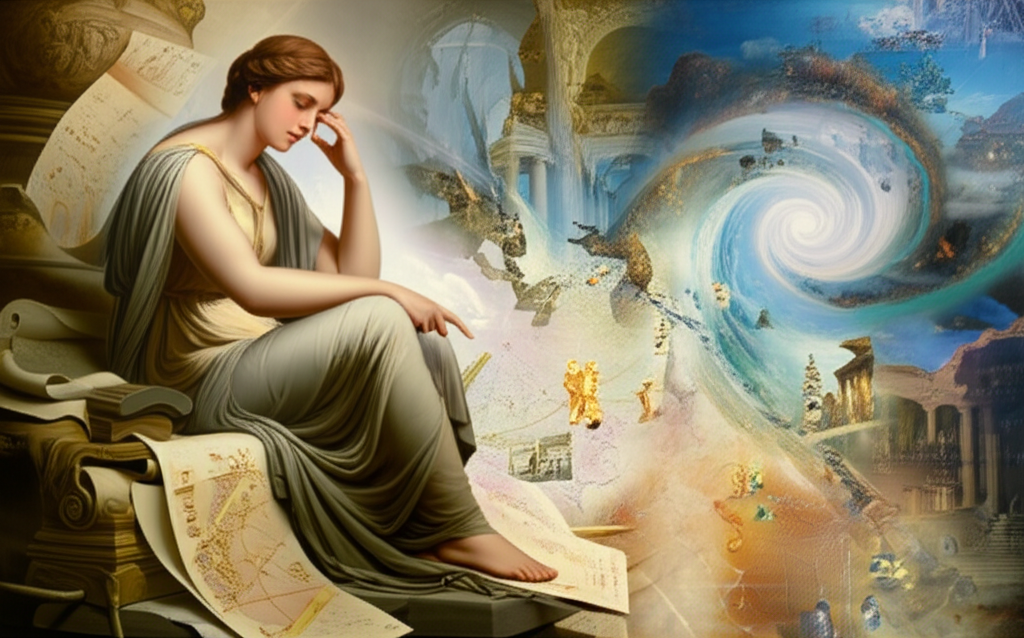
The Intertwined Nature: Mind, Memory, and Imagination as Consciousness
The true power of the Mind lies not just in memory or imagination individually, but in their dynamic interplay, which gives rise to our rich and complex Consciousness. These faculties are not isolated but constantly inform and influence each other. Our memories provide the raw material for our imagination, allowing us to project past experiences into novel scenarios. Conversely, imagination can reconstruct, embellish, or even distort our memories, highlighting their fluid and subjective nature.
The Soul, for many classical thinkers, was the unifying principle behind these mental operations. Whether seen as an immortal essence or the animating principle of life, the soul was often considered the ultimate ground for the mind's ability to remember and imagine. This holistic view emphasizes that our capacity for self-awareness, our continuous experience of self, and our ability to navigate both the actual and the potential are deeply rooted in the integrated functions of the mind.
Conclusion: The Enduring Legacy of the Mind
The philosophical exploration of the Mind as the seat of Memory and Imagination reveals a profound appreciation for the inner workings of human existence. From Plato's enduring forms to Augustine's boundless internal landscapes and Aristotle's meticulous categorizations, the Great Books of the Western World provide an invaluable framework for understanding these fundamental aspects of Consciousness. The mind, therefore, is not merely a biological organ but a philosophical concept, a dynamic space where the past is preserved, the future is conceived, and the very essence of our Soul finds its expression. To ponder memory and imagination is to delve into the very core of what it means to be human, a journey that continues to inspire inquiry and wonder.
YouTube Video Suggestions:
-
📹 Related Video: PLATO ON: The Allegory of the Cave
Video by: The School of Life
💡 Want different videos? Search YouTube for: "Plato on Memory and Recollection Philosophy"
-
📹 Related Video: ARISTOTLE ON: The Nicomachean Ethics
Video by: The School of Life
💡 Want different videos? Search YouTube for: "Aristotle's De Anima Explained Imagination"