

The Mind's Tapestry: Memory, Imagination, and the Seat of Our Being
Our existence, in its most profound sense, is woven from threads of the past and visions of the future. It is within the intricate chambers of the Mind that these threads are spun. Far from being a mere biological organ, the Mind has long been considered, across millennia of philosophical inquiry, the very Seat of Memory and Imagination. This article delves into the rich intellectual lineage, drawing from the Great Books of the Western World, to explore how philosophers have grappled with these fundamental human faculties, revealing their deep connection to our Soul and the very essence of Consciousness.
The Mind: An Enduring Philosophical Enigma
From the earliest inquiries into human nature, philosophers have sought to understand the Mind. Is it distinct from the body? What are its capacities? How does it interact with the world? These questions, central to our understanding of self, inevitably lead us to its roles in retaining what was and conceiving what could be. The Mind, in this context, is not just a brain, but the locus of our subjective experience, our thoughts, feelings, and, crucially, our ability to remember and to imagine.
Echoes of the Past: Memory in Philosophical Thought
Memory is more than just recall; it is the active reconstruction of our past, fundamental to identity and learning. Diverse philosophical traditions have offered compelling insights into its nature.
Ancient Conceptions of Memory
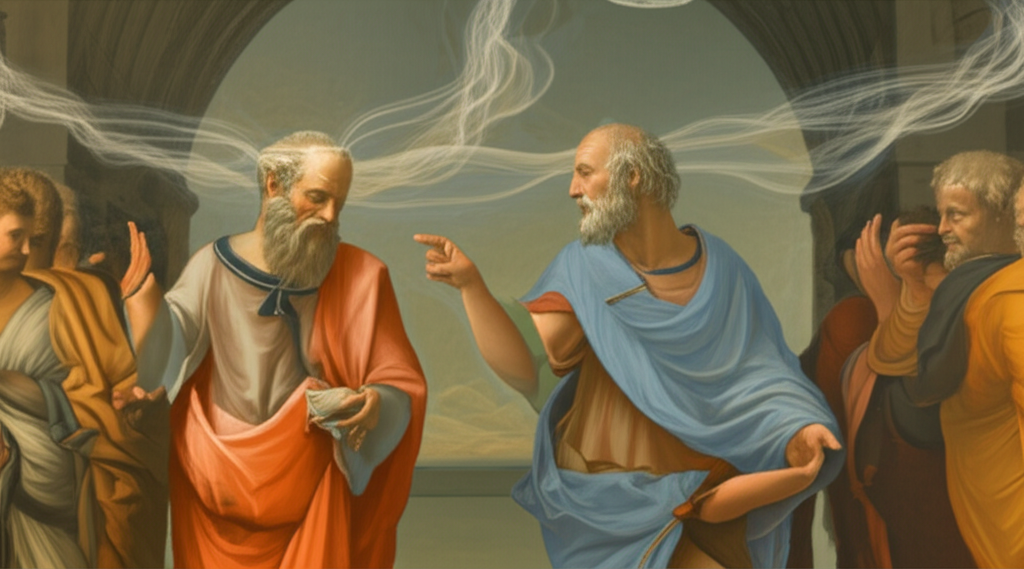
- Plato's Anamnesis: For Plato, memory, particularly the concept of anamnesis or recollection, was central to his theory of Forms. He posited that learning was not acquiring new knowledge, but rather remembering truths the Soul already knew from a prior existence. This suggests memory as a deep, innate faculty, connecting us to eternal truths.
- Aristotle's Faculty of the Soul: In De Anima, Aristotle treats memory as a faculty of the Soul, specifically linked to the senses and phantasmata (images). He distinguished between remembering, which is a retention of past perceptions, and recollection, which is an active search for a past event. Memory, for Aristotle, is intrinsically tied to time and the ability to perceive something as having been in the past.
- Augustine's Inner Sanctuary: Saint Augustine, in his Confessions, marvels at the vastness of memory, describing it as a "great chamber" or "palace" within the Mind. It is a profound inner space where images, ideas, emotions, and even God himself can be found. For Augustine, memory is not just storage but a place of profound self-discovery and spiritual reflection, hinting at the divine within the Soul.
Modern Understandings of Memory's Foundations
Later thinkers, while perhaps less overtly spiritual, continued to explore memory's mechanisms:
- Locke's Empiricism: John Locke's An Essay Concerning Human Understanding presented the Mind as a tabula rasa (blank slate) at birth. Memory, then, became the crucial faculty for retaining the ideas derived from sensory experience and reflection. Without memory, the continuous flow of experience would be meaningless, and personal identity impossible.
- Hume's Impressions and Ideas: David Hume, in A Treatise of Human Nature, differentiated between vivid "impressions" (sensations and feelings) and fainter "ideas" (thoughts and memories). Memory, for Hume, is the faculty that preserves these ideas, though often with a diminished force compared to the original impression.
Forging New Worlds: Imagination's Creative Spark
If memory re-presents the past, imagination actively constructs new realities, from the mundane rearrangement of sensory data to the most profound artistic and philosophical visions.
Imagination Across the Ages
- Aristotle's Productive Phantasia: Aristotle recognized imagination (phantasia) as a critical faculty, not just for recalling images but for combining and manipulating them. It serves as an intermediary between sensation and thought, allowing us to think about things not immediately present.
- Descartes's Thinking Substance: René Descartes, in Meditations on First Philosophy, positioned imagination as a faculty of the thinking substance (the Mind), distinct from the body. While it often relies on bodily images, the act of imagining itself is a mental operation, further emphasizing the non-physical nature of the Mind.
- Hume's Associative Power: Hume saw imagination as a powerful force in connecting ideas, often leading to complex thoughts and even beliefs. It allows us to move beyond direct experience, creating new combinations of ideas, sometimes leading to fictions, but also forming the basis for complex reasoning.
- Kant's Transcendental Imagination: Immanuel Kant, in his Critique of Pure Reason, elevated the role of imagination to a transcendental level. He argued that a "transcendental imagination" is essential for structuring our experience, bridging the gap between raw sensory data and the conceptual categories of the understanding. It is a fundamental, active faculty that makes perception and knowledge possible.
The Intertwined Dance: Memory, Imagination, and Consciousness
Memory and Imagination are not isolated faculties; they are deeply interdependent, constantly informing and shaping each other within the crucible of Consciousness.
- Memory as Foundation: Memory provides the raw material – images, concepts, experiences – upon which imagination operates. We can only imagine a "winged horse" if we have prior memories of "wings" and "horses."
- Imagination as Architect: Imagination, in turn, can rearrange, combine, augment, or diminish these remembered elements, creating novel ideas, plans for the future, or even re-interpreting past events. It allows us to simulate scenarios, fostering creativity and problem-solving.
- Consciousness as the Stage: The entire interplay unfolds within Consciousness. Our awareness allows us to experience the recall of memory and the creation of imagination, distinguishing between what is remembered and what is merely imagined, though sometimes this line can blur. This continuous, subjective awareness is the very fabric of our mental life.
The Dynamic Relationship
| Faculty | Primary Function | Relationship with the Other | Role in Consciousness |
|---|---|---|---|
| Memory | Recalling and retaining past experiences and knowledge | Provides raw material | Grounds Consciousness in the past |
| Imagination | Forming new images, ideas, and concepts | Manipulates and combines data | Allows Consciousness to project forward |
Beyond the Physical: The Soul's Enduring Presence
For many philosophers, especially prior to the scientific revolutions, the Mind's capacity for memory and imagination pointed towards something beyond mere physical matter. The idea of a Soul, an immaterial essence, often became the explanatory framework for these complex, non-physical operations. Whether conceived as the animating principle (Aristotle) or an immortal, rational substance (Plato, Descartes), the Soul was seen as the true Seat of Memory and Imagination, housing the very core of our rational and creative being. This philosophical lineage reminds us that our mental faculties are not just biological functions, but profound aspects of what it means to be human.
📹 Related Video: PLATO ON: The Allegory of the Cave
Video by: The School of Life
💡 Want different videos? Search YouTube for: ""Plato's Theory of Recollection and the Forms Explained""
📹 Related Video: ARISTOTLE ON: The Nicomachean Ethics
Video by: The School of Life
💡 Want different videos? Search YouTube for: ""Aristotle on Memory, Imagination, and the Soul""
In conclusion, the Mind, understood as the Seat of Memory and Imagination, stands as a testament to the enduring depth of philosophical inquiry. From the ancient insights into the Soul's capacity for recollection to modern understandings of Consciousness shaping and being shaped by these faculties, we see a continuous exploration of what makes us uniquely human. Our ability to remember our journey and to imagine new horizons is not just a function, but the very essence of our conscious existence.