

The Mind's Inner Cosmos: The Seat of Memory and Imagination
The human mind, that boundless inner cosmos, serves as the profound wellspring from which our memory and imagination flow. Far from being mere passive storage or fleeting fantasy, these intertwined faculties are the very architects of our understanding, identity, and capacity for creation. They define our past, shape our present, and project our future, revealing the profound depth of human consciousness and hinting at the enduring mystery of the Soul. This article delves into how philosophy, particularly through the lens of the Great Books of the Western World, illuminates the mind's central role in these essential cognitive functions.
The Mind's Enduring Enigma: A Philosophical Foundation
From antiquity, philosophers have grappled with the nature of the mind, often equating it with the psyche or Soul. Plato, in works like the Phaedo and Republic, posited the Soul as immortal, a repository of eternal Forms, suggesting that memory is not merely recall but a form of recollection of truths known before birth. Aristotle, while grounding the Soul more firmly within the body in De Anima, nevertheless detailed its faculties, including perception, memory (mneme), and imagination (phantasia), asserting them as intrinsic operations of the living being's essence. This established a long-standing tradition: the mind, however defined, is the primary arena for these profound internal experiences.
Memory: The Tapestry of Our Past
Memory is far more than a simple filing cabinet for past events; it is the living tapestry upon which our sense of self is woven. It allows us to learn, to adapt, and to build narratives that connect our disparate experiences into a coherent personal history.
More Than Recall: Memory's Active Nature
Philosophers like John Locke, in his Essay Concerning Human Understanding, emphasized the role of memory in shaping personal identity. For Locke, it is consciousness extended backward through time by memory that makes us the same person yesterday as today. This view highlights memory as an active, continuous process, not just passive retrieval. We don't merely have memories; we are, in part, our memories. They inform our decisions, our emotional responses, and our very perception of reality.
Imagination: The Blueprint of What Could Be
If memory anchors us to the past, imagination liberates us into the realm of possibility. It is the faculty that allows us to conceive of things not present, to create new ideas, and to envision alternative realities.
From Daydreams to Discovery: The Power of Phantasia
Aristotle's concept of phantasia (imagination) was crucial, viewing it as the faculty that produces mental images, essential for thought and even dreams, bridging sensation and intellect. Later, Immanuel Kant, in his Critique of Pure Reason, elevated the "transcendental imagination" to a foundational status, describing it as a fundamental cognitive faculty that synthesizes sensory input into coherent experience, making knowledge possible. Whether it's the simple act of planning tomorrow's errands, designing a complex architectural marvel, or empathizing with a character in a novel, imagination is the engine of human creativity and innovation. It allows us to simulate outcomes, explore ethical dilemmas, and construct entire worlds within our minds.
The Symbiotic Dance: How Memory Fuels Imagination
The true power of the mind as the seat of these faculties lies in their profound interdependence. Memory provides the raw material—the images, concepts, and experiences—that imagination then manipulates, combines, and transforms. We cannot imagine a color we have never seen, nor construct a narrative without drawing on remembered linguistic structures or emotional experiences. Conversely, imagination can re-contextualize memories, shaping how we interpret our past and influencing our emotional response to it. This dynamic interplay is fundamental to learning, problem-solving, and artistic expression.
Beyond Neurons: Mind, Soul, and Consciousness
The philosophical inquiry into memory and imagination inevitably leads to deeper questions about the nature of the mind itself, and its relationship to the physical brain. While modern neuroscience meticulously maps the neural correlates of these functions, philosophy continues to ponder whether the entirety of consciousness and the rich subjective experience of remembering and imagining can be reduced solely to electrochemical processes. The persistent discussions around the Soul in Western thought, from Descartes' dualism to more contemporary debates, underscore the intuition that there is something more to our inner life than mere biological machinery. The capacity for profound memory and boundless imagination often points to this irreducible quality of our being.
| Philosopher (Era) | Key Idea on Mind/Memory/Imagination | Relevance to "Seat of Memory and Imagination" |
|---|---|---|
| Plato (Ancient) | Soul (psyche) as the true self, immortal, repository of eternal Forms. Memory as anamnesis (recollection). | The mind/soul is the primary locus; memory is access to higher, pre-existent knowledge. |
| Aristotle (Ancient) | De Anima - Soul as the form of the body, faculties (memory, phantasia) as functions of the soul. | Memory and imagination are integral, active functions of the living being's soul. |
| John Locke (Modern) | Mind as tabula rasa (blank slate), experience fills it. Personal identity based on consciousness linked by memory. | Memory is crucial for continuity of self; mind actively processes and stores experience. |
| Immanuel Kant (Modern) | Transcendental Imagination as a core faculty synthesizing sensory input into coherent experience. | Imagination is a foundational cognitive faculty, essential for structuring our perception of reality and making knowledge possible. |
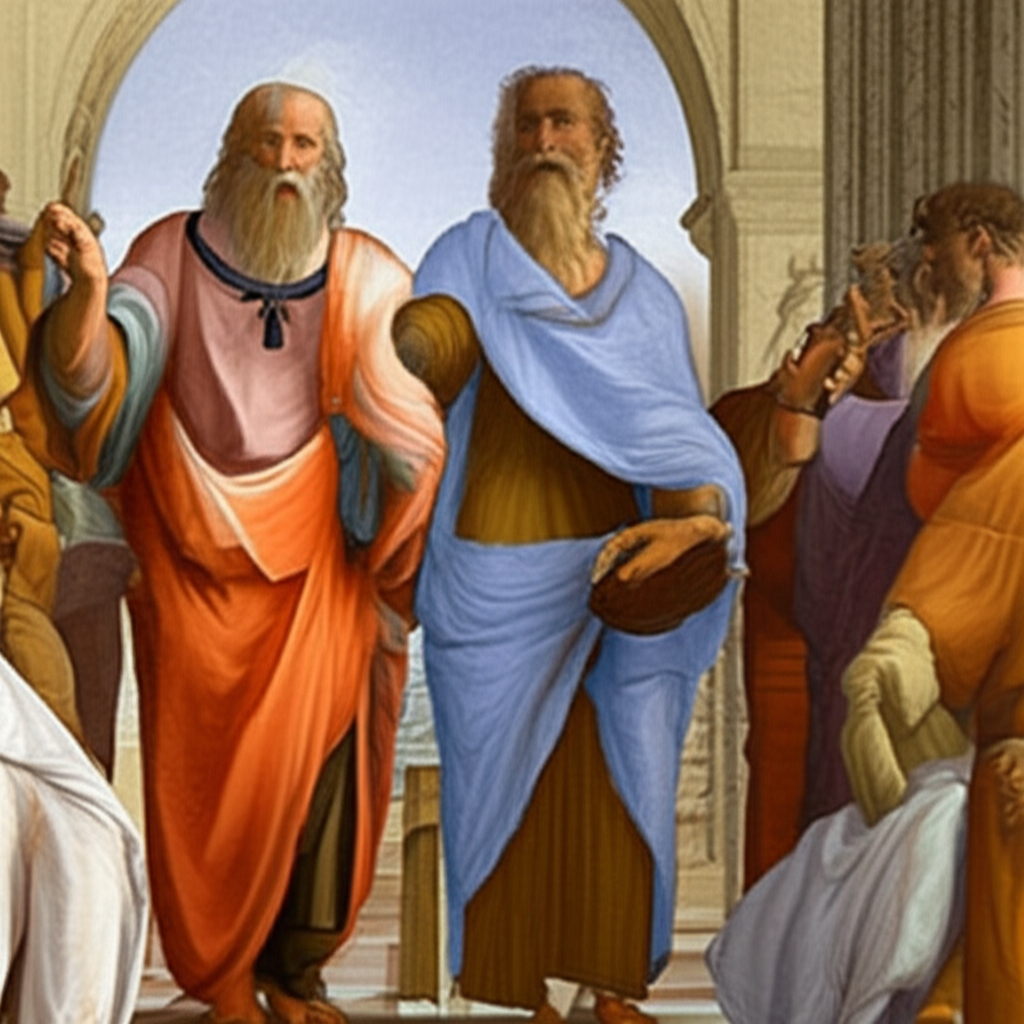
The mind, as the seat of memory and imagination, is not merely a passive recipient of information but an active, creative force. It is the crucible where our past is preserved, our present is understood, and our future is conceived. To understand these faculties is to glimpse the extraordinary power of human consciousness and the enduring philosophical quest to comprehend the inner life.
📹 Related Video: What is Philosophy?
Video by: The School of Life
💡 Want different videos? Search YouTube for: ""Philosophy of Memory: What is Memory and How Does it Work?""
📹 Related Video: What is Philosophy?
Video by: The School of Life
💡 Want different videos? Search YouTube for: ""The Power of Imagination in Philosophy and Science""